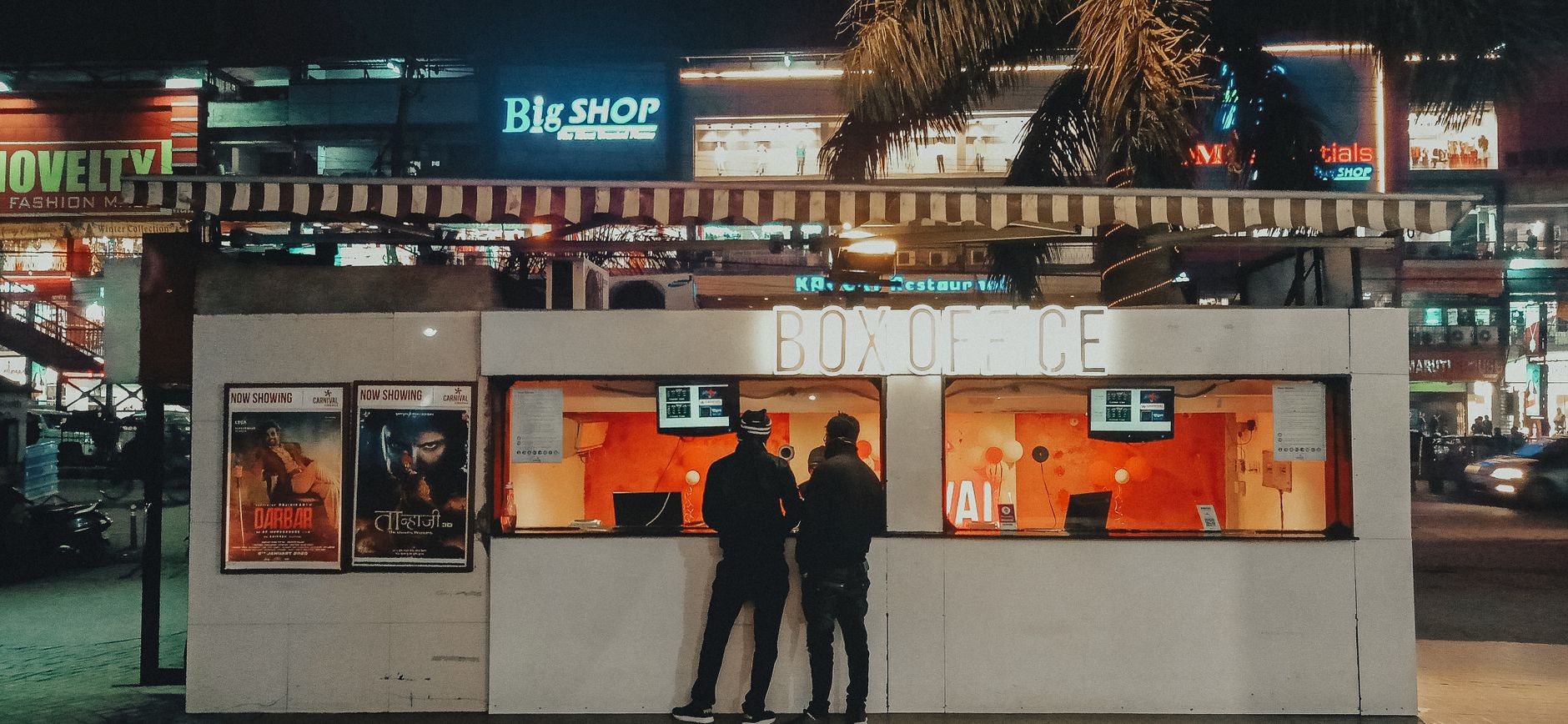
Photo: MD ARIF / Pexels
Bandar's Box Office Reckoning and Anurag Kashyap's Fury
Anurag Kashyap rarely lets a grievance sit quietly, and this week he turned his frustration on the people who decide what plays where. The filmmaker took to Instagram to argue that Indian cinemas are bending over backwards for Hollywood's Obsession while squeezing homegrown releases into half-empty morning slots. His own film, Bandar, had already lived that reality the week before. The numbers behind his anger are worth laying out plainly, because they tell a harsher story than the headline does.

What set Kashyap off
In his post, Kashyap accepted that audiences want to watch Obsession, but said the Hollywood title could keep running on fewer shows rather than crowding out everything else. He pointed to Bandar the previous week, and then to this week's new Indian arrivals — Main Vaapas Aaunga, Sing Geetham and Governor — all reportedly stuck with morning shows or a handful of screens while Obsession occupied six to seven slots a day. His line of attack was less about one film losing and more about a system he believes quietly starves Indian cinema of room to breathe.
It is a familiar complaint from him, and not an unreasonable one. But it also lands awkwardly when the film at the centre of it never found an audience even where it did get screens.

The film itself
Bandar is a neo-noir thriller built around Bobby Deol as Samar Mehra, a fading screen star clinging to relevance. His seemingly settled life — anchored by a younger partner played by Saba Azad — comes apart when an old relationship resurfaces as a serious accusation. The supporting cast includes Sanya Malhotra, Sapna Pabbi, Raj B. Shetty and Jitendra Joshi. The film had earlier travelled the festival route abroad before its Indian theatrical release on 5 June 2026.
Critically, it landed well. Reviewers singled out Deol for what several called a career-defining turn, and treated the film as something of a return to form for Kashyap after a rough run. Praise, though, does not buy tickets on a Tuesday afternoon.
Day-wise box office collection
Here is the run so far, with India net figures according to industry tracker Sacnilk. Sacnilk reports overseas earnings as nil, so worldwide gross has tracked the India gross rather than building separately; per-day worldwide splits are not broken out, so those cells are marked awaited and the cumulative figure noted below.
| Day | India Net (Rs cr) | Worldwide Gross (Rs cr) |
|---|---|---|
| Day 1 (Fri, 5 Jun) | 0.50 | awaited |
| Day 2 (Sat) | 0.95 | awaited |
| Day 3 (Sun) | 1.00 | awaited |
| Day 4 (Mon) | 0.30 | awaited |
| Day 5 (Tue) | 0.40 | awaited |
| Day 6 (Wed) | 0.25 | awaited |
| Day 7 (Thu) | 0.25 | awaited |
| Day 8 (Fri) | 0.08 | awaited |
| Total (through Day 8) | 3.73 | ~4.44 (cumulative) |
As per Sacnilk's estimates, the week-one India net came to roughly Rs 3.65 crore, with India gross around Rs 4.44 crore and worldwide gross matching it because there were effectively no overseas collections.
Reading the trend
The shape of this run is unusually flat for a film with a known director and a lead star. A few things stand out.
- A muted opening. Rs 0.50 crore on Day 1 is a soft start for any wide-ish Hindi release. It signals weak pre-release buzz and limited walk-in interest.
- A weekend that never took off. The Saturday and Sunday bumps to Rs 0.95 crore and Rs 1 crore were modest. Healthy films often double or triple their opening day over the weekend; Bandar barely doubled it at peak.
- A brutal weekday collapse. Monday fell to Rs 0.30 crore, and by midweek the film was scraping Rs 0.25 crore a day. The second Friday at Rs 0.08 crore confirms the screens were drying up fast.
That curve — a small peak followed by a near-vertical drop — is the signature of a film that did not generate word of mouth strong enough to overcome its visibility problem. Good reviews existed, but they stayed in critic circles rather than spreading to casual ticket-buyers.
Budget versus recovery
Reports peg the budget anywhere between Rs 10-15 crore and Rs 25 crore, with no official figure confirmed. Even on the lower estimate, a film needs to clear its cost across theatrical, satellite and streaming deals to be called safe. With an India net under Rs 4 crore and worldwide gross around Rs 4.44 crore, the theatrical leg has recovered only a sliver of even the modest budget read.
That makes Bandar a commercial flop on theatrical terms, regardless of its critical standing. Where it can claw back ground is on OTT and satellite, where Kashyap's name and Deol's reviews carry more weight than opening-weekend footfalls. Strong streaming reception could reframe the film's legacy even if the box office never will.
Does Kashyap's argument hold up
There are two truths sitting side by side here. The screen-allocation grievance is real: when a Hollywood title gets prime evening slots and an Indian film is pushed to 11am, the playing field is tilted, and small films pay the price. Distributors and chains chase whatever fills seats, and that logic can quietly squeeze out riskier, smaller titles before they get a fair hearing.
The other truth is that Bandar's collections were weak even relative to its limited shows. A film drawing a quarter-crore a day on weekdays is not being held back purely by show timings; the demand simply was not there. Better slots might have lifted the numbers, but it is hard to argue they would have rescued the run.
The honest read is that both can be right. The system does under-serve niche Indian cinema, and this particular film also struggled to convert the attention it had. Kashyap's larger point about prioritising homegrown films deserves a serious conversation — it just happens to be anchored to an example that the market had already turned away from.
What comes next
Watch for the streaming announcement, which is where Bandar's real second life will play out. If the platform reception is strong, expect the conversation to shift from box office failure to underrated gem — a path several Kashyap films have walked before. For now, Bandar stands as a film that won the reviews and lost the weekend, and as the spark for a debate about screens that India's smaller films have been quietly losing for years.