Photo: skigh_tv / Pexels
A 125-Million-Year-Old Shellfish Was Found With Its Babies Inside
Picture a mussel that died 125 million years ago, lay buried while dinosaurs walked overhead, and was lifted out of an English cliff with its unborn babies still cradled inside its gills. That is not a thought experiment. Scientists have just described exactly such a fossil, and it is now the oldest known evidence that a shellfish cared for its young.
The specimen is a freshwater mussel named Margaritifera valdensis, recovered from Early Cretaceous rocks on the Isle of Wight off the south coast of England. Preserved in its gills are microscopic embryos and larvae, frozen at different stages of development at the moment the animal was entombed. The study appeared in the journal Scientific Reports on 22 June 2026.
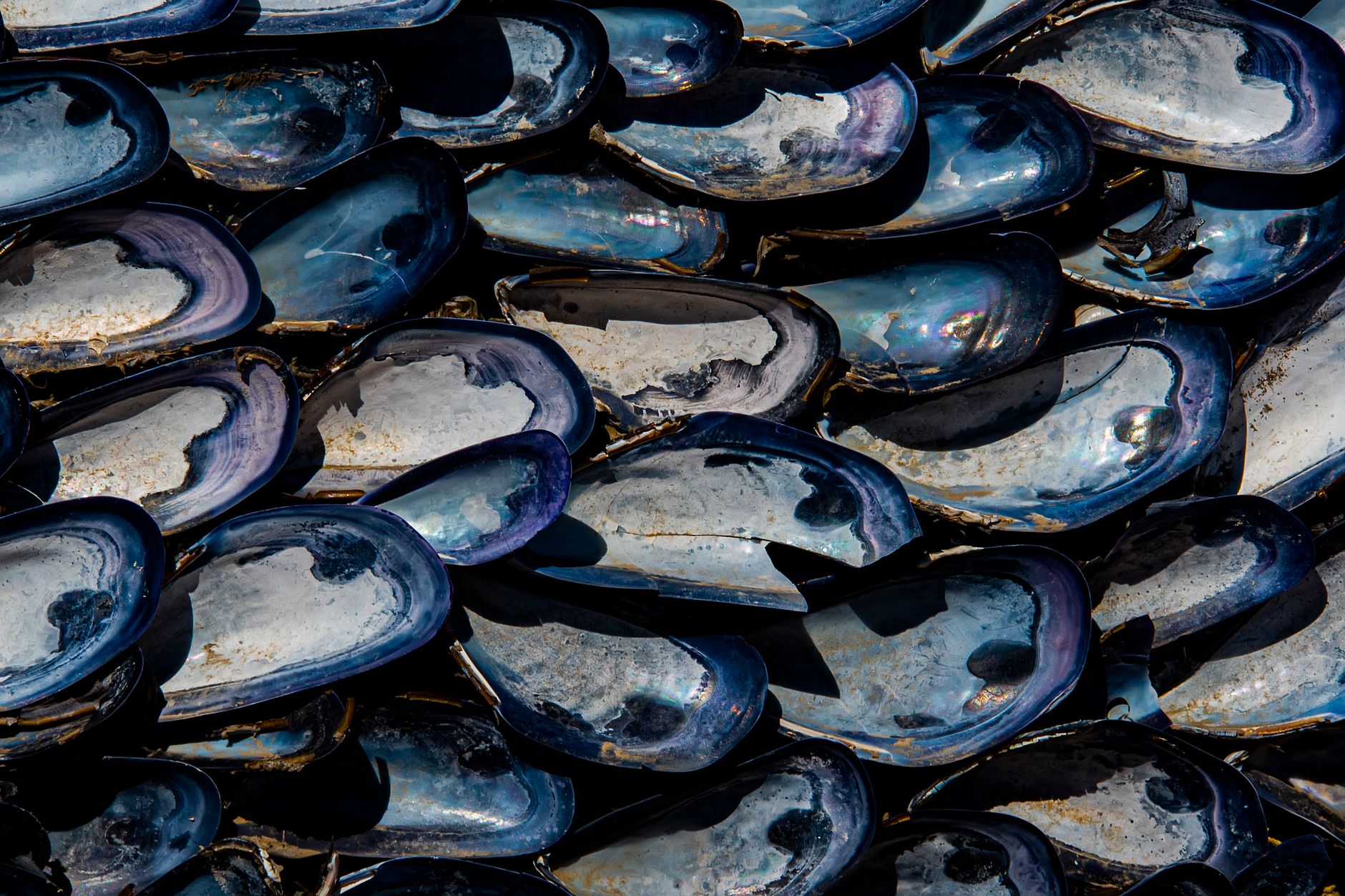
A snapshot of motherhood, 125 million years deep
Most fossils are just hard parts — shells, bones, teeth. The soft, squishy machinery of life almost never survives. That is what makes this find so unusual. Alongside the shell, the rock preserved delicate internal structures: the gill brood chambers, the surrounding gill tissue, and the tiny bodies developing inside.
The team did not find a single uniform clutch. They found a range of growth stages, from the earliest embryo-like cells through to more advanced larvae. In other words, the fossil captured an active nursery mid-cycle, the way a single photograph can freeze a busy moment that was clearly part of a longer process.
That detail matters. A one-off egg would be a curiosity. A graded series of developing young inside a dedicated brooding organ is something else entirely — direct evidence of a deliberate reproductive strategy playing out in deep time.
Why a mussel keeps its babies in its gills
If the idea of a shellfish brooding embryos in its breathing organs sounds strange, it helps to know that living freshwater mussels do precisely this. The group has one of the most extraordinary reproductive cycles of any invertebrate, and Margaritifera valdensis is a distant relative of the freshwater pearl mussels still found in rivers today.
In modern mussels of this family, the sequence runs roughly like this:
- Fertilised eggs develop inside the female's gills, which double as a protected nursery.
- The young grow there into a specialised larval stage before release.
- Once released, those larvae must briefly hitch onto a passing fish, clamping onto its gills or fins to complete their development.
- After this short parasitic phase, the juveniles drop off and settle to start life on the riverbed.
It is a high-stakes relay. The fish stage lets the otherwise immobile mussel disperse upstream and across river systems it could never reach on its own. What the new fossil shows is that the first crucial leg of that relay — a mother sheltering her young inside her body before sending them out into the world — was already up and running 125 million years ago.
The calcium clue hidden in the gills
The researchers found something extra that turns a remarkable fossil into a genuinely revealing one. Tucked among the preserved gill tissues were tiny mineralised calcium deposits.
In living mussels, building a shell takes calcium, and that demand starts early, while the young are still developing. The team interpret these mineral grains as calcium stores — a built-in supply the mother appears to have set aside to help her offspring start forming their own shells. It is a small thing physically and a big thing scientifically: a hint not just that these animals brooded their young, but that they actively provisioned them.
That moves the story from passive incubation toward something closer to true parental investment, a level of care we usually associate with much later, much flashier animals.
How the fossil survived at all
The Isle of Wight is one of Europe's richest hunting grounds for Cretaceous fossils, better known for dinosaurs than for shellfish embryos. Soft tissue surviving here for 125 million years required an unusually gentle burial and the right chemistry in the surrounding sediment — conditions that replaced or coated fragile structures with minerals fast enough to record them before they rotted away.
The work was led by Dr. Graciela Delvene of the Geological and Mining Institute of Spain (CSIC), working with Dr. Martin Munt of the University of Portsmouth, bivalve specialist Dr. Aleksandra Skawina, and geochemist Rafael P. Lozano. As Dr. Munt put it, this is the earliest known fossil evidence that these shellfish cared for and protected their developing young.
What it tells us about deep time
Parental care can be hard to spot in the fossil record because the behaviour itself does not fossilise — only its rare physical traces do. Evidence of brooding has turned up before in other ancient creatures, but pinning it down inside a freshwater mussel, with multiple larval stages and a calcium pantry to match, is a different order of detail.
The big takeaway is about timing. A reproductive cycle this specialised — internal brooding, staged larval development, a calcium handoff, and ultimately a fish-hitching phase — did not appear overnight. Finding it already assembled in the Early Cretaceous tells scientists the strategy is far older and more deeply rooted than the fossil record had been able to confirm.
There is a quieter point too. The freshwater pearl mussels that carry on this ancient lifestyle today are among the most endangered animals on Earth, hit hard by pollution, dams and the decline of the host fish their larvae depend on. The fossil is a reminder that this fragile, finely tuned way of raising young has been working in the world's rivers for well over a hundred million years — and that what took so long to evolve can be lost in a comparative blink.
What comes next
Expect researchers to go looking for more. Now that scientists know soft reproductive tissue can survive in these deposits, other museum drawers and cliff faces become worth a second, closer look with modern imaging. Each new specimen could sharpen the picture of how brooding spread across mussel family trees and when the fish-parasite stage first locked into place.
For now, the headline fact is enough to sit with. A mother shellfish, sheltering her babies inside her body, was buried so completely and so gently that 125 million years later we can still see them there. Some fossils make the past feel distant. This one makes it feel astonishingly close.