Photo: Michael Ken / Pexels
A Bird Japan Knew for 100 Years Was Secretly Two All Along
For decades, birdwatchers on two scattered chains of Japanese islands thought they were looking at the same small green songbird. They were wrong. New research has revealed that the bird breeding on the Tokara Islands is not the rare warbler everyone assumed — it is a separate species that quietly went its own way nearly 3 million years ago, and nobody noticed until the DNA spoke up.
The newcomer has a name now: the Tokara Leaf Warbler (Phylloscopus tokaraensis). And here is the part worth pausing on — it is the first new bird species described in Japan since 1981, when the famous Okinawa Rail was added to the books. A country with one of the most obsessively documented bird populations on Earth had a hidden species sitting in plain sight the whole time.

A bird that fooled everyone by looking ordinary
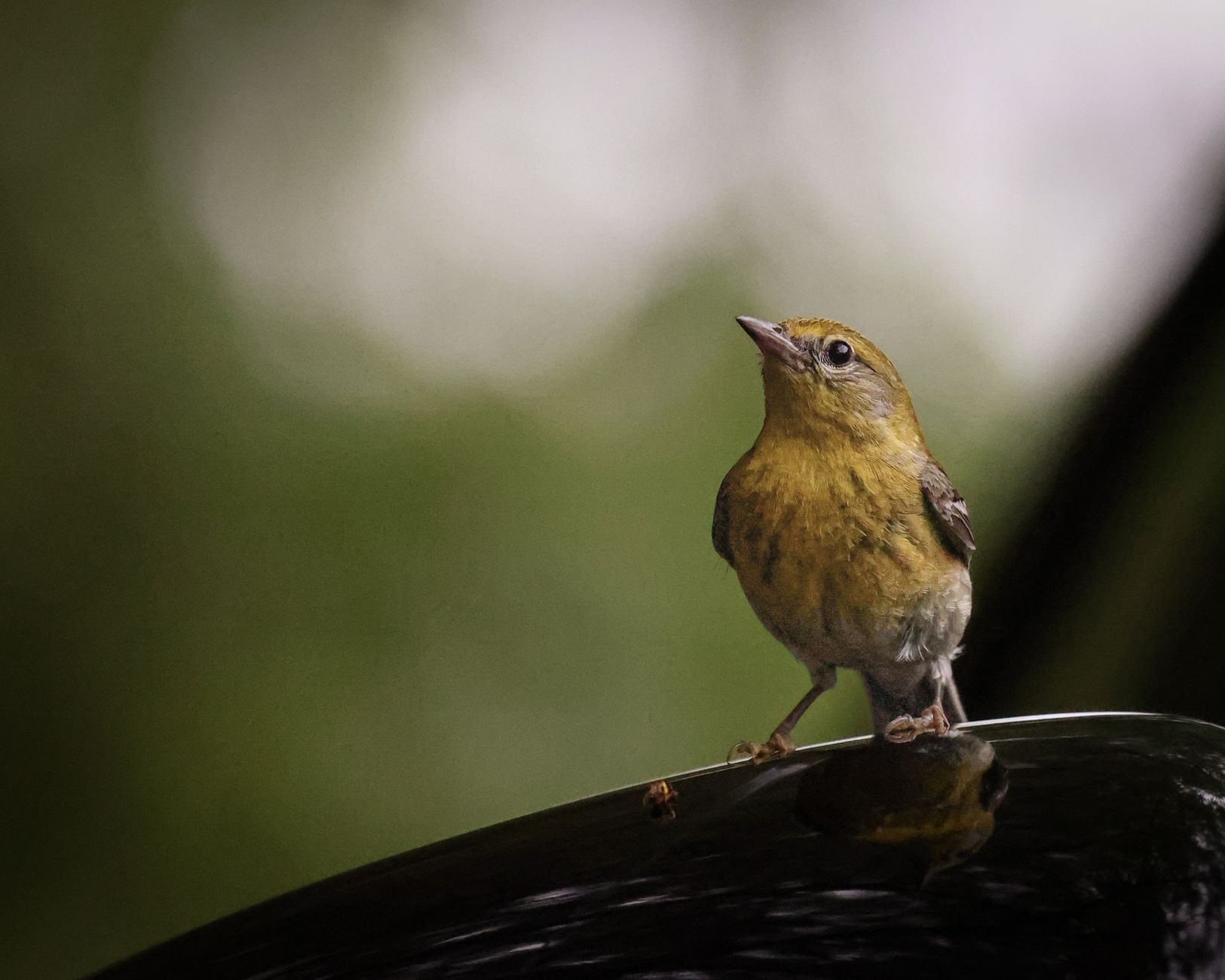
The Tokara Leaf Warbler is tiny and unremarkable to the eye. It runs about 10 to 12 centimetres long and weighs roughly the same as a couple of coins — somewhere around 6 to 9 grams of olive-green feathers flitting through island forest. That ordinariness is exactly why it stayed hidden.
For decades, ornithologists believed a single species, Ijima's Leaf Warbler (Phylloscopus ijimae), bred across two widely separated Japanese island groups: the Izu Islands south of Tokyo, and the Tokara Islands about 1,000 kilometres to the southwest. The birds in both places looked so alike that even side-by-side museum specimens showed barely any difference in plumage. There was no obvious reason to suspect two species. So nobody did.
That is the trap with what biologists call cryptic species — animals that are genetically distinct but visually near-identical. The eye is a blunt instrument. Two creatures can share the same wing, the same feather pattern, the same general size, and still belong to lineages that parted ways before humans existed.

The clue that started a decade-long hunt
The first crack appeared about ten years ago, when researchers noticed that birds from the two island groups didn't match genetically the way they should if they were one population. It was a faint signal, the kind easy to dismiss. Instead, it kicked off years of careful work.
The investigation, led by Per Alström of Uppsala University in Sweden along with colleagues in Gothenburg and two Japanese institutions, pulled together three separate threads of evidence:
- Fieldwork on the remote islands to observe and record living birds
- Museum specimens examined for any physical differences, however small
- Genetic analysis using thousands of genome-wide markers plus mitochondrial DNA
When the data came back, the picture was unambiguous. The genetic split between the Tokara birds and the Izu birds was as deep as — or deeper than — the gap separating many bird species already recognised as distinct. There was no sign of recent interbreeding. These were two species, full stop.
What the songs gave away
DNA was the decisive proof, but the birds had been confessing all along in a language researchers finally measured: their song. When the team analysed recordings, the vocal differences between the two populations were consistent and measurable — distinct enough to tell the birds apart with high accuracy just by listening.
That detail matters more than it sounds. For songbirds, song is not decoration. It is how they attract mates and defend territory, and it is largely how they decide who counts as "one of us." Two populations singing different songs are unlikely to recognise each other as potential partners even if they meet. Song, in other words, is part of the wall that keeps the species apart — and it was hiding in plain hearing for anyone who knew to compare.
Nearly 3 million years apart
The genetics put a date on the divorce. The two lineages diverged roughly 2.8 to 3.2 million years ago, deep in the geological past, and the analysis found no detectable gene flow between them since. To put that in perspective, these birds had been on separate evolutionary tracks since long before the first members of our own genus walked the Earth.
And yet they ended up looking almost exactly the same. Evolution didn't bother redesigning the body because nothing pushed it to — the same island-forest lifestyle rewarded the same compact, leaf-coloured shape in both places. The change happened in the parts you can't see in a photograph: the genome and the voice. It is a clean reminder that appearance is one of the least reliable ways to count the living world.
Why this should worry conservationists
There's a sting in the discovery. Splitting one species into two doesn't just add a name to a list — it can instantly change a bird's survival odds on paper. A population that looked secure as part of a larger group may turn out to be small, isolated, and fragile once it stands alone.
That is the situation here. Both the Tokara and Ijima's warblers show low genetic diversity and signs of past population declines. The researchers recommend that both be classified as Vulnerable; Ijima's Leaf Warbler already carries that label on the IUCN Red List, and both birds are protected in Japan as a designated Natural Monument. The Tokara Leaf Warbler faces the classic gauntlet of island life — limited habitat, environmental disturbance, and introduced predators such as weasels that native birds never evolved to dodge.
A species you didn't know existed is a species you weren't protecting. The Tokara warbler has been quietly at risk this whole time, filed under the wrong name.
The bigger lesson hiding in a small bird
The study's authors make a blunt point that reaches far beyond one Japanese archipelago: if a well-studied bird in a well-studied country could hide as a separate species until modern genetics caught it, how many others are still miscounted everywhere else? At a moment when scientists warn of a global biodiversity crisis, the tools that reveal hidden species are also revealing how much we may be losing without ever having named it.
For Japan, the find is a genuine point of pride — a brand-new bird for the national list after more than four decades, born not from an expedition to some unexplored frontier but from a fresh look at something everyone thought they already understood. For the rest of the world, it is a nudge to keep looking, and listening, more carefully.
The Tokara Leaf Warbler was never lost. It was singing its own song the entire time. We just needed the right instruments to finally hear that it wasn't the bird we thought it was.