Photo: Zelch Csaba / Pexels
Salty Clouds Found on the Pink Planet 57 Light-Years Away
There is a world 57 light-years away that glows the colour of a dark cherry blossom, and astronomers have just worked out that its skies are full of salt. Not water. Not ammonia. Salt — the same family of compounds you sprinkle on your food, condensed into clouds drifting through an alien atmosphere. The James Webb Space Telescope made the call, and it is the first time scientists have found a world where salt clouds are the key to reading its light.
The object is GJ 504b, better known by its nickname: the Pink Planet. It is one of the strangest things in our cosmic neighbourhood, and the more we look at it, the harder it becomes to say exactly what it is.
A world the colour of cherry blossom
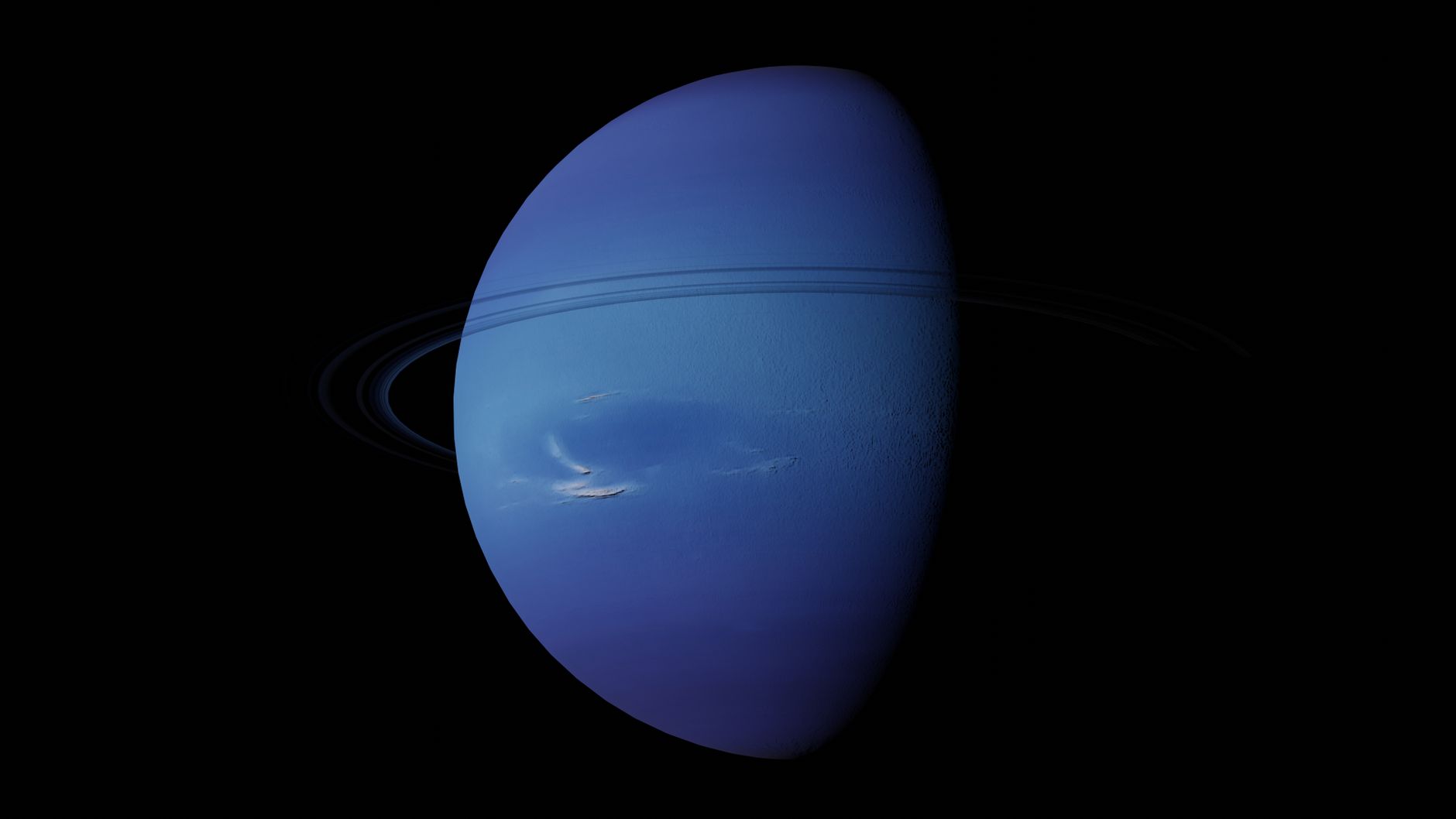
Most planets we see in space are dark. They shine only because they reflect light from a nearby star, the way the Moon glows with borrowed sunlight. GJ 504b is different. It produces its own light because it is still hot from the violence of its birth, radiating a faint magenta glow that earned it the Pink Planet name when it was first imaged in 2013.
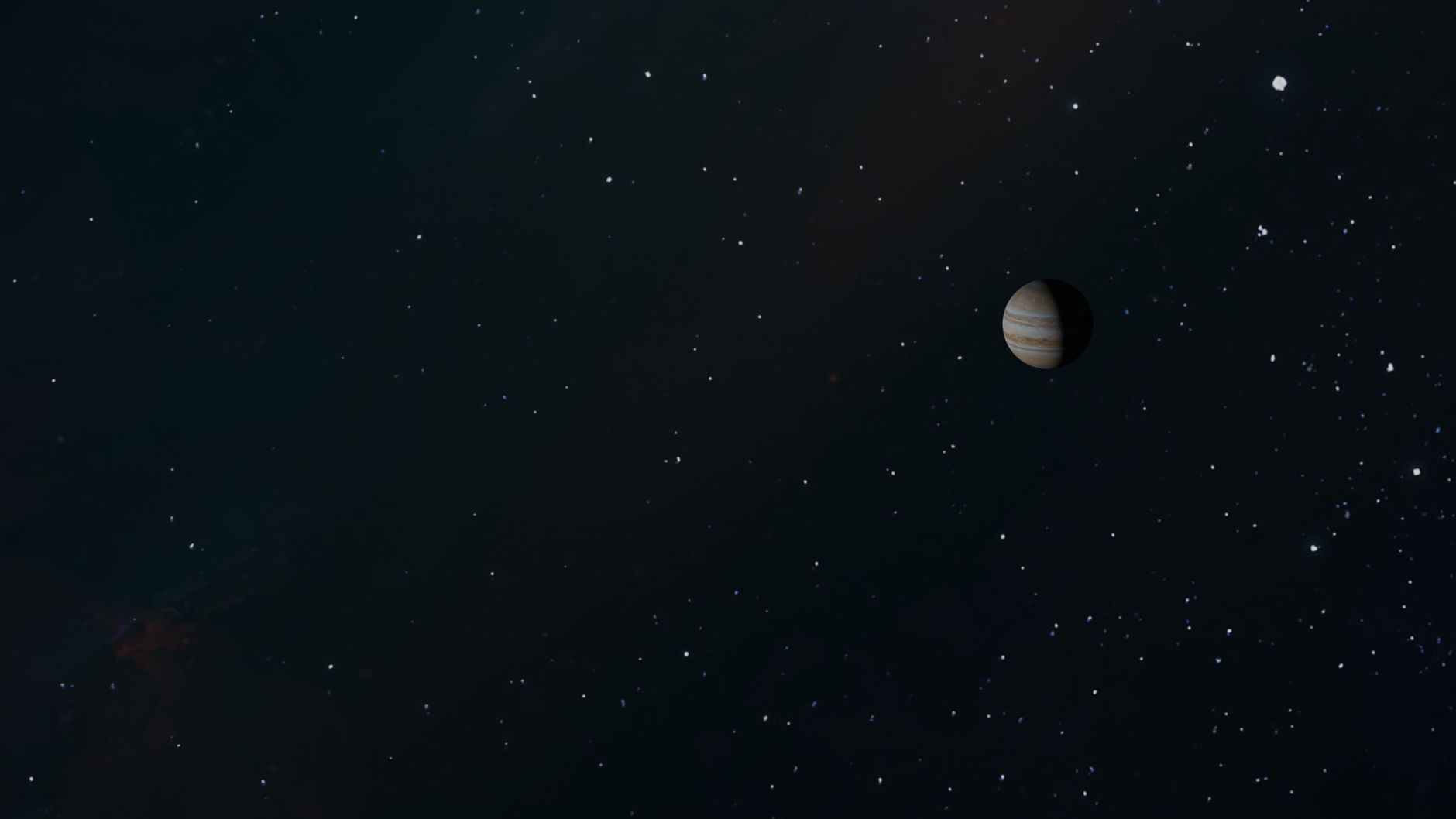
That discovery was its own milestone. A team using the Subaru Telescope in Hawaii captured GJ 504b directly — an actual point of light next to its star, not just a wobble or a shadow in the data. Direct imaging of a planet-sized object is extraordinarily hard, because the host star drowns it in glare. The Pink Planet stood out partly because it orbits so far from its star, at roughly 43.5 astronomical units, comparable to the distance from our Sun out past Pluto.
What Webb actually saw
The new work comes from a team led by Aneesh Baburaj, a postdoctoral researcher at Northwestern University. Using JWST, they captured the Pink Planet's faint light for only about two hours and spread it into a spectrum — essentially a barcode of the chemistry in its atmosphere.
That barcode lit up with familiar ingredients:
- Water vapour
- Methane
- Carbon dioxide
- Ammonia
These are the kinds of molecules you'd expect in the cool, gassy envelope of a giant world. But the numbers refused to add up. The models simply could not reproduce the spectrum the telescope was seeing — until the researchers added one more ingredient that nobody had needed before for an object like this.
The salt that solved the puzzle
The missing piece was clouds made of salt. When the team folded salt clouds into their atmospheric model, the spectrum finally clicked into place. Their best fit points to chloride salts, such as potassium chloride, and possibly sulfide salts like manganese sulfide, condensing high in the atmosphere and shaping the light that reaches us.
This matters more than it sounds. Clouds are not all the same across the universe — they form from whatever happens to condense at a given temperature. On Earth, that's water. On Jupiter, it's ammonia. On scorching worlds that run thousands of degrees hot, clouds can be made of vaporised rock, or silicates. The Pink Planet sits in an awkward gap: too warm for tidy water clouds, too cool for clouds of molten rock.
Salt clouds are the missing middle. They are exactly what theory predicts should fill that temperature range, and now there is real evidence of them being decisive in a world's appearance. What had been a footnote in atmospheric models turned out to be the headline.
Not quite a planet, not quite a star
Here is where GJ 504b gets genuinely slippery. When it was first found, astronomers thought it might be around four times the mass of Jupiter — a clean, if unusually distant, gas giant. But reassessing the system pushed that estimate dramatically upward, to roughly 25 times the mass of Jupiter.
That number drops it squarely onto one of the blurriest borders in astronomy: the line between a giant planet and a brown dwarf. Brown dwarfs are sometimes called failed stars — objects too heavy to be planets but too light to ignite the hydrogen fusion that powers real stars. At 25 Jupiter masses, GJ 504b could plausibly be filed under either label, and which one it deserves depends on how it was born.
If it formed the way planets do, gradually building up in a disk of gas and dust around its star, it's a planet. If it collapsed directly out of a cloud of gas the way stars do, it leans brown dwarf. The salty clouds don't settle that argument, but the detailed chemistry Webb is now able to read gives researchers a sharper tool to eventually tell the difference.
Cool enough to be readable
Part of why GJ 504b is such a useful target is that it is, by the standards of these objects, cold. Its temperature sits around 290 degrees Celsius (about 550 degrees Fahrenheit) — blistering by human standards, but mild compared with the many freshly formed worlds that glow at over a thousand degrees.
That relative coolness comes down to age. Giant worlds are at their hottest right after they form and then slowly radiate that heat away over billions of years. The Pink Planet is estimated to be somewhere between 2.5 and 4 billion years old, which fits a world that has had time to cool into this strange, salt-clouded state. A cooler atmosphere is also a more chemically complex one, which is precisely why salts get a chance to condense rather than staying vaporised.
Why this discovery punches above its weight
It would be easy to file this under "interesting but distant." It deserves more. Every gas giant and brown dwarf we've studied has forced astronomers to model clouds they couldn't directly confirm, and salt clouds were long predicted but never shown to be the linchpin of an object's spectrum. The Pink Planet changes that.
Getting the clouds right is not a niche concern. Clouds control how much light escapes a world, how its temperature is distributed, and how we interpret everything else we measure about it. If we misread the clouds, we misread the planet. Pinning down salt clouds on GJ 504b sharpens the models that scientists will apply to hundreds of other worlds, including the long-term goal of reading the atmospheres of smaller, potentially habitable planets.
There is also something simply arresting about the picture itself. A magenta giant, far from its star, still warm from its own making, wrapped in clouds of salt — a place that fits no neat category, found by patient observers first with a telescope on a Hawaiian mountaintop and now with one parked a million miles from Earth. The universe keeps refusing to be ordinary, and the Pink Planet is one of its better arguments.
For now, GJ 504b stays exactly what it has always been: a world that astronomers struggle to name, glowing pink, raining the question of what it really is — with salt in the air.