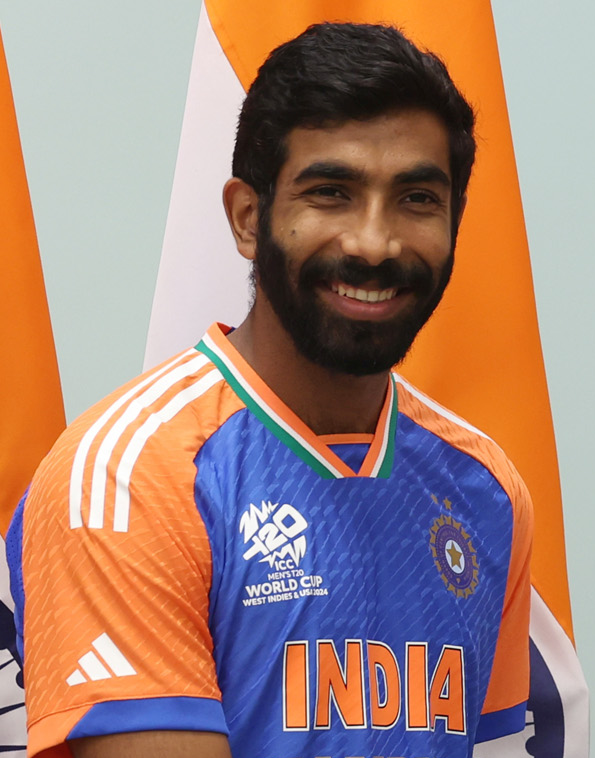
Photo: Shahanadg · CC BY-SA 4.0 / Wikimedia Commons
Person of the Day: Sachin Bansal, From a ₹4 Lakh Bookstore to Fintech
When two young engineers rented a flat in Bengaluru's Koramangala in 2007 and started selling books online, almost nobody believed Indians would type in their card details and wait for a parcel. One of those engineers was Sachin Bansal, and the venture they bootstrapped on roughly ₹4 lakh became Flipkart, the company that taught a country how to shop on the internet. Today, having handed that chapter to history, he is busy building something arguably harder: a financial-services group meant to put loans, insurance and investments inside everyone's phone.
This Person of the Day profile traces how Sachin Bansal went from a curious computer-science student to one of the most recognisable figures in Indian technology, and why his second act may matter as much as his first.
The Chandigarh boy who loved problems
Born on 5 August 1981 in Chandigarh, Bansal was the kind of student who treated tough exams as puzzles rather than hurdles. He cracked the IIT entrance with an All-India rank of 49, a number that opened the door to the Indian Institute of Technology, Delhi, where he studied Computer Science and Engineering and graduated in 2005.
Those campus years did more than hand him a degree. They gave him a network of equally restless peers and an instinct for building things that work at scale. It was at IIT Delhi that he met Binny Bansal, a batchmate who shared no family ties but plenty of ambition. The two would later turn that friendship into one of India's defining business partnerships.
Learning the trade at Amazon
Before he ever ran a company, Bansal learned how a great one operates. After a short early stint at a technology services firm, he joined Amazon in 2006 as a software engineer. Working inside the global e-commerce machine showed him both the engineering behind online retail and the gaps that a homegrown player could fill in India.
He noticed the obvious problem: India had millions of curious buyers but almost no trustworthy way to shop online, no reliable logistics, and deep scepticism about paying in advance. Rather than wait for someone else to solve it, he and Binny quit their jobs to try.
Flipkart: a bookstore that rewired Indian retail
In October 2007, the pair launched Flipkart as an online bookstore. The early days were unglamorous. They personally packed orders, delivered books, and stood outside bookshops handing out flyers. Their bet was that if they nailed the experience, selection and delivery, trust would follow.
Flipkart's most important contributions were not flashy features but quiet fixes to Indian-specific problems. The company popularised:
- Cash on delivery, which let wary first-time buyers pay only when the parcel arrived
- A serious investment in its own supply chain and logistics, eventually spun into Ekart
- Big, festival-style sale events that turned online shopping into a national habit
From books, Flipkart expanded into electronics, fashion, smartphones and almost everything else. As CEO from the start until 2016, and then as Executive Chairman until 2018, Bansal steered the company through wave after wave of fundraising and fierce competition. By the time of his exit, Flipkart was valued at around $20 billion and stood as the country's largest homegrown e-commerce player.
The Walmart deal and a clean exit
The defining moment came in 2018, when American retail giant Walmart acquired a controlling stake in Flipkart in one of the largest deals in Indian startup history. Bansal sold his holding and stepped away from the company he had nurtured for over a decade.
That exit turned the bootstrapped founder into a billionaire and, just as importantly, gave him the freedom to chase a new problem. Many founders would have settled into investing and advisory roles. Bansal chose to start again from scratch.
Navi: trying to do for finance what Flipkart did for shopping
Late in 2018, Bansal set up an investment vehicle and then co-founded Navi Technologies with Ankit Agarwal. The thinking was familiar: just as Indians once distrusted online shopping, millions still found loans, insurance and investing intimidating, paperwork-heavy and slow. Navi's pitch was simplicity, an app where a personal loan, a home loan, health insurance, mutual funds or a UPI payment were all a few taps away.
Navi built or acquired the regulated pieces it needed, including a non-banking finance company that now sits at the centre of its lending business. The group leaned hard into technology and a direct-to-customer model, keeping the experience mobile-first and the approvals quick.
The results have been striking on the payments side. After launching its UPI offering, Navi climbed rapidly up the rankings and became one of India's top five UPI apps, processing well over a hundred million transactions a month and overtaking some far older, deep-pocketed rivals. For a company that entered payments late, that ascent is a measure of how quickly a clean app can win users.
What his journey actually teaches
Bansal's career is often reduced to one headline, the Flipkart founder who sold to Walmart. The more useful story is about temperament. A few threads run through both of his big ventures:
- Solve the trust problem first. Cash on delivery for shopping, instant transparent approvals for finance, both attacked the same hesitation in Indian customers.
- Own the hard infrastructure. He invested in logistics at Flipkart and in regulated financial entities at Navi rather than renting them.
- Be willing to start over. Walking away from a $20-billion company to bootstrap a fintech from zero is a rare kind of confidence.
Now operating as Navi's Executive Chairman, with a professional CEO running day-to-day operations, Bansal occupies the role of the long-term builder rather than the firefighter. His ambition for Navi is openly enormous, and whether it gets there will take years to judge.
What is already settled is his place in the story of Indian technology. A boy from Chandigarh who liked solving problems helped convince a billion people that the internet was safe to shop on, and is now trying to make formal finance feel just as easy. For a generation of founders who grew up watching Flipkart's rise, Sachin Bansal remains proof that the biggest companies often start with two people, a rented flat, and a problem nobody else wanted to fix.