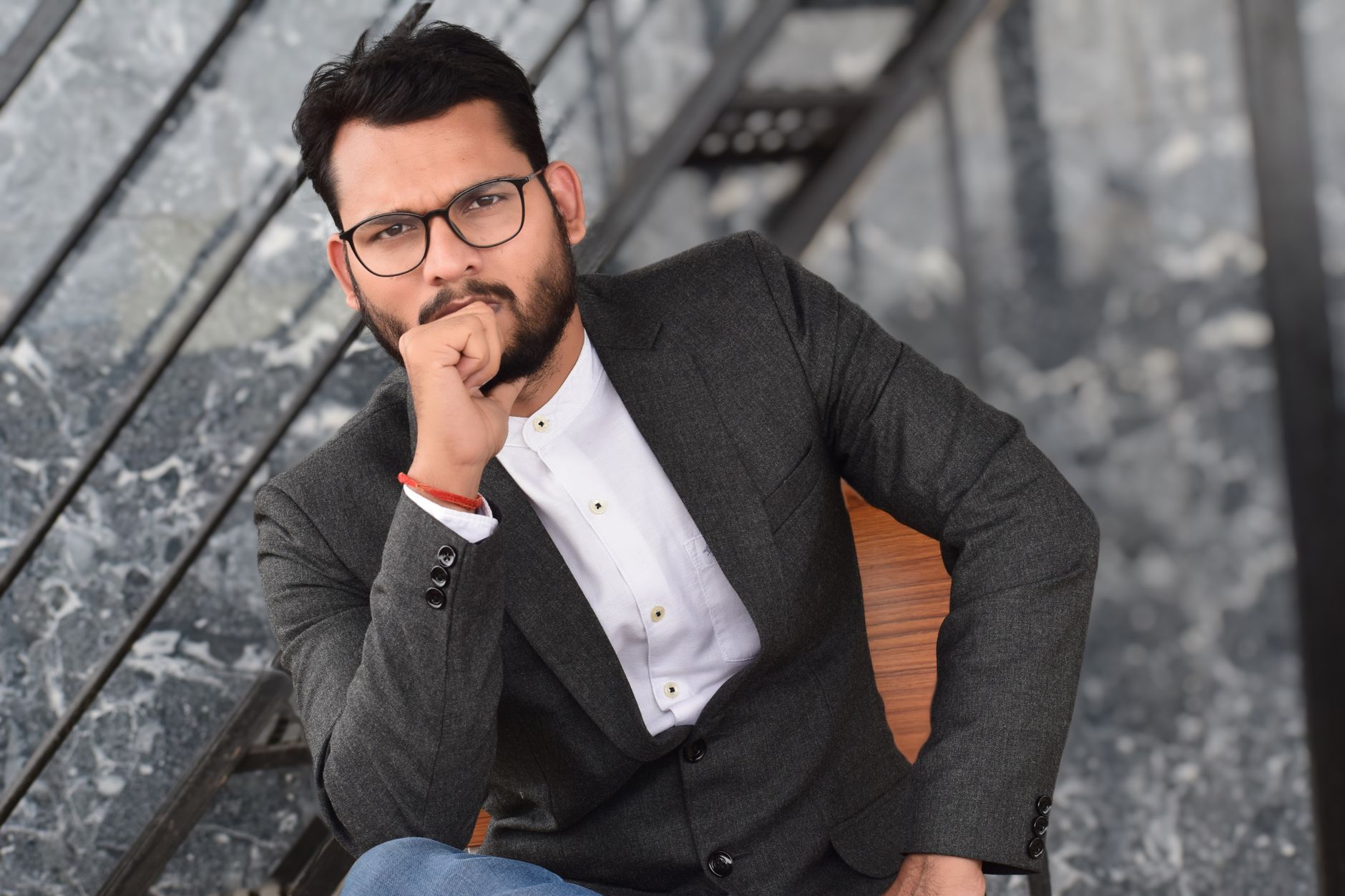
Photo: Aathif Aarifeen / Pexels
Person of the Day: Deepinder Goyal, From Bain Cubicle to Eternal
It started with a queue. Sometime around 2008, a young consultant at Bain & Company in Delhi kept watching colleagues huddle over dog-eared paper menus to decide where lunch would come from. Most people would have shrugged. Deepinder Goyal photographed the menus, put them on an internal page, and watched the traffic climb. That small fix grew into one of India's most-used apps and a company now worth tens of billions of dollars.
This is a story about persistence more than genius — a Punjab-born engineer who turned an everyday annoyance into a business that changed how millions of Indians eat, shop and step out. As our Person of the Day, Deepinder Goyal offers a clean case study in spotting a real problem early and refusing to let go of it.
The student who almost didn't make it
Goyal's beginnings were ordinary, which is part of what makes the climb worth telling. He grew up in Muktsar, Punjab, where both his parents were teachers, and his early school record was nothing remarkable. By his own telling in later interviews, he repeated years and was far from a guaranteed topper.
What changed things was a decision to take preparation seriously. He cracked the entrance exam and reached IIT Delhi, graduating in 2005 with a degree in Mathematics and Computing. The discipline of that course — equal parts logic and code — would later show up in how he ran a data-heavy consumer company.
After IIT he joined Bain & Company as a management consultant. It was a prestigious, well-paid seat, the kind most graduates would settle into for years. Goyal lasted long enough to notice the menu problem and then to do something about it.

FoodieBay, and the leap out of a safe job
In 2008, Goyal and his Bain colleague Pankaj Chaddah launched FoodieBay, a website that digitised restaurant menus and listings across Delhi NCR. The idea was simple and the timing was right: smartphones were arriving, eating out was booming, and nobody had built a clean, searchable directory of where to eat.
The site caught on faster than expected. Goyal quit his consulting job to run it full-time, betting a stable career on a website that earned nothing yet. In 2010, the founders renamed it Zomato — a shorter, catchier word with no baggage, easier to scale beyond food listings and beyond India.
That rename mattered more than it looked. FoodieBay sounded like a local guide. Zomato sounded like a brand that could travel, and over the next few years it did, expanding city by city and eventually testing markets abroad.
From restaurant guide to delivery giant
Zomato's first life was as a discovery platform — reviews, ratings, menus, photos. The bigger turn came when it moved into food delivery, putting it head-to-head with well-funded rivals in one of the most expensive battles in Indian startup history.
Delivery is a brutal business: thin margins, heavy discounts, a small army of riders to coordinate. For years Zomato burned cash chasing scale, and plenty of observers doubted it would ever make money. Goyal kept pushing on logistics, technology and unit economics, treating each loss-making quarter as a problem to engineer through rather than a verdict.
A few milestones marked the rise along the way:
- 2011-2012: Early recognition, including an ET Startup of the Year award and a Young Business Leader honour, as Zomato became a household name.
- 2020: IIT Delhi named him a Distinguished Alumnus, a nod from the institution that shaped him.
- 2021: Zomato's market debut, a watershed moment for the entire ecosystem.
The IPO that opened a door for everyone
In July 2021, Zomato listed on the stock exchanges, becoming the first of India's big new-age consumer startups to go public on home soil. The float was heavily oversubscribed and the stock jumped on debut, and for a generation of founders it carried a message: an Indian internet company that had never turned a profit could still command a serious public valuation.
That listing reset expectations. It told venture investors, employees holding stock options and future entrepreneurs that there was a credible path from loss-making upstart to publicly traded company without relying on a foreign exit. Several quick-commerce and consumer-tech IPOs that followed owe something to the trail Zomato cut.
Goyal handled the transition to public-company life by leaning into transparency, writing candid shareholder letters and openly discussing where the business was losing money and why. Over the following years the group strung together profitable quarters, answering the doubters who had written it off.
Blinkit and the quick-commerce bet
If food delivery built the brand, the 2022 acquisition of Blinkit for roughly $568 million may turn out to be Goyal's sharpest call. Quick commerce — groceries and essentials delivered in minutes from dense local warehouses — was unproven and cash-hungry when he bought in.
Within a couple of years, Blinkit had become one of the group's crown jewels. By 2024, analysts were valuing the quick-commerce arm at more than the original food business, a remarkable reversal that vindicated a deal many had questioned at the time. It captured something about how Goyal operates: place the bet while it is still contrarian, then run hard at the execution.
The group kept widening its footprint, adding District, an app for dining out, events and entertainment bookings, to sit alongside food delivery and Blinkit. The portfolio was no longer just about getting dinner to your door.
Eternal, and a planned step back
In 2025, the listed parent company dropped the Zomato name at the corporate level and rebranded to Eternal Limited. The food app stayed Zomato; the holding company became Eternal, an umbrella covering the food, grocery and going-out businesses. By mid-2025 the group was valued at roughly ₹2.35 lakh crore, in the region of $25-27 billion — extraordinary distance from a website of photographed menus.
Then came a move that surprised many: in early 2026 Goyal announced he would step down as CEO and managing director of Eternal, effective 1 February 2026. Blinkit's Albinder Dhindsa was named to succeed him, while Goyal stayed on as vice chairman, focusing on long-term strategy, leadership and governance rather than day-to-day operations.
Stepping back at the top of your game is rare among Indian founders. Framed positively, it reads as a founder building an institution that can outlast him — handing operational control to a trusted lieutenant while keeping a hand on the company's direction.
Why his journey still resonates
Strip away the valuations and the headlines, and the throughline is consistent. Goyal noticed a tiny inconvenience, built the simplest possible fix, and then stayed with the idea through years when it made no money and plenty of people expected it to fail.
For anyone starting out in India today, the takeaways are practical: real businesses often begin as a hack to solve a problem you personally feel; renaming and reframing can unlock far bigger ambition; and surviving the unglamorous middle years matters more than the launch. From a teacher's son in Muktsar to the vice chairman's chair at a company worth tens of billions, Deepinder Goyal built it one stubborn quarter at a time — and that, more than any single milestone, is what makes his career worth studying.