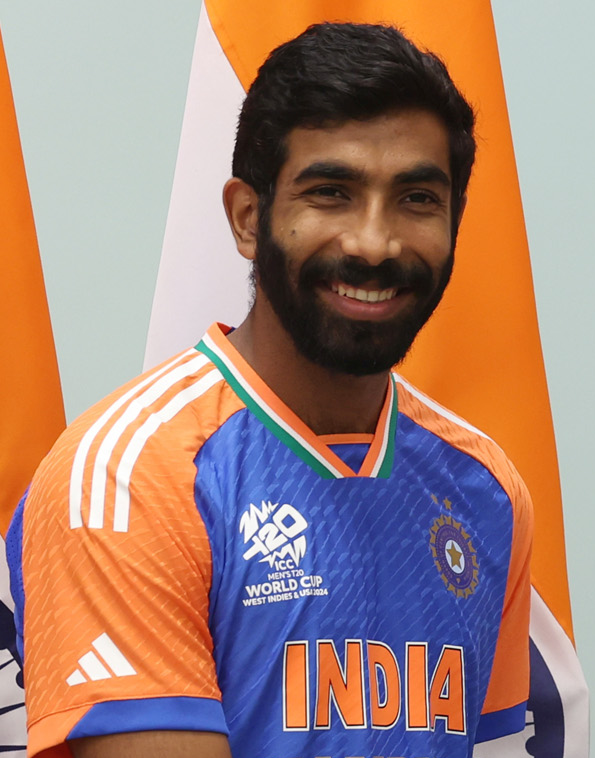
Photo: Times Of India · CC BY 3.0 / Wikimedia Commons
Person of the Day: Sourav Ganguly, the Captain Who Taught India to Win Away
He walked out at Lord's in June 1996 as a 23-year-old with a point to prove, and walked off with a century that rewrote how India saw itself abroad. Sourav Ganguly scored 131 on Test debut, added another hundred in his very next match, and announced a left-hander who could drive through the off side with a grace that earned him the nickname many still use. This Person of the Day profile follows a career that runs from the maidans of Kolkata to the boardrooms of world cricket, told entirely through the public work and the wins.
A late start and a famous arrival
Ganguly's path to the top was not smooth. He had played a single one-day international back in 1992 and then waited years for another chance, working on his game in domestic cricket for Bengal until the selectors could no longer look away. When the recall came on the 1996 tour of England, he made it count in the most emphatic way possible.
The twin scenes at Lord's and Trent Bridge did more than secure his place. They reframed a player once doubted into someone who could perform under the biggest spotlight in the sport. From that point his left-handed strokeplay, particularly anything pitched outside off stump, became one of the most watchable sights in the game.
The architect of one-day batting
Through the late 1990s and early 2000s, Ganguly formed one of the most prolific opening partnerships in One-Day International history alongside Sachin Tendulkar. The two routinely gave India fast starts and stacked up record stands, turning the top of the order into a position of attack rather than caution.
By the time he was done, Ganguly had piled up more than 11,000 ODI runs and over 7,000 Test runs, with centuries home and away. He was, for a stretch, among the most destructive 50-over batsmen in the world, equally capable of pacing a chase or tearing into bowling from the first over. His numbers alone would have made for a fine career. What followed lifted him into a different bracket.
The captaincy that changed Indian cricket
Ganguly took over the captaincy in 2000 at a difficult moment for the team. He inherited a side ranked around eighth in Tests and, over the next five years, dragged it close to the top of the world game. That climb remains one of the steepest improvements any captain has overseen.
What set him apart was a willingness to win away from home, in conditions that had long troubled Indian sides. Drawn series and rare victories in Australia, England and Pakistan became markers of a team that no longer accepted being second best on foreign soil. He captained India in 49 Tests for 21 wins and 146 ODIs for 76 wins, both among the strongest captaincy records the country had seen.
His trophy cabinet as leader includes:
- A share of the 2002 ICC Champions Trophy, the final washed out and the title split with Sri Lanka
- The final of the 2000 Champions Trophy
- A run to the 2003 World Cup final in South Africa, where India fell only to a dominant Australia
In that 2003 campaign he was at his peak, becoming one of the few players to score three centuries in a single World Cup edition and the first Indian to make a hundred in a knockout match. He led from the front in the truest sense.
Backing youth before it was fashionable
Ganguly's most lasting contribution may be the players he trusted. He pushed for and protected a generation of young match-winners who went on to define Indian cricket for the next decade and beyond. Future captains and World Cup heroes were given long ropes and clear roles under him.
He understood that talent needed belief as much as runs. By insisting that selectors back potential and giving newcomers the security to fail and learn, he helped build the spine of a team that later climbed to number one in Tests and won global titles. Much of that success was seeded in dressing rooms he ran.
A comeback that proved the temperament
Leadership ended for him in the mid-2000s, and a difficult phase followed when he was left out of the side. Rather than fade away, Ganguly went back to domestic cricket, scored heavily, and forced a return on merit. His recall in late 2006 and the strong run of Test form that followed showed the same stubbornness that had marked his whole journey.
He finally retired from international cricket in 2008, on his own terms, after a home Test series against Australia. He later played in the early seasons of the Indian Premier League, captaining the Kolkata franchise and remaining a draw for crowds long after his prime.
From the middle to the boardroom
The second innings has been just as busy. Ganguly moved into television commentary, where his reading of the game found a new audience, before stepping into administration. He served as president of the Cricket Association of Bengal, putting his name behind the structures that produce the next generation.
In 2019 he became president of the Board of Control for Cricket in India (BCCI), the most powerful cricket body in the world, a post he held until 2022. Running the finances and fixtures of Indian cricket placed him at the centre of the global game in a very different way from his batting days, and he brought a player's instinct to the job.
Where he stands in 2026
Ganguly remains one of the busiest figures in cricket. He chairs the ICC Men's Cricket Committee, a role he has held since the early 2020s and to which he was reappointed for a further term, giving him a direct voice in how the international game is shaped and reformed.
He has also returned as president of the Cricket Association of Bengal and works at franchise level with JSW Sports, holding senior cricket roles across its Capitals teams in India, South Africa and the UAE. In the 2026 SA20 season he coached Pretoria Capitals to a runners-up finish, and reports indicate an expanded leadership role with Delhi Capitals in the seasons ahead.
That range, from elite player to administrator to coach and committee chair, is rare. It explains why his influence stretches well beyond the runs in the record books.
Why his journey still resonates
Ganguly's story works because it is built on resilience rather than ease. A delayed start, a famous arrival, a captaincy that lifted a nation's self-belief, a setback, a comeback, and then a third act in the corridors of the sport. Each stage was earned.
For young players from outside the traditional power centres, he stands for the idea that ambition and self-belief can travel. He took an Indian team that had learned to settle and taught it to expect victory anywhere in the world. Decades on, that mindset is simply how India plays, and a fair share of the credit belongs to the boy from Kolkata who once turned a debut at Lord's into a statement of intent.