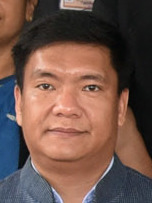
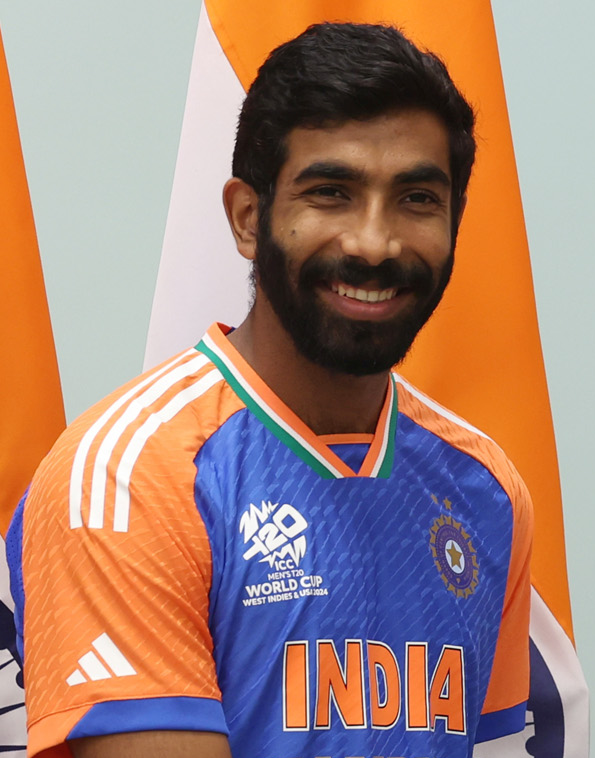
Photo: Ministry of Social Justice and Empowerment · GODL-India / Wikimedia Commons
Person of the Day: Conrad Sangma, Wharton to Meghalaya's CM
Most political careers in India trace back to a courtroom, a campus union or a family seat handed down quietly. Conrad Sangma's runs through a Wharton lecture hall and a finance MBA in London. The man who today serves as Chief Minister of Meghalaya and national president of the National People's Party (NPP) could have built a corporate life anywhere. He chose the Garo Hills instead, and the journey from that choice is one of the more instructive stories in contemporary Indian public life.
From St. Columba's to Wharton and London
Conrad Kongkal Sangma grew up in a household where politics was the family trade, but his own preparation pointed elsewhere. He studied at St. Columba's School in Delhi, then headed abroad for a degree in entrepreneurial management from the Wharton School at the University of Pennsylvania, one of the most competitive business programmes in the world. He followed it with an MBA in finance from Imperial College London.
That training matters because it shaped how he later governed. Where many entered politics through ideology or agitation, Sangma arrived with the vocabulary of budgets, balance sheets and enterprise. It is no accident that finance and economic targets became recurring themes once he reached office.
A campaign manager before a candidate
Sangma did not parachute into a safe seat. His first real political role was unglamorous: campaign manager for his father, the late P.A. Sangma, the former Lok Sabha Speaker, during the late 1990s. He learned the machinery of elections from the ground up, organising, persuading and counting before he ever asked voters to count on him.
When he finally stood for office himself, the result was humbling. In 2004 he contested the Selsella assembly by-election and lost by just 182 votes. For a young man with elite degrees, it was a sharp early lesson that credentials do not substitute for local trust. He stayed, kept working the constituency, and came back.
Breaking through in 2008
The rebuild paid off in the 2008 Meghalaya Assembly election, when Sangma won from the Selsella constituency. Almost immediately he was handed serious responsibility, taking charge of heavyweight portfolios including Finance, Power, Tourism, General Administration and IT. He became the youngest finance minister the state had seen, and reportedly presented his first state budget within days of taking the job.
When his party moved to the opposition benches, Sangma took on the role of Leader of the Opposition in the Meghalaya Legislative Assembly from 2009 to 2013. It was a stretch that taught him the other half of politics, holding a government to account rather than running one. He lost his seat in the 2013 election, another setback that, like 2004, he treated as a pause rather than an ending.
2016: a party and a record margin
The turning point came in 2016. After the death of his father earlier that year, Sangma was elected national president of the National People's Party, inheriting the leadership of a party his father had built. The NPP is not a small footnote in Indian politics. It is the only recognised national party headquartered in Northeast India, a distinction that gives the region rare standing in a system long dominated by parties rooted in the Hindi belt and the south.
Months later he contested the by-election to the Tura Lok Sabha seat and won it by a margin reported at around 1.92 lakh votes, an emphatic comeback for a politician who had twice tasted defeat. He served as Member of Parliament from Tura between 2016 and 2018, taking the Meghalaya story to the floor of the national legislature.
The youngest Chief Minister Meghalaya has had
The biggest milestone arrived on 6 March 2018, when Sangma was sworn in as Chief Minister of Meghalaya at the age of 40, the youngest person to hold the office in the state's history. Leading a coalition government, he managed the delicate task that defines politics in the Northeast: balancing tribal interests, regional pride and the demands of governance.
Voters renewed their trust. He was re-elected to a second term as Chief Minister on 7 March 2023, and he currently represents the South Tura constituency. Winning back-to-back terms is far from routine in a state where coalitions are fragile and anti-incumbency runs strong, which makes the second mandate a meaningful marker of his standing.
What he has tried to build
Sangma's tenure has leaned heavily on the economic instincts visible in his education. His administration set an ambitious benchmark of building a roughly $10 billion state economy by 2028, framed around a target of double-digit annual growth. Whether or not the figure is hit, setting a hard number is itself a departure from vague promises, and it has anchored the government's planning conversations.
A few threads stand out in his work:
- Sports as policy, not afterthought. His government launched Meghalaya's first dedicated Sports Policy and invested in grassroots sporting infrastructure, a notable move in a state with deep football and archery cultures.
- Tourism and the environment. Meghalaya's living root bridges, waterfalls and clean villages have been pushed as eco-tourism assets, and the state has drawn recognition for sustainable tourism efforts.
- Governance and public health. The administration has picked up awards in areas like public health innovation and clean governance, reflecting an emphasis on delivery and digital systems.
Beyond the chief minister's chair, Sangma chairs the PA Sangma Foundation, named for his father, which works in education and the environment and runs colleges in rural Meghalaya. It is an extension of the same idea that runs through his career: that opportunity in the Northeast should not require leaving it.
Why his journey resonates
Strip away the offices and the through-line is consistent. Conrad Sangma is a politician who failed early, lost more than once, and treated each defeat as information rather than verdict. He brought a businessman's discipline to a region often discussed in Delhi only during election season, and he gave the Northeast a genuinely national platform through the NPP.
For a generation of young people across the hill states watching from far outside the traditional power centres, that arc carries a simple message. A 182-vote loss is not the end of a story. Sometimes it is the first chapter.