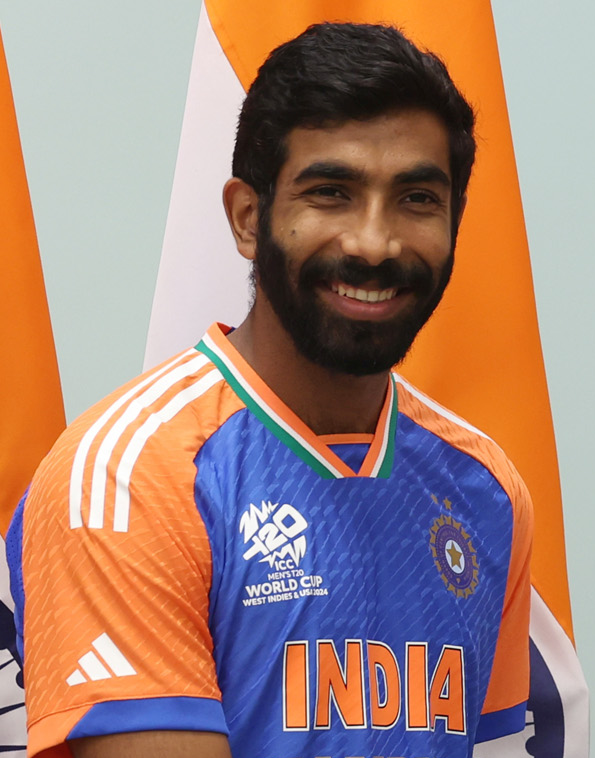
Photo: Ministry of Social Justice and Empowerment · GODL-India / Wikimedia Commons
Person of the Day: Conrad Sangma's Climb to the Top
Few political journeys in India blend an Ivy League boardroom education with the grassroots grind of a hill state quite like this one. Person of the Day: Conrad Sangma has travelled from the lecture halls of the Wharton School to the Chief Minister's chair in Shillong, and along the way he has rewritten what a regional party from the Northeast can achieve on the national stage. His story is one of preparation meeting opportunity, and of a young leader who chose to build at home rather than abroad.
From Tura to the Wharton School
Conrad Kongkal Sangma was born on 27 January 1978 in Tura, the bustling hub of the West Garo Hills in Meghalaya. He grew up largely in Delhi, where he attended St. Columba's School, before setting off for one of the most demanding business educations in the world.
He earned an undergraduate degree in business administration, specialising in entrepreneurial management, from the Wharton School of the University of Pennsylvania in the United States. He followed that with an MBA in finance from Imperial College London. That academic grounding in finance and enterprise would later become a defining feature of how he approached governance, with budgets, balance sheets and development economics treated as tools rather than abstractions.
What stands out is the choice he made next. With credentials that could have opened doors in global finance, he turned toward public life in his home state, a region that often struggles to retain its brightest young talent.
Learning the ropes in the late 1990s
Sangma's entry into politics was hands-on rather than ceremonial. In the late 1990s he worked as a campaign manager for his father's electoral efforts, absorbing the mechanics of organising voters, reading constituencies and running a ground operation across difficult terrain.
His own first contest, in 2004, was a humbling one. Standing for a seat in the Garo Hills Autonomous District Council, he lost by a razor-thin margin of just 182 votes. Rather than discouraging him, the near miss became an early lesson in resilience and in the unforgiving arithmetic of local elections.
That apprenticeship period matters. It explains why, when bigger responsibilities arrived, Sangma already understood the texture of grassroots Meghalaya politics from the bottom up rather than the top down.
A finance minister at 30
The breakthrough came in 2008, when Sangma was elected to the Meghalaya Legislative Assembly. He was quickly inducted into the state cabinet and handed a heavyweight set of portfolios that included Finance, Power, Tourism, General Administration, and Information Technology.
In a detail that has become part of his legend, he presented his first annual state budget within about ten days of becoming a minister, drawing directly on his financial training. Taking charge of the state's purse strings while still in his early thirties made him one of the youngest finance ministers in Meghalaya's history.
From 2009 to 2013, he served as Leader of the Opposition in the assembly. That role sharpened a different muscle: holding a government to account, mastering legislative debate, and building a profile as a serious political voice rather than simply an inheritor of a famous name.
Stepping onto the national stage
The year 2016 brought both loss and elevation. After his father's passing earlier that year, Sangma was elected National President of the National People's Party (NPP) in March 2016, taking the reins of an organisation that needed steadying and a clear forward direction.
Later that year he made the leap to Parliament. Contesting a by-election from the Tura Lok Sabha seat, he won by a commanding margin of around 1.92 lakh votes, serving as a Member of Parliament from 2016 to 2018. The thumping verdict signalled that his appeal extended well beyond his family's traditional base.
The national role meant balancing two arenas at once: representing Garo Hills in Delhi while simultaneously building the NPP into a force that could speak for the wider Northeast. It was a stretch assignment, and he grew into it.
Chief Minister of Meghalaya
In March 2018, after the assembly elections produced a fractured verdict, Sangma stitched together a coalition and was sworn in as Chief Minister of Meghalaya on 6 March 2018. He has represented the South Tura constituency in the assembly since then.
Five years later, the voters returned their confidence. In the 2023 Meghalaya assembly election, the NPP emerged as the single largest party with 26 of 60 seats, and Sangma was sworn in for a second term on 7 March 2023. Winning re-election in a state known for volatile, fragmented mandates is no small feat, and it cemented his standing as one of the Northeast's most durable leaders.
As Chief Minister, he has framed his agenda around a structured development vision. His government has placed sustained emphasis on:
- Education and skilling, treated as the foundation of long-term growth
- Healthcare access across remote and rural districts
- Sports infrastructure and youth opportunity
- Entrepreneurship and the rural economy
- Tourism, agriculture and the environment as engines for a green, locally rooted economy
The through-line is recognisable from his Wharton-and-Imperial training: investing in human capital and enterprise, and trying to turn Meghalaya's natural and cultural wealth into sustainable livelihoods.
A first for the entire Northeast
Perhaps the single most striking achievement of Sangma's leadership came on 7 June 2019, when the Election Commission of India granted the NPP national party status. With that recognition, the NPP became the first political party from Northeast India ever to attain national party status.
The milestone carried meaning far beyond party politics. For a region that has often felt distant from India's political centre of gravity, it was a symbolic and practical assertion that a movement born in the hills could earn a pan-Indian standing on its own terms. Sangma himself framed the recognition as an achievement for the entire Northeast, not just his party.
Why his journey resonates
Conrad Sangma's career reads like a deliberate answer to a familiar lament: that young, highly educated Indians take their talents elsewhere. He did the opposite, channelling a world-class finance education back into a state that needed builders.
His trajectory also charts a steady widening of horizons, from a 182-vote local defeat, to running a state's finances, to leading a nationally recognised party, to governing Meghalaya across two terms. Each stage built on the last without skipping the hard, unglamorous middle.
For students in Tura, Shillong and beyond, the takeaway is encouraging and concrete: ambition and education can travel the world, but they can also come home and reshape it. As he continues his second term, the question many in the Northeast are watching is how far the model he has built, of finance-literate, development-focused regional leadership, can stretch in the years ahead.