Photo: Mike Bird / Pexels
Bedford Train Crash Driver Named as Shaun Burton, 60
The driver who died when two trains collided near Bedford has been named as Shaun Burton, a 60-year-old who came to the railway later than most. The Bedford train crash on 19 June 2026 killed Burton at the controls and injured around 100 people, making it one of Britain's most serious rail accidents in years. His family's grief, released through British Transport Police, was short and raw: they said they were devastated by his loss, and turned their thoughts to everyone else caught up in it.
Burton drove the 16:40 Corby to London St Pancras service. According to accounts of the collision, his train ran into the back of a stationary train ahead of it on the same line. He was pronounced dead at the scene. The other people hurt were passengers and crew on both services, scattered across a stretch of track south of the town where a normal Friday evening commute turned into a rescue operation.

Who was Shaun Burton
Friends and colleagues describe a man who found the job he loved in the second half of his working life. Before he stepped into a train cab, Burton spent years behind the wheel of buses and coaches. He qualified as a train driver roughly seven years ago, joining East Midlands Railway and, by every account from his depot, throwing himself into it.
That detail matters because it cuts against the faceless way rail disasters are usually reported. The driver of a passenger train is the last human safeguard on a system built from steel and signals, and Burton was the one in the seat when it failed. The train drivers' union Aslef said his death had left a hole in the lives of his family, friends and colleagues. People who worked alongside him spoke of someone popular at his depot and devoted to the people he shared shifts with.
There is a particular cruelty in how he died. A train driver is trained to bring hundreds of strangers home safely, and the danger to the driver themselves sits up front, in the first carriage, in the direction of travel. When something goes wrong on the line ahead, the cab is the worst place to be.
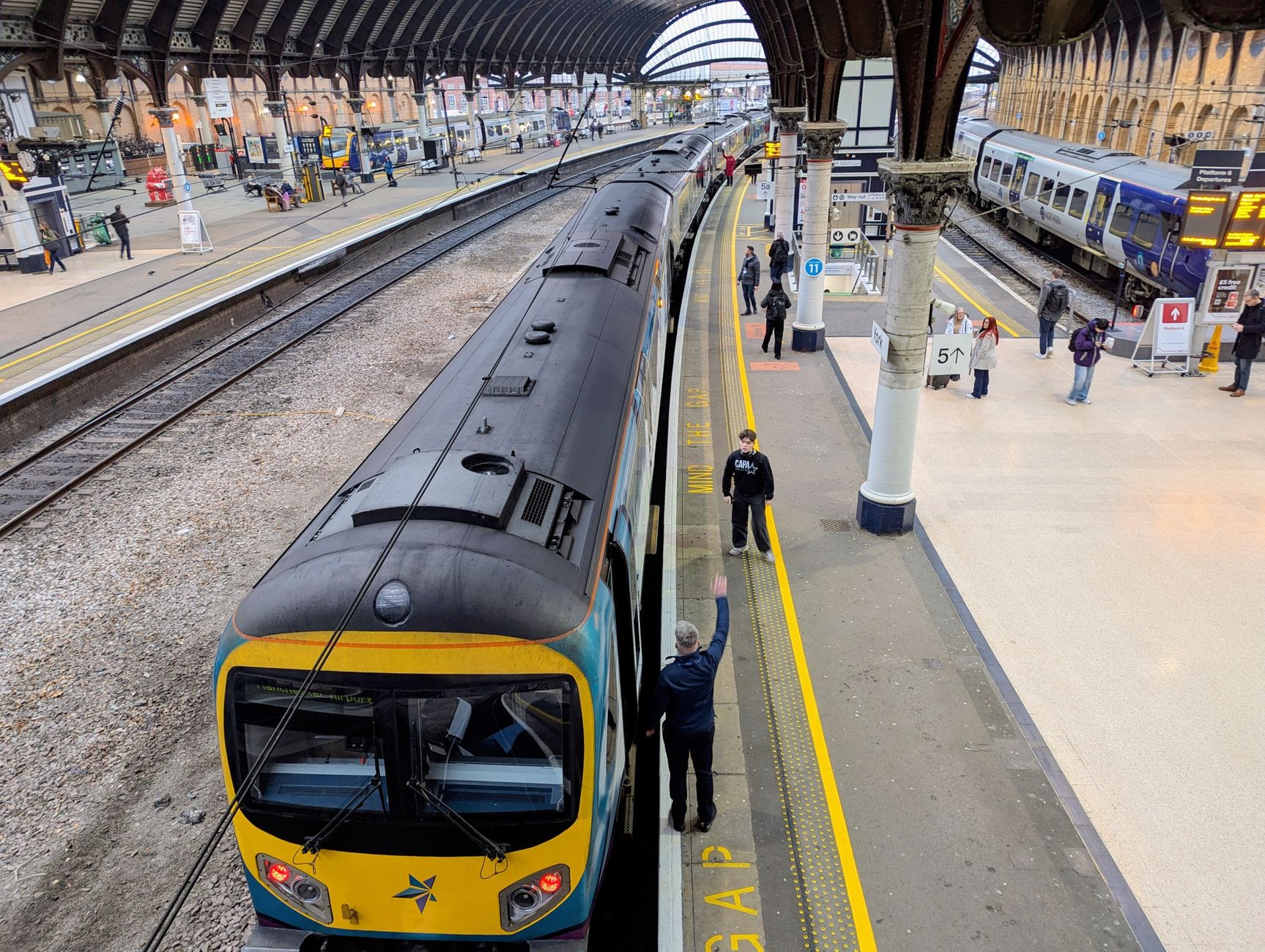
What happened near Elstow
The collision took place at about 17:12 BST on the Midland Main Line, near Elstow, just south of Bedford. Two East Midlands Railway services were involved.
- The 15:50 Nottingham to St Pancras train had come to a stop on the up fast line.
- The 16:40 Corby to St Pancras train, with Burton driving, struck it from behind.
Why the first train was stationary, and why the second was unable to stop short of it, are now the central questions for investigators. A rear-end collision between two trains on the same line is exactly the scenario that modern British signalling is designed to make impossible. Trains are meant to be held apart by signals and automatic protection, with a buffer of empty track between one service and the next. On the evening of 19 June, that separation collapsed.
A response that signalled how bad it was
The scale of the emergency response told its own story before any casualty figures were confirmed. Six air ambulances were sent to the scene, along with around 20 road ambulances and the National Police Air Service. More than 70 firefighters and officers worked the wreckage, cutting people free and moving the injured away from the trackside.
The injury breakdown released afterwards was sobering:
- 11 people with very serious injuries
- 32 people seriously injured
- 57 people with minor injuries
That adds up to roughly 100 casualties from a single rear-end impact, a reminder of how much energy is carried by a train moving at line speed even when the crash looks, from the outside, like one train simply running into the back of another.
Why a crash like this is supposed to be impossible
Britain's railway carries the memory of its worst days in its safety rules. After the Ladbroke Grove disaster in 1999, which killed 31 people when a train passed a red signal and met an oncoming service head-on, the network rolled out the Train Protection and Warning System (TPWS). The idea is blunt and effective: if a train approaches a stop signal too fast, or passes one it should not, the system applies the brakes automatically, taking the decision out of human hands.
For more than two decades, that layer of protection helped make British rail one of the safest in the world. Fatal collisions between passenger trains became extraordinarily rare. So the question hanging over the Bedford crash is not only what went wrong, but why the safeguards built precisely to prevent a rear-end pile-up did not stop this one.
Investigators will be working through several possibilities without leaping to any of them. Among the threads they typically pull on after a collision like this:
- Whether the signalling was displaying and functioning correctly
- Whether TPWS or related protection was working as designed
- The speed and braking of the following train in its final moments
- Why the leading train was stopped where it was
- Any track, equipment or communication failures in the run-up
The investigation ahead
Two bodies have moved in. The Rail Accident Investigation Branch (RAIB), which examines the causes of accidents to make the railway safer rather than to assign blame, has sent inspectors to the site. So has the Office of Rail and Road (ORR), the industry's safety regulator. British Transport Police are running their own inquiries alongside.
These investigations are deliberately slow. The RAIB will recover and download on-train data recorders, examine the signalling logs, inspect the rolling stock and interview those involved before publishing findings. A full report can take many months, sometimes more than a year. An interim bulletin with early factual findings often comes sooner, and it is that first document the rail industry will be watching for.
For East Midlands Railway and the wider network, the stakes go beyond one line. If a fault is found in equipment or procedures used elsewhere, the lessons will ripple across the country. That is the grim logic of rail safety: the system improves by understanding exactly how each disaster was allowed to happen.
What it leaves behind
Naming Shaun Burton turns a statistic back into a person. He was 60, he had switched careers to do a job he wanted, and he was at work on a Friday evening when the line he trusted let him down. The 100 people injured will carry their own recoveries, some of them long. And until the investigators report, the most important question stays open: how, on a railway engineered to keep trains apart, did two of them end up in the same place at the same time.