Photo: Vatsal Bhatt / Pexels
Beyond 36 Gunas: What Really Makes a Couple a Match
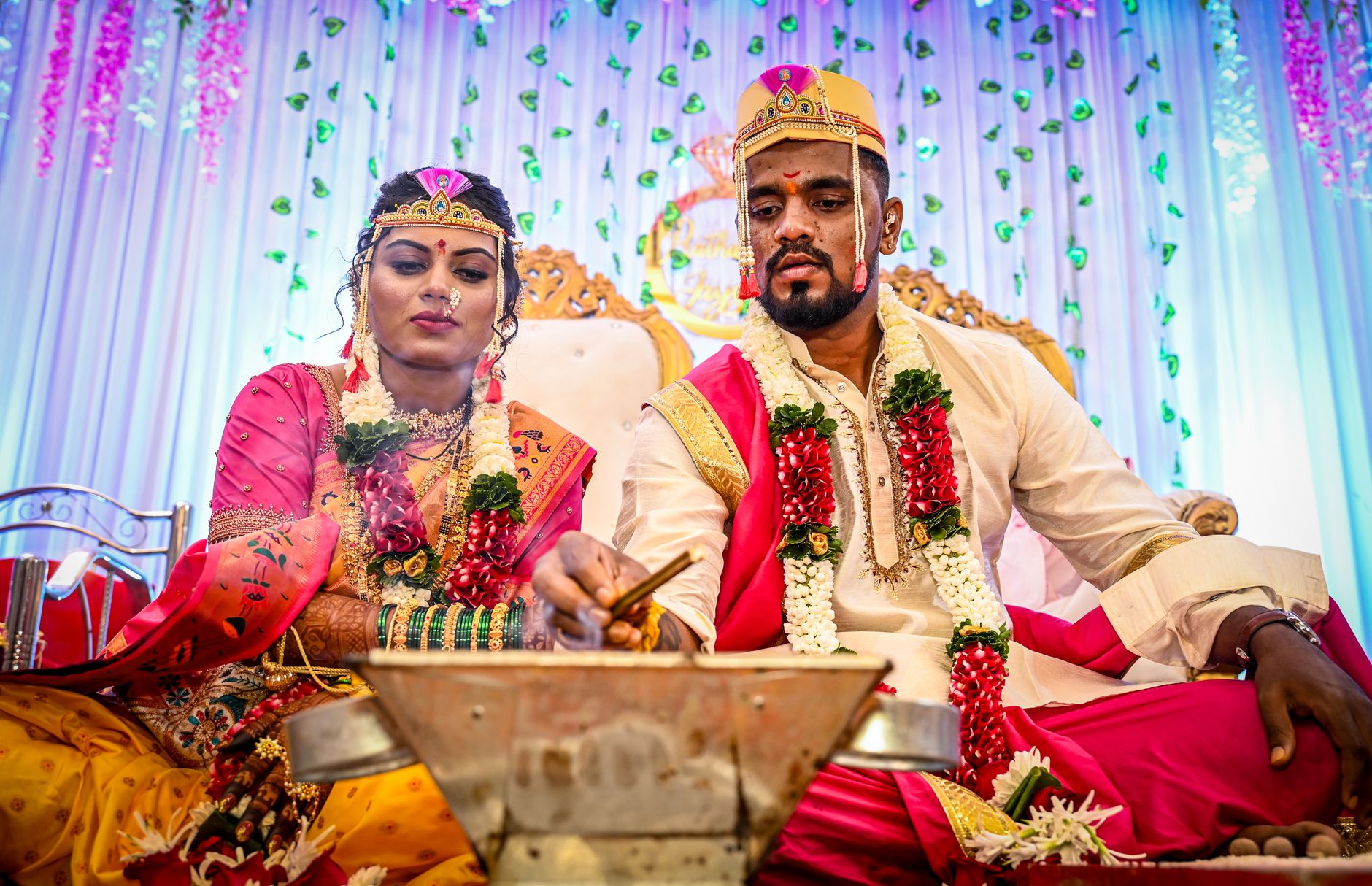
Two of the biggest Indian weddings of 2026 happened within ten days of each other, and both sent the same quiet ripple through family WhatsApp groups across the country: somebody, somewhere, was getting their charts checked. Rashmika Mandanna and Vijay Deverakonda married in a private Udaipur ceremony on February 26, 2026, according to media reports, with a Hyderabad reception soon after. Telugu actor Allu Sirish wed entrepreneur Nayanika Reddy in Hyderabad on March 6, 2026, the same date his brother Allu Arjun married Sneha back in 2011.
Behind the heritage venues and guest lists is a ritual most Indian families still take seriously: matching horoscopes before a marriage. The headline number everyone quotes is the guna milan score out of 36. What far fewer people know is that, to a careful astrologer, that score is closer to a first impression than a final answer. So what actually makes a couple astrologically compatible? It turns out to be a longer conversation than a single tidy figure.
The 36-point score is a starting line, not a finish line
The number most couples fixate on comes from the Ashtakoot system, which compares the bride and groom's birth star (nakshatra) and moon sign across eight categories. Each category carries a weight, and the totals add up to a maximum of 36.
The rough thresholds astrologers use are well established:
- Below 18: usually treated as a weak match that needs deeper review.
- 18 to 24: acceptable, the traditional minimum being 18.
- 24 to 30: considered a strong, comfortable match.
- Above 30: rare, and oddly, not automatically a guarantee of anything.
Here is the part that surprises people. A couple scoring a glowing 32 can still be steered toward caution, while a couple sitting at 20 can be told they are perfectly fine. The score measures compatibility of temperament, instinct and rhythm drawn from the moon's position. It says nothing about the parts of the chart that govern the marriage itself.

Why astrologers look past the number
The limitation is structural. Guna milan reads only nakshatra-based harmony. It does not weigh the strength of the 7th house, the part of the chart that rules partnership and commitment. It does not check the condition of Venus, the planet of love and marriage, or Jupiter, which for a woman's chart is traditionally read as an indicator of the husband. And it ignores the planetary periods, or dasha, that each person will be living through in the early years of the marriage.
That is why a seasoned astrologer will quietly set the score aside and open the full chart. Think of guna milan as the compatibility quiz at the top of a dating profile, and the rest of the analysis as the actual relationship history underneath. One is quick and shareable; the other is where the real signal lives.
The Navamsa chart, where a marriage shows its true face
If there is one tool that separates a casual reading from a serious one, it is the Navamsa or D9 chart. This is a divisional chart, derived by dividing each sign into nine parts, and it is the chart astrologers turn to specifically for marriage.
The traditional framing is simple and a little poetic: the birth chart shows what could happen, the Navamsa shows how it actually unfolds. A union that looks bright in the main chart but cracks in the D9 is read as a relationship that charms early and strains later. A marriage that looks ordinary on the surface but holds firm in the Navamsa is read as the slow-burn kind that deepens with time.
Matchmakers cross-check both partners' D9 charts, paying special attention to the 7th house within it. That house, they say, is where you read adjustment, loyalty and how two people behave once the wedding glow fades and ordinary life takes over.
The pieces a good reading actually weighs
Strip away the mysticism and a thorough compatibility check is really a checklist of overlapping factors. The ones that come up again and again:
- The 7th house and its lord in each chart, and where those lords sit relative to each other. Lords in a difficult 6-8 angle are considered a friction point even when the guna score is high.
- Venus and Jupiter, their strength, sign and any affliction, since these planets carry the weight of love and the spouse.
- The Navamsa (D9), read as the long-term temperature of the bond.
- Doshas, chiefly Mangal Dosha, the Mars placement that families still ask about by name, along with whether it is cancelled or balanced across the two charts.
- Dasha timing, meaning which planetary periods each partner runs around and after the wedding, since a supportive period can carry a couple through a rocky patch and a harsh one can test even a strong match.
Notice what is doing the heavy lifting here. Not one of these five is captured by the 36-point total. A couple can sail through guna milan and still get a thoughtful word of caution about a weak 7th lord or a punishing dasha overlap.
What the celebrity weddings actually tell us
The famous unions of 2026 are a useful mirror precisely because so little of their private matchmaking is public. The Rashmika-Vijay wedding was kept tightly under wraps, with the couple offering no running commentary on dates or rituals beforehand. Allu Sirish's family leaned into tradition, choosing a date already woven into the family's history. Nupur Sanon and singer Stebin Ben married in Udaipur on January 11, 2026.
What these weddings share is not a visible horoscope, but a reminder of how central the ritual remains across film industries and regions. Even among stars with every modern resource, the old practice of sitting down with two charts before fixing a date has not gone anywhere. If anything, the spectacle around these marriages has pushed kundli matching back into casual conversation, doshas and all.
A fair word of skepticism
None of this comes with a guarantee, and honest astrologers say so. Plenty of couples with dazzling scores have separated, and plenty with mediocre ones have built decades of contentment. Compatibility, in the end, is built far more by communication, shared values and the unglamorous work of compromise than by any planetary placement.
The sensible way to treat horoscope matching is as one input among many, a cultural ritual that can prompt useful conversations between two families rather than a pass-fail exam that decides a life. The charts can flag where two people might rub against each other. Whether they actually do, and what they do about it, stays gloriously beyond the reach of any number out of 36.