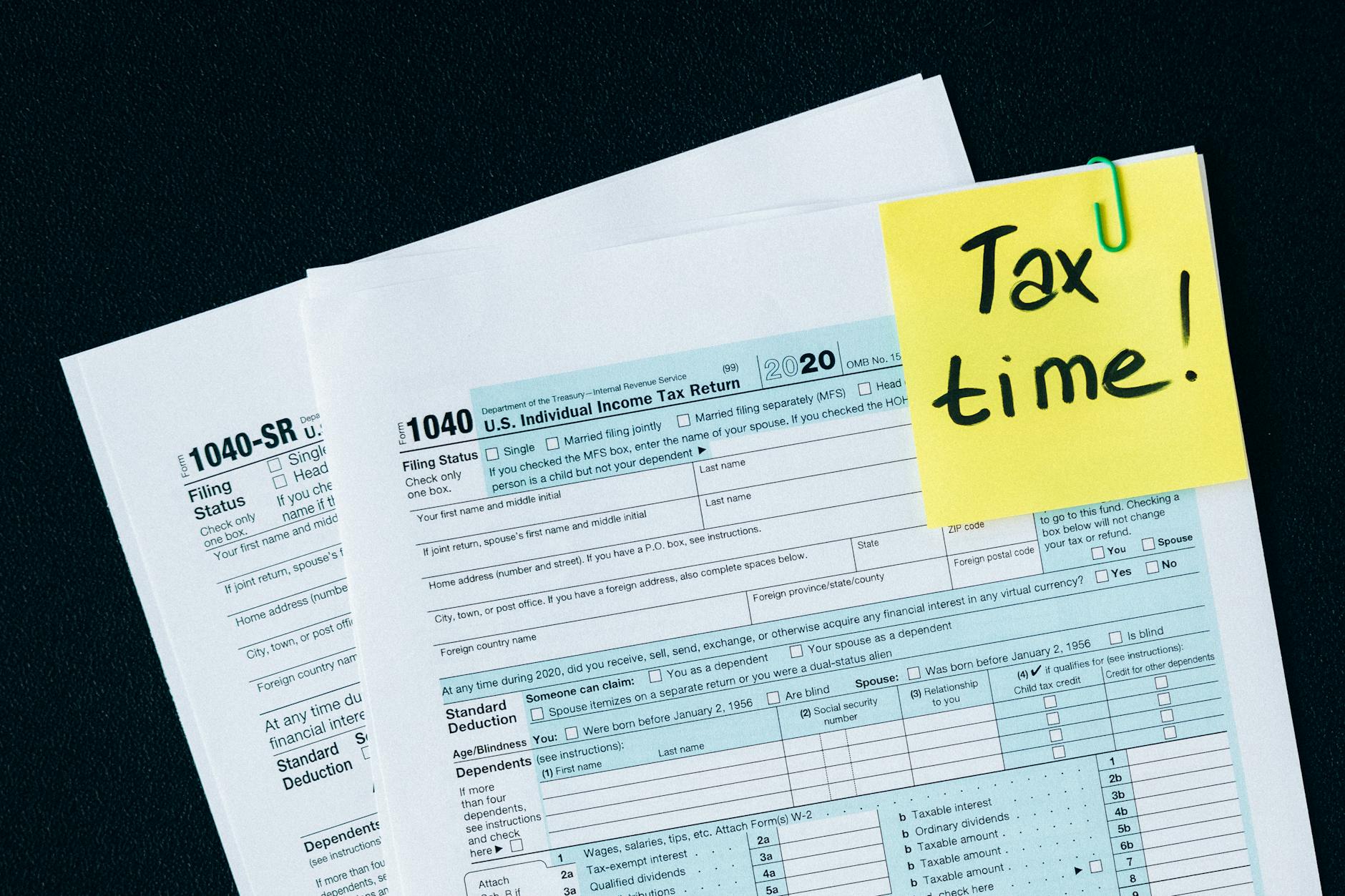
Photo: Nataliya Vaitkevich / Pexels
Crypto Tax in India: How to File VDA Income in Your ITR
If you bought, sold or swapped a single token in the last financial year, the taxman now expects a line-by-line account of it. Crypto tax in India is no longer a grey area you can quietly ignore — every Indian exchange reports your trades, and the Annual Information Statement (AIS) quietly mirrors them back to the Income Tax Department. As the AY 2026-27 filing season opens, here is exactly how virtual digital asset (VDA) income works, where people slip up, and how to file it cleanly.
The 30% flat tax that ignores your tax slab
Since FY 2022-23, gains from transferring any virtual digital asset — Bitcoin, Ether, altcoins, even most NFTs — are taxed under Section 115BBH at a flat 30%, plus surcharge and 4% cess. This rate applies regardless of whether you earn ₹3 lakh or ₹3 crore a year, and regardless of how long you held the coin. There is no concept of long-term versus short-term here.
This is the first thing that catches new investors off guard. A salaried person in the 5% slab still pays 30% on crypto profit. The basic exemption limit and the new regime's generous rebate do not shelter VDA gains — the 30% sits on top, calculated separately from your salary and other income.
The only amount you may subtract is your cost of acquisition — what you actually paid to buy the coin. Nothing else qualifies as a deduction.

The deductions you cannot claim (and the losses you cannot use)
This is where the regime turns genuinely punishing. Beyond the purchase price, you cannot deduct:
- Exchange trading fees, brokerage or withdrawal charges
- Blockchain gas fees and network costs
- Interest on any loan taken to buy crypto
- Infrastructure costs like a hardware wallet or subscription tools
Worse, crypto losses are stranded. A loss on one coin cannot be set off against a profit on another coin in the same year. It cannot be set off against salary, rent, business income or stock-market gains. And it cannot be carried forward to a future year. So if you made ₹1 lakh on Ether and lost ₹80,000 on a meme coin, you are taxed on the full ₹1 lakh of Ether profit — the meme-coin loss simply vanishes for tax purposes.
This asymmetry — gains taxed, losses ignored — is the single most important thing to internalise before you trade actively.
The 1% TDS, and why you should actually welcome it
Under Section 194S, a 1% TDS is deducted on the transfer of VDAs above a yearly threshold — ₹50,000 for most individuals and HUFs (and ₹10,000 for others such as those running a VDA-linked business). On Indian exchanges this happens automatically: the platform deducts 1% of your sale value and deposits it against your PAN.
Many traders treat this as money lost. It is not. The 1% is not an extra tax — it is an advance against your final liability. It shows up in your Form 26AS and AIS, and you reclaim it when you file. If your actual tax is lower than the TDS deducted across the year, the excess comes back as a refund.
Its real purpose is traceability. The TDS creates a paper trail of every meaningful trade, which is precisely why the department can now match your return against what really happened on the exchange.
P2P and foreign platforms: the trap most people miss
The convenience ends the moment you step off a compliant Indian exchange. In a peer-to-peer (P2P) trade, or when you buy from someone via a foreign or decentralised platform, the legal duty to deduct and deposit the 1% TDS falls on the buyer, not on any intermediary.
In practice, almost nobody doing casual P2P deals files Form 26QE and deposits that TDS — and that is a compliance failure sitting on the buyer's PAN. If you trade on offshore platforms, you also still owe the full 30% on gains; using a non-Indian exchange does not make the income invisible, especially as global tax-information sharing tightens. Treat foreign-platform activity as higher-risk, not lower.
Gifts, airdrops and salary in crypto
VDAs received without paying full value are taxed too. If you receive crypto as a gift, it is taxable in your hands at fair market value (with the usual relative and ₹50,000 thresholds that apply to gifts). Tokens received via an airdrop are treated as income at the value on the day you receive them — and then, if you later sell, the 30% gains rule applies to any further appreciation.
If an employer or client pays you in crypto, that is income in the normal sense — taxed at your slab as salary or professional income — and a later sale is a separate VDA event. The lesson: receiving and selling are two distinct taxable moments, each with its own rule.
How to actually file: a clean Schedule VDA checklist
The relevant section in the return is Schedule VDA, available in ITR-2 and ITR-3. You cannot use the simple ITR-1 if you held or transacted in VDAs. Work through it like this:
- Pull your data. Download the full transaction and TDS statement from every exchange you used, plus your AIS and Form 26AS from the income-tax portal.
- List each transfer separately. Schedule VDA expects date of acquisition, date of transfer, cost and sale consideration for every disposal — not a single yearly lump sum.
- Compute gains per transaction. Sale value minus cost of acquisition only. Do not net losses against gains.
- Apply 30% plus cess on the total gains, kept separate from your slab income.
- Claim the 1% TDS in the TDS schedule so it adjusts against your liability or generates a refund.
- Reconcile with AIS. If your numbers differ from what the AIS shows, fix the mismatch before filing — unexplained gaps invite notices.
Keep your wallet addresses, exchange ledgers and bank statements for several years. The burden of proving your cost of acquisition is entirely on you.
What comes next
The direction of travel is clearly toward more disclosure, not less. The new Income-tax Act 2025, which governs returns from the coming year, carries the VDA framework forward and the term "Tax Year" with it, while keeping the 30% rate and the loss restrictions intact. Globally, India is moving toward automatic exchange of crypto-account information, which means offshore holdings will become far harder to keep off the radar.
None of this makes crypto illegal or untouchable — it remains fully legal to own and trade. But it does mean the smart approach for 2026 is boringly simple: record every trade as you make it, treat the 1% TDS as your friend, never assume a loss will rescue a gain, and file Schedule VDA honestly. The cost of sloppiness here is no longer a vague worry — it is a matching algorithm with your PAN attached.


