
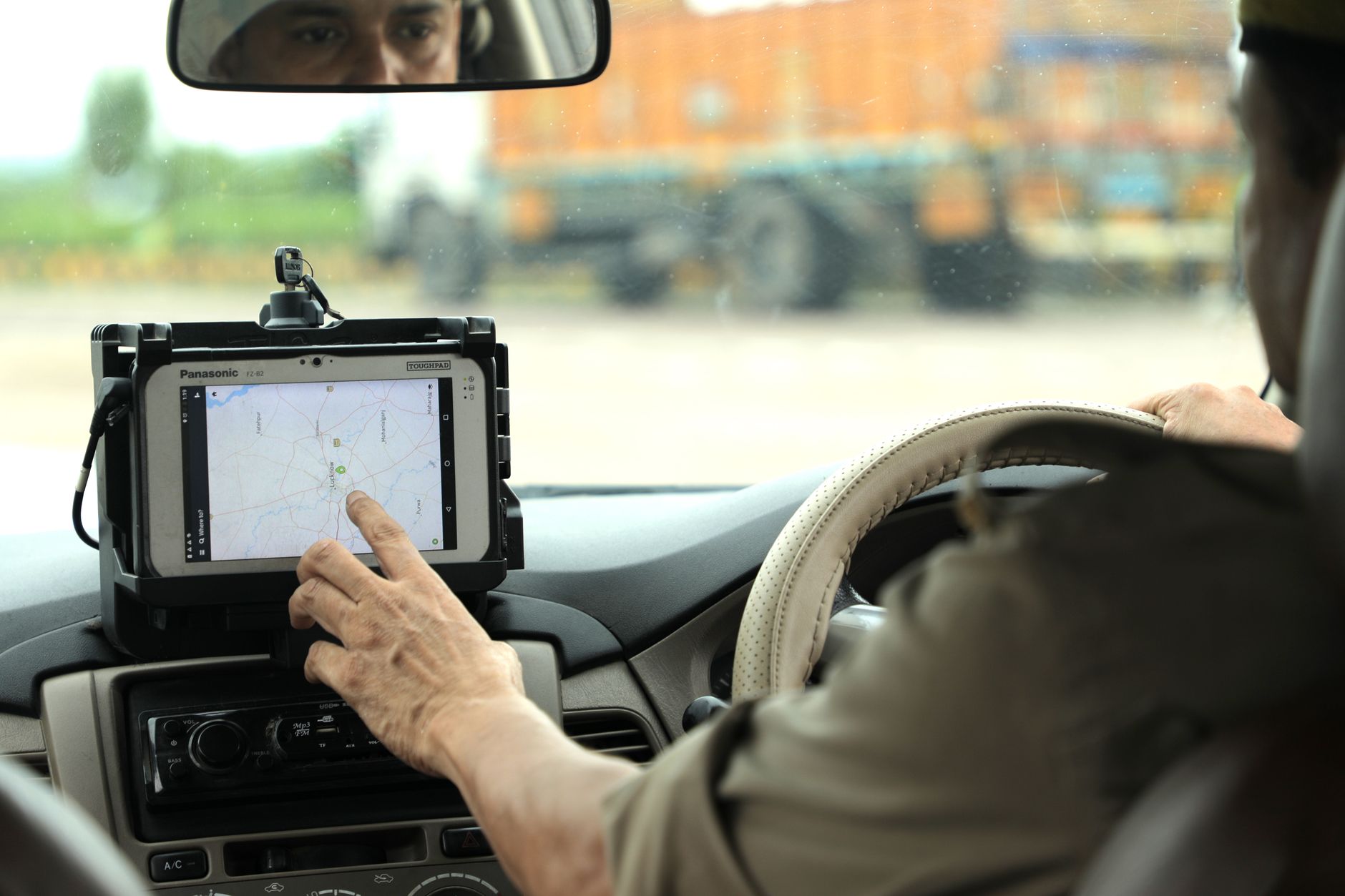
Photo: 112 Uttar Pradesh / Pexels
File an FIR Online in India: The 2026 Step-by-Step
If you have ever stood at a counter clutching a stolen-phone receipt while a constable hunts for the right register, you already know why people search for a way to lodge a complaint without leaving home. In 2026 you can file an FIR online in most states, but the rules around it have changed sharply since the new criminal codes came in. Knowing exactly what the online route can and cannot do will save you a wasted trip and, in a fraud case, possibly your money.
The legal backbone is the Bharatiya Nagarik Suraksha Sanhita (BNSS), 2023, which replaced the old Code of Criminal Procedure on 1 July 2024. The duty to register a First Information Report for a cognizable offence now sits in Section 173 of the BNSS, the provision that used to be Section 154 of the CrPC. One line in that section matters more than the rest for online filing: information can be given electronically, and the person giving it must sign it within three days.

Online FIR is not always a full FIR
This is the single biggest source of confusion. Walk through a state police portal and you will usually see two different things. One is a genuine e-FIR, which becomes a registered FIR with a number, a police station and a section of law attached. The other is an e-complaint or lost-article report, which is only an acknowledgement of your information.
A lost-report acknowledgement is genuinely handy. You can use it to get a duplicate SIM, a fresh driving licence or an insurance claim moving. But it does not by itself start an investigation. Before you assume your matter is "filed", check whether the system gave you an FIR number or merely a complaint reference. If there is no FIR number, no investigation has formally begun.
Which complaints you can actually file online
States have deliberately kept the online window narrow. As a rule, the e-FIR option is offered for a defined set of cognizable offences where the complainant rarely needs to be examined on the spot:
- Theft, including snatching where the accused is unknown
- Motor vehicle theft
- Lost or stolen mobile phones, documents and valuables
- Some property offences against an unknown accused
For anything involving violence or a serious body offence, the online route is closed by design. Assault, rape, murder, kidnapping and similar grave crimes require you to go to the police station, where the officer-in-charge is legally bound to record the FIR. The logic is simple: these cases turn on the victim's own account, and the law wants that recorded directly rather than through a web form.
How to file an e-FIR, step by step
The exact labels differ between states, but the flow on a typical CCTNS-backed portal is consistent.
- Open your state police website and find the citizen services, e-services or "Online FIR / Lodge Complaint" section. Most states are linked from the national digitalpolice.gov.in hub.
- Register or log in with your mobile number and verify the OTP. Keep that number active, because updates and the verification call come to it.
- Choose the complaint type from the dropdown. If your offence is not listed, the portal is telling you it must be filed in person.
- Enter the incident details precisely: date, time, exact location, and a plain, factual description. Avoid guesswork about who did it unless you genuinely know.
- Add any suspect or vehicle details and upload supporting documents such as bills, photos or screenshots.
- Review everything and submit. Note down the reference or FIR number the system generates.
After submission the police verify the information, and you will usually be asked to sign the FIR within three days to complete it. That step is not a formality you can skip; an unsigned e-FIR can stall. Where the offence carries a punishment of three to seven years, Section 173(3) lets a senior officer, with the approval of an officer not below Deputy Superintendent of Police, run a short preliminary enquiry within 14 days before formal registration. For lesser offences and clear cognizable crimes, registration should be immediate.
Zero FIR and the new e-Zero FIR for cyber fraud
A Zero FIR solves the old jurisdiction headache. If a crime happened in another city or state, you can still get an FIR registered at the nearest police station, which records it with the number "zero" and then transfers it to the station that actually has jurisdiction. No officer can turn you away on the ground that "this didn't happen in our area."
The most useful recent change is for online financial fraud. In May 2025 the Indian Cyber Crime Coordination Centre (I4C), under the Home Ministry, launched the e-Zero FIR system, first as a pilot in Delhi. When you report a cyber financial fraud on the 1930 helpline or the National Cybercrime Reporting Portal (cybercrime.gov.in) and the loss is above Rs 10 lakh, the complaint is automatically converted into a Zero FIR at Delhi's e-Crime police station and routed onward. The government has said it intends to extend this nationwide, so check whether your state is covered.
The point of all this is speed. In fraud cases the first few hours decide whether money can be frozen before it is siphoned across accounts. So even before any FIR, dial 1930 immediately and file on the portal; the FIR can follow.
How to track your FIR and get a copy
Once an FIR exists, you are entitled to a copy of it free of cost under Section 173. You do not have to pay or plead for it. Tracking is now largely self-service:
- Go to your state's CCTNS citizen portal or the View FIR / FIR Status page linked from digitalpolice.gov.in.
- Search by FIR number, police station and district, or by the date range.
- Many states publish the FIR copy within about 24 hours, and you can download or print the PDF.
Some portals also show the investigating officer, the current stage and whether the matter has gone to court. Remember that before a chargesheet is filed, the FIR lives only in police records. Once the chargesheet reaches court, the case gets a CNR number, after which you can follow hearings on the eCourts services. Save a copy of every status page; it is your proof of where things stand.
If the police won't register your FIR
Refusal still happens, and the BNSS gives you a clear ladder. First, send the substance of your complaint in writing, by post, to the Superintendent of Police under Section 173(4). If the SP is satisfied a cognizable offence is disclosed, an investigation must follow.
If that does not work, you can approach the Judicial Magistrate under Section 175(3) with an application supported by an affidavit. The Supreme Court has confirmed that going to the SP first is now a mandatory precondition before the Magistrate can act, and the Magistrate must hear the police officer and pass a reasoned order. Keep dated copies of every letter and acknowledgement, because this paper trail is what makes the escalation work.
Before you click submit
A few habits make the difference between a complaint that moves and one that drifts. Write the facts in chronological order and stick to what you actually witnessed. Attach evidence at the start rather than promising it later. For fraud, act within minutes, not days, and keep the 1930 acknowledgement. And once your FIR number is issued, set a reminder to check the status portal every few days. The online system has genuinely shortened the queue, but it still rewards the person who follows up.