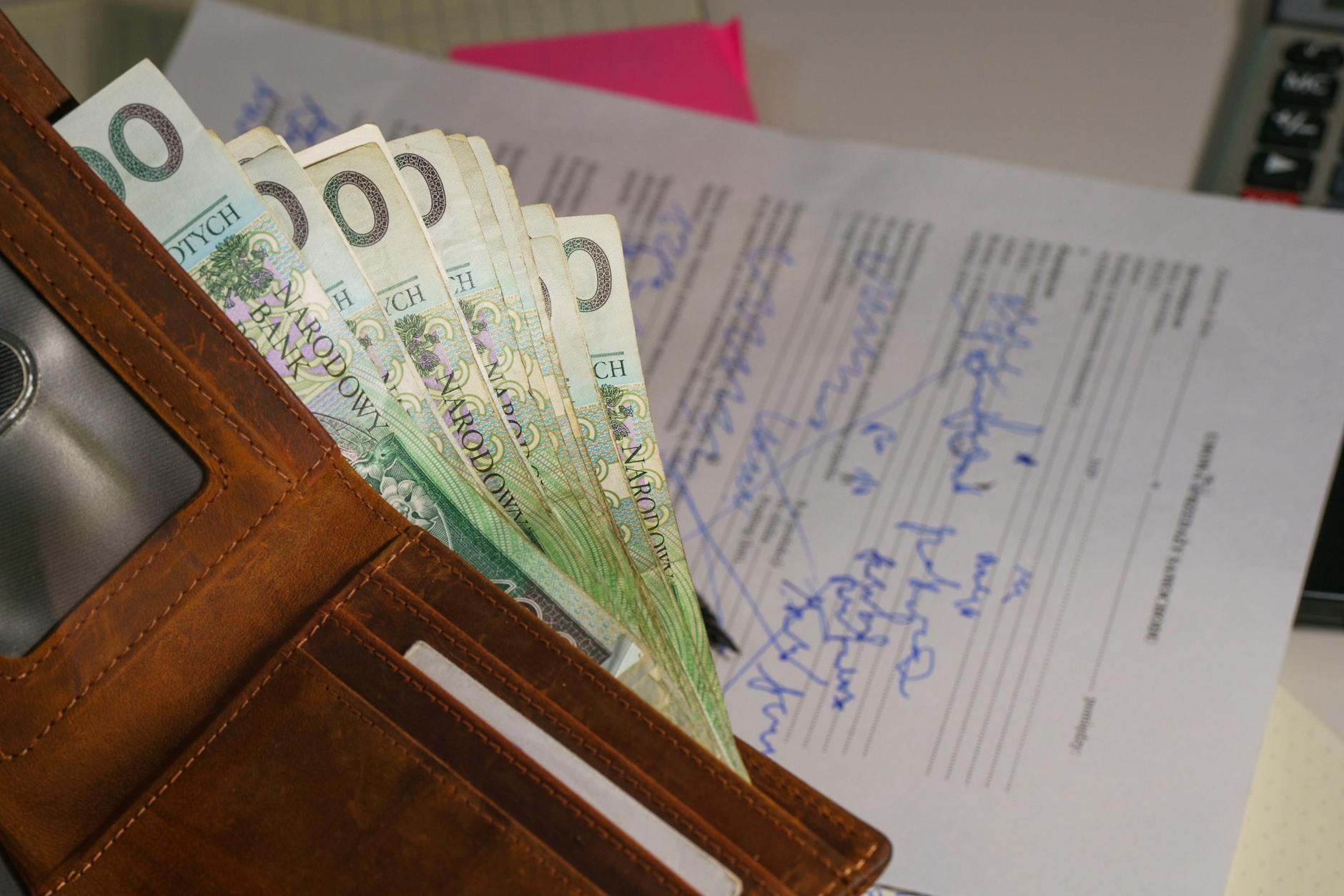
Photo: Jakub Zerdzicki / Pexels
Form 121 Replaces 15G and 15H: India's New No-TDS Form
If your parents kept a folder of bank papers, somewhere in it sat a yearly ritual called Form 15H — the slip senior citizens hand their bank so it doesn't shave TDS off their fixed deposit interest. That slip, and its younger sibling Form 15G, are now history. From Tax Year 2026-27, the income from 1 April 2026 onward, both have been folded into a single new self-declaration: Form 121.
This is one of the quieter consequences of the Income-tax Act 2025 replacing the old 1961 law. Most coverage focused on renumbered sections and the new "tax year" language. But for ordinary savers — pensioners living off deposit interest, homemakers with FDs, anyone whose income sits below the taxable line — the form change is the part that actually touches your bank statement.

Why your bank cuts tax before you see the money
Banks don't wait for you to file a return. When the interest on your deposits with one bank crosses a yearly threshold, the bank itself deducts tax at source and hands it to the government, leaving you to sort it out later.
The thresholds carried into the new regime are unchanged: a bank starts deducting once your interest crosses ₹50,000 in a financial year for those below 60, and ₹1,00,000 for senior citizens. The standard rate is 10%. Crucially, this is counted per bank across all its branches — core banking links your accounts, so splitting one FD across two branches of the same bank saves nothing.
The sting is that this happens even when you owe no tax at all. A retiree earning ₹3 lakh of interest and nothing else pays no income tax for the year, yet the bank still skims 10% upfront. You'd then have to file a return and wait months for a refund. Form 121 exists precisely to stop that loop before it starts.
What Form 121 actually does
Form 121 is a self-declaration. You are telling the payer — usually your bank — that your estimated total income for the year is low enough that your final tax bill will be nil, and that they should therefore not deduct any TDS.
The single condition that matters is this: your estimated total tax liability for the tax year must be zero. Not your income alone, your tax after all deductions and rebates. If the maths leaves you owing even a rupee, you are not eligible, and signing the form anyway is a false declaration.
What the form does not do is make your interest tax-free. The interest stays fully taxable. Form 121 only changes the timing — it stops the bank deducting now, on the understanding that you'll square things up when you file. If your situation changes mid-year and you do end up with a tax bill, that liability is still yours.
The big change: one form for everyone
The headline simplification is the merger itself. Until now you had to pick the right form by age — Form 15G if you were under 60 (and HUFs), Form 15H if you were a senior citizen — and the two carried different fine print.
The old 15G had an awkward extra test: not only did your tax have to be nil, your total interest income also had to stay below the basic exemption limit. That tripped up younger savers with chunky deposits. Form 15H for seniors was looser — only the nil-tax test applied.
Form 121 keeps things simple by applying the single nil-tax-liability test to everyone, regardless of age. One form, one rule. For banks and savers alike, that removes a recurring source of "which form do I tick" confusion.
PAN is non-negotiable
There is one rule you cannot skate around: a valid PAN is mandatory on Form 121. Leave it out, or quote one that doesn't check out, and the declaration is treated as invalid.
The penalty for that is steep. Without a valid PAN, the payer is legally bound to deduct TDS at 20% — double the normal rate — no matter how small your income. So the very form you filed to avoid tax ends up triggering a bigger cut. Before you submit, confirm your PAN is active and correctly linked.
File it with every payer, not just one bank
A single Form 121 covers only the payer you hand it to. It is not a blanket waiver. If your money is spread around, each source needs its own copy.
That means a fresh declaration for:
- Each bank where you hold deposits — and separately for the post office if you have schemes there.
- Company or NBFC fixed deposits, which deduct TDS on the same logic.
- Mutual funds or companies paying you dividend income above the deduction threshold.
- EPF withdrawals in cases where the provident fund office would otherwise deduct tax.
The practical move is to file early in the financial year, ideally in April, before the first interest is credited. File late and any TDS already deducted can't be reversed by the bank — you'll have to chase it as a refund.
Don't sign it if you actually owe tax
Because Form 121 is a sworn statement, treating it as a routine signature is risky. Declaring nil tax when you genuinely have a liability is an offence under the Act and can invite prosecution, not just a penalty. The form even asks you to disclose other declarations you've filed and your estimated total income, so the picture is meant to be honest and complete.
The honest way to judge eligibility is to do a rough year-end estimate now. Add up pension, interest, rent, capital gains and any other income, subtract the deductions you're entitled to, and see whether the rebate wipes out the tax. If it does, Form 121 is yours to use. If there's tax left over, let the bank deduct and reconcile it in your return instead.
How to check the deduction actually stopped — or get it back
Filing the form is step one; verifying is step two. A few weeks after the interest is due, log into the income tax portal and check your Form 26AS and the Annual Information Statement (AIS). These show every rupee of TDS reported against your PAN.
If the statement shows zero TDS against that bank, the declaration worked. If tax was cut anyway — say you filed late, or the branch missed it — the money isn't lost. You reclaim it as a refund when you file your income tax return, by reporting the income and the TDS credit. It just takes longer and ties up your cash in the meantime, which is exactly the delay Form 121 is designed to spare you. The form is small, the deadline is early in the year, and getting it in on time is one of the simplest tax wins a saver can book.