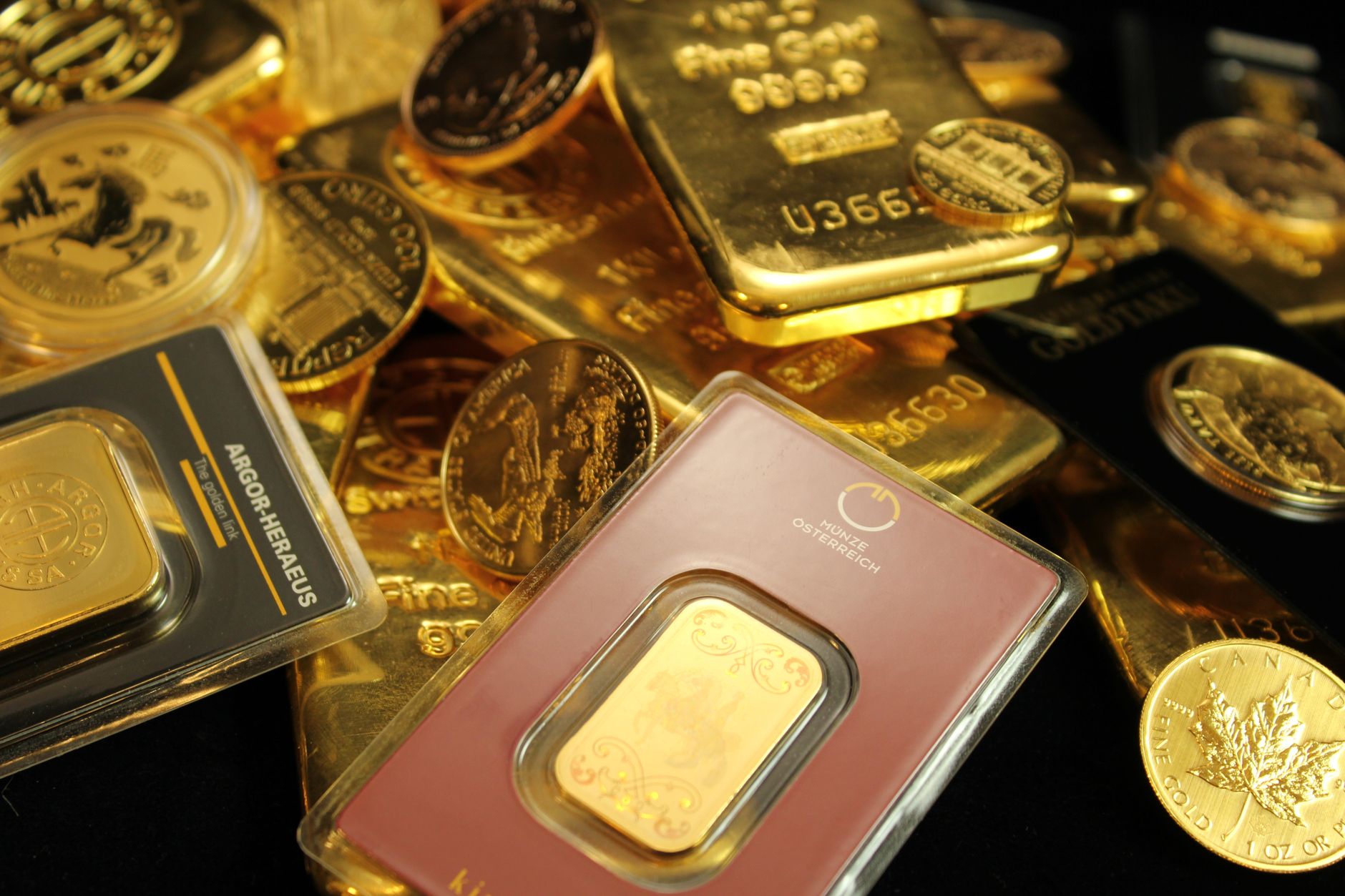
Photo: Zlaťáky.cz / Pexels
Gold Rate Today, 4 June 2026: 24K at ₹1,54,801, Silver Soars
Gold opened the first week of June 2026 perched near record territory, with the 24K (999) benchmark hovering around ₹1,54,801 per 10 grams and 22K jewellery gold near ₹1,41,901 per 10 grams. Silver is the louder story, trading close to a punchy ₹2,80,000 per kilogram. If you are tracking the gold rate today before a wedding purchase, a festive buy or a fresh SIP, here is a clear, practical read on where prices sit, what is pushing them, and whether the moment favours buyers.

Gold rate today: the headline numbers
As of 4 June 2026, here are the indicative all-India benchmark rates before tax and making charges:
- 24K gold (999 purity): about ₹1,54,801 / 10g — the investment-grade standard used for coins, bars and digital gold.
- 22K gold (916 purity): about ₹1,41,901 / 10g — the everyday jewellery grade, alloyed for durability.
- Silver: about ₹2,80,000 / kg, or roughly ₹280 per gram.
These are reference prices. The figure on your final bill will be higher once 3% GST and making charges are stacked on top, and it will move through the day as international markets and the rupee shift. Think of these numbers as the starting line, not the finish.

City rates vary — and so does your final bill
There is no single national price for gold. Each city sets its own rate based on local bullion association quotes, transport, octroi-era levies and dealer margins. The spread between the cheapest and priciest metros is usually ₹100 to ₹700 per 10 grams — small in percentage terms, but real money on a heavy purchase.
As a rough guide on a day like today:
- Mumbai and Chennai often print among the keenest rates, given their large bullion trade.
- Delhi typically sits a notch higher.
- Hyderabad and Bengaluru float close to the national average, with minor daily wobble.
Two caveats matter more than the city gap. First, all quoted rates exclude 3% GST. Second, they exclude making charges, which can run from 8% on plain coins to 25% or more on intricate jewellery. A ₹1.4 lakh necklace can carry several thousand rupees of craftsmanship cost that you will never recover at resale. Always ask for a HUID-hallmarked piece and a bill that itemises metal value, making charge and GST separately.
What is moving precious metals right now
Gold and silver do not move in a vacuum. A handful of forces are keeping bullion firm in mid-2026:
- A soft rupee. With USD/INR near ₹95.4, every dollar of global gold price translates into more rupees at home. A weak rupee alone can lift Indian gold even when international prices are flat.
- Safe-haven demand. Lingering geopolitical tension and worries around West Asian energy flows nudge investors toward gold as insurance.
- Central-bank buying. Reserve banks across emerging markets have been steady gold accumulators, tightening available supply.
- Silver's industrial pull. Beyond jewellery, silver is hungry for solar panels, EVs and electronics. A multi-year supply deficit has amplified its rally — and its volatility.
Meanwhile, equities are holding their ground. The Sensex is around 74,346 and the Nifty 50 near 23,406, signalling that risk appetite has not vanished. Bitcoin near ₹64,22,968 shows speculative money is still active. When stocks and crypto are buoyant, gold sometimes takes a back seat — yet today both metals and equities are elevated together, a sign that investors are hedging rather than choosing sides.
Gold vs silver: the ratio worth watching
Seasoned buyers track the gold-to-silver ratio — how many grams of silver one gram of gold buys. At roughly ₹15,480 per gram of gold against ₹280 per gram of silver, the ratio sits near 55:1. Historically, a high ratio (gold expensive relative to silver) has tempted value buyers toward silver, while a low ratio favours gold.
Silver's appeal is its dual identity: part precious metal, part industrial commodity. That makes it a higher-octane bet — it can outrun gold in a rally and fall harder in a correction. If you cannot stomach a 15–20% swing within weeks, gold remains the calmer store of value. Silver rewards conviction and a strong stomach.
Is it a good time to buy?
The honest answer: it depends on why you are buying, not on guessing the next move.
Reasons to be cautious:
- Prices sit near all-time highs, so the easy gains may already be priced in.
- Buying a large lump sum at a peak out of fear of missing out is how people get hurt.
- Making charges and GST mean you start every jewellery purchase several percent underwater.
Reasons it can still make sense:
- For a wedding or festival with a fixed deadline, you are buying a need, not timing a trade — spread the purchase across a few weeks to average the rate.
- For long-term wealth, a small, steady allocation hedges against inflation and rupee weakness.
- Paper formats — gold ETFs, digital gold or a gold-fund SIP — skip making charges entirely and are easier to exit than a bangle.
A sensible rule of thumb: keep gold and silver to about 10–15% of your overall portfolio, buy in tranches rather than all at once, and never borrow to buy bullion. The metal is a shock absorber for your money, not a lottery ticket.
The bottom line for today
On 4 June 2026, gold near ₹1,54,801 (24K) and silver near ₹2,80,000/kg reflect a market braced for uncertainty and squeezed by a weaker rupee. City rates will differ by a few hundred rupees, and your real cost climbs once GST and making charges land. If you have a goal, buy steadily and buy hallmarked. If you are only chasing the rally, remember that the best time to own gold is usually long before everyone is asking whether it is too late.


