
Photo: RDNE Stock project / Pexels
Gold Rate Today, 9 June 2026: 24K at ₹1,47,050; Silver Near ₹2.6 Lakh/kg
Gold opened the week on a firm note. As of 9 June 2026, standard 24K (999) gold is hovering around ₹1,47,050 per 10 grams, while 22K, the grade most jewellery is made from, sits near ₹1,40,050 per 10 grams. Silver is trading close to ₹2,60,000 per kilogram. If you are checking the gold rate today before a wedding purchase or a fresh SIP into metals, here is what those numbers mean and what is pushing them around.
A quick caveat before the details: the figures above are benchmark or indicative rates. What you actually pay at the counter will be higher once GST and making charges are added, and it will shift a little depending on which city you are standing in.
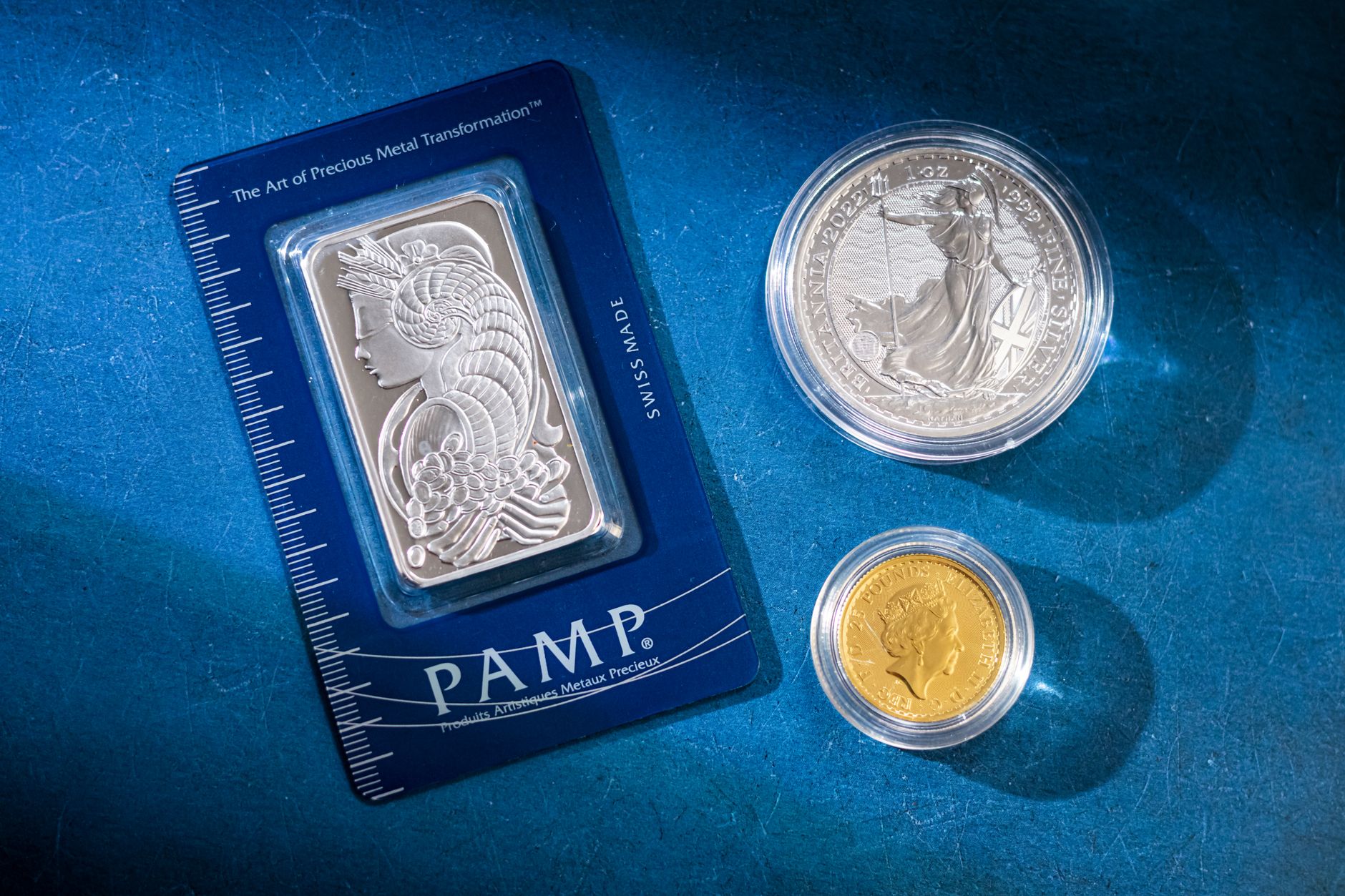
Today's rates at a glance
- 24K gold (999 purity): about ₹1,47,050 per 10g
- 22K gold (916 purity): about ₹1,40,050 per 10g
- Silver: about ₹2,60,000 per kg
- 1 gram of 24K gold: roughly ₹14,705
- 1 gram of 22K gold: roughly ₹14,005
The gap between 24K and 22K is not a markup trick. 24K is 99.9% pure and too soft to hold a clasp or a stone, so jewellers alloy it down to 22K (91.6% pure) with a little copper or silver for durability. Coins and bars are usually 24K; necklaces and bangles are usually 22K. That purity difference is the entire reason for the price gap.

What's moving gold and silver right now
Two forces are doing most of the work. The first is the rupee, which is trading around ₹95.8 to the US dollar. Because India imports nearly all its gold, a weaker rupee mechanically lifts the local price even when global prices stay flat. Every time the rupee slips, the imported metal gets pricier in your currency.
The second is the US Federal Reserve. Markets are still pricing in further rate cuts after the easing cycle that ran through 2025. Lower interest rates reduce the appeal of holding cash and bonds, which makes non-yielding gold more attractive by comparison. Central banks, meanwhile, have kept buying bullion for their reserves year after year, and that steady official demand puts a floor under prices.
Silver has its own story. Beyond its safe-haven role, it is an industrial metal feeding solar panels, electronics and EV components. That demand has supported prices, but it also makes silver far more volatile than gold. The metal is currently well below the record highs it touched earlier, which is why some buyers see it as the cheaper entry point of the two.
The market backdrop
Precious metals never trade in a vacuum, so it helps to glance at the wider board. As of today the Sensex is around 73,524 and the Nifty 50 near 23,123. Equities and gold often move in opposite directions: when stocks wobble or geopolitical headlines flare, money rotates into metals as a hedge. When risk appetite returns, some of that flows back out.
Bitcoin is trading near ₹59,35,000, and it is increasingly watched as a rival store of value, especially by younger investors weighing crypto against the family habit of buying gold. The two assets sometimes rise together on the same fear-of-debasement logic, and sometimes diverge sharply. For most Indian households, gold remains the default, with crypto a smaller, riskier satellite.
Why city rates differ
There is no single national gold price in India. Rates are set locally by bullion associations and jeweller bodies, and they are nudged by state taxes, local demand, transport and dealer margins. So the number you see in Mumbai will not be identical to the one in Chennai on the same morning.
As a rough guide to how the major metros usually stack up:
- Mumbai and Delhi tend to track the national benchmark closely, with Delhi often a touch higher.
- Chennai frequently runs slightly above the others, partly because of strong demand for higher-purity gold.
- Hyderabad and Bengaluru generally sit in the same band, with small daily gaps.
The differences are usually a few hundred rupees per 10 grams, not thousands. Still, it is worth checking the local rate rather than assuming a headline number applies everywhere.
What you'll actually pay
This is where many first-time buyers get a surprise. The quoted rate excludes 3% GST and making charges. Making charges are the jeweller's fee for craftsmanship, and they range widely, from roughly 8% on plain coins and simple chains to 25% or more on intricate, stone-set pieces. Hallmarking adds a small fixed fee.
A simple way to estimate the bill on a 10-gram 22K ornament:
- Start with the metal value (rate × weight).
- Add making charges (a percentage of the metal value).
- Add 3% GST on the total.
Two habits save real money. Ask for the breakup in writing, and check whether making charges are quoted as a flat per-gram amount or a percentage, because the percentage version costs far more on heavier pieces. When you sell or exchange later, making charges are usually not refunded, so they are a sunk cost worth minimising at purchase.
Is this a good time to buy?
The honest answer is that nobody reliably calls the top or bottom of bullion. Prices are near elevated levels, and the same tailwinds keeping them firm, a soft rupee, expected rate cuts and steady central-bank buying, could persist or reverse on a single data release. Recent sessions have shown how quickly a strong US jobs number can knock the wind out of a rally.
A few principles hold up better than guesswork:
- If you are buying for a wedding or festival, the date is fixed, so spread your purchases over a few weeks rather than buying everything on one volatile morning.
- If you are investing, treat gold as portfolio insurance, not a get-rich bet. Most advisers suggest keeping it to roughly 5–15% of a portfolio.
- For pure investment, consider gold ETFs or digital gold, which skip making charges and storage worries, instead of buying ornaments you will eventually resell at a loss on craftsmanship.
- For silver, brace for bigger swings. Its industrial demand cuts both ways.
The metal has rewarded patient holders for years, but chasing a rally at any price has burned plenty of buyers too. Staggering your purchases, knowing the true all-in cost, and matching the buy to your actual goal will serve you better than trying to outguess the next move in the rupee or the Fed.
Rates mentioned are indicative for 9 June 2026 and exclude GST and making charges. Confirm the live local price with your jeweller or bank before transacting.


