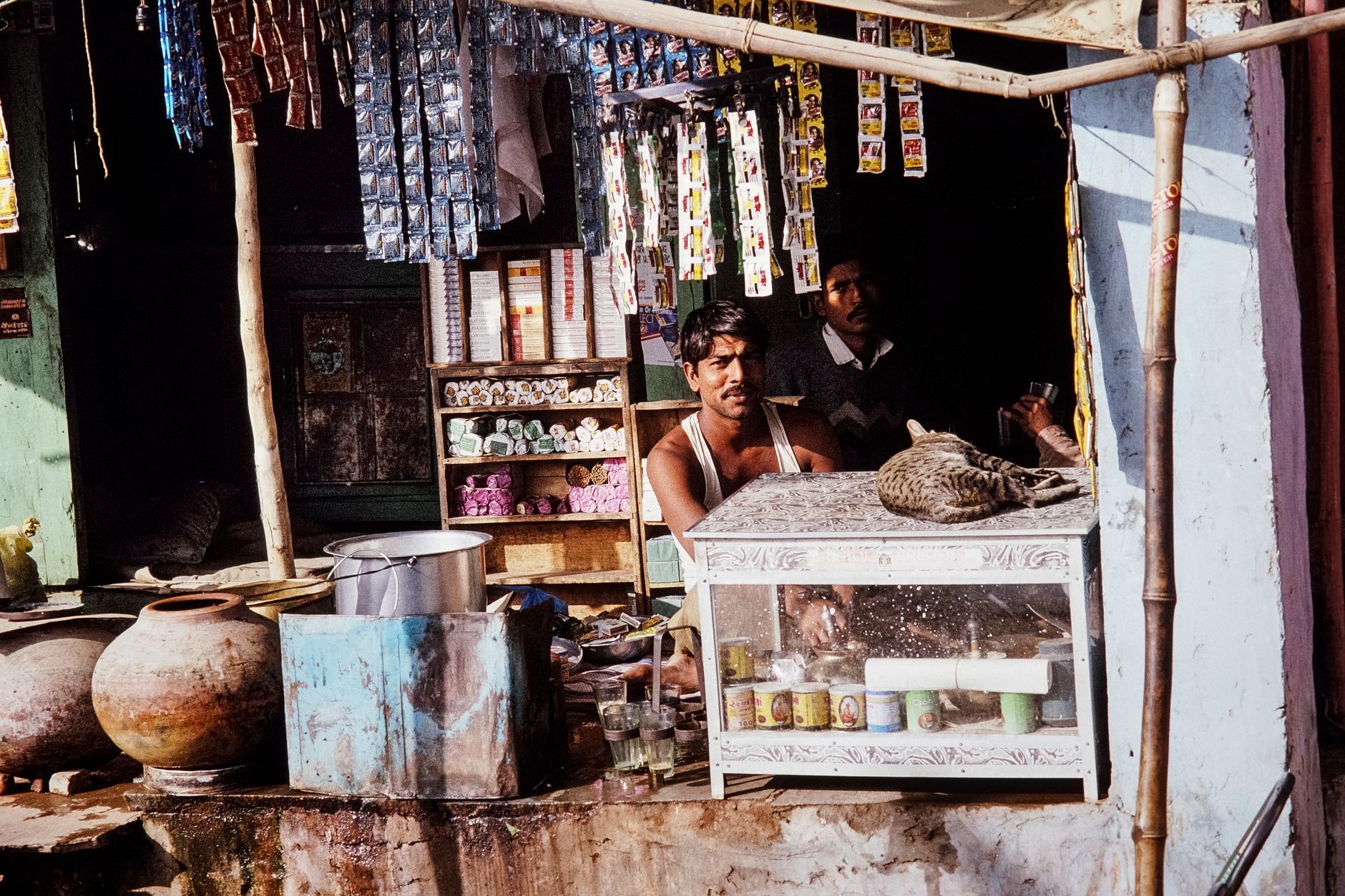
Photo: pierre matile / Pexels
Why Running a Small Business Is Still Hard in India
India's small businesses are its quiet engine. As of February 2026, roughly 7.86 crore enterprises were registered on the Udyam portal, reporting employment of about 34.63 crore people. Micro, small and medium enterprises (MSMEs) contribute close to 30% of GDP, around 35% of manufacturing output and nearly 46% of exports. Yet ask most owners and they will tell you the same thing: starting a small business in India is easier than ever, but running and scaling one is still a daily obstacle course. This is a constructive, non-partisan look at what genuinely hurts, what is working, and what experts say could fix the rest.

The hurdle owners feel first: money
The single most common complaint is credit — getting it on time, at a fair price, without drowning in paperwork. Industry estimates put the MSME credit gap at roughly Rs 30 lakh crore, or about a quarter of the sector's addressable demand. The gap is wider in services and sharper still for women-owned firms, where it is estimated near 35%.
The problem is not only the amount but the fit. Lending models built for salaried borrowers assume steady monthly income. A small manufacturer's reality is seasonal orders, lumpy revenue and customers who pay late. When a rigid algorithm cannot read that pattern, the loan is either refused or priced as high-risk. Many owners face long approval cycles and heavy documentation, and simply give up midway — falling back on costlier informal lenders.

The cash-flow killer: delayed payments
If credit is the headache, delayed payments are the slow bleed. The value of dues owed to MSMEs — mostly by larger buyers and government bodies — has been estimated at a crippling Rs 8.14 lakh crore. That is working capital trapped in invoices, money that cannot buy raw material, upgrade a machine or meet payroll.
The damage compounds. A small supplier who is paid 120 days late must still pay its own staff and vendors on time, often by borrowing — paying interest to bridge a gap created by someone else's delay. For a firm running on thin margins, a few large delayed invoices can be the difference between hiring and shutting down. This is why payment discipline, not just cheaper loans, sits at the heart of the MSME question.
The paperwork maze
Beyond money lies the compliance load. A typical small firm juggles GST returns, labour and PF filings, factory and pollution licences, municipal permissions and sector-specific approvals — each with its own portal, deadline and penalty. Experts often call this accumulated friction "regulatory cholesterol": no single rule is unreasonable, but the stack of them eats time a small owner does not have.
The pain is uneven. A large company hires a compliance team; a five-person workshop has the founder doing it at night. Heavy penalties for a first late filing can also push genuinely small, informal units to avoid registering at all — the opposite of what formalisation is meant to achieve. Reducing this burden is as much about ease of doing business as any tax rate.
What is genuinely working
It would be unfair to call this a story of only problems. Several reforms have measurably reduced friction, and they deserve credit.
- Udyam registration turned MSME registration into a free, paperless, Aadhaar-and-PAN-linked process. Registered units jumped from under 1 crore in FY22 to nearly 7.9 crore by early 2026 — a formalisation wave that brings more firms into the fold for credit and schemes.
- Decriminalisation via Jan Vishwas. The Jan Vishwas (Amendment of Provisions) Act, 2023 amended 42 central Acts and removed jail terms from 183 minor, procedural offences, replacing them with monetary penalties. A far larger follow-up has been moving through Parliament in 2026, proposing to touch hundreds more provisions across dozens of Acts. The principle — a paperwork slip should not risk prison — directly lowers the fear factor for small owners.
- The 45-day payment rule (Section 43B(h)). This income-tax provision lets a buyer claim a deduction on a payment to a registered micro or small supplier only in the year it is actually paid, when settled within 15 or 45 days. It gives large buyers a tax reason to clear small dues on time.
- TReDS, the digital invoice-discounting platform, lets MSMEs convert unpaid invoices into quick cash by auctioning them to financiers — a market-based answer to delayed payments.
- GST simplification. Reforms through late 2025 aimed at faster refunds, fewer slabs and lighter filing for small taxpayers chip away at the compliance stack.
The direction of travel is encouraging. The debate now is about depth and speed, not intent.
What experts say could make it better
Industry bodies and economists converge on a practical, do-able list — reforms that are incremental, not utopian.
- A single-window clearance that actually works. State-level, digitised, time-bound single-window systems where a firm files once and tracks every approval are widely seen as the biggest lever. The key word is time-bound: deemed approval if a department does not respond within a set window.
- One consolidated annual MSME filing. Instead of many overlapping returns, experts suggest a single combined annual compliance form for small units, with some filings moved to a two- or three-year cycle.
- Graded, forgiving penalties. Waive or sharply reduce the fine for a first late filing and scale penalties by repeat behaviour. This keeps small firms inside the formal system rather than scaring them out of it.
- Audit and threshold relief. Exempt the smallest enterprises from mandatory audit when turnover and borrowings stay below a clear limit, cutting cost without losing oversight.
- Deepen TReDS and tighten payment discipline. Wider, near-mandatory onboarding of large buyers and PSUs onto TReDS, plus stricter monitoring of the 45-day norm, would attack the Rs 8.14 lakh crore pile-up at its source.
- Cash-flow-based lending. Encourage banks and fintechs to underwrite using GST data, digital transaction trails and account-aggregator records rather than collateral alone — so a healthy but asset-light firm can actually get a loan.
- Fix the basics on the ground. Reliable power, faster land-use conversion, rational approval fees and decent last-mile roads and water still decide whether a unit in a smaller town can compete.
Why this matters, and what comes next
The stakes are bigger than any single shopfloor. MSMEs are where most new non-farm jobs are created, where exports are diversified, and where small towns industrialise. Every week a loan is delayed or an invoice goes unpaid is output and employment quietly lost across millions of units.
The honest takeaway is that India has moved in the right direction — registration is easier, fewer slips carry criminal risk, and digital rails like Udyam and TReDS exist. The unfinished work is execution: making single-window clearances real in every state, collapsing many filings into one, enforcing payment timelines, and teaching the credit system to read a small firm's irregular but genuine cash flow.
None of this requires demolishing regulation. The aim is the opposite — fewer rules, done well, applied with proportion and a measure of trust. Get that balance right, and the next decade's growth will not just be powered by India's small businesses; it will finally stop punishing them for being small.