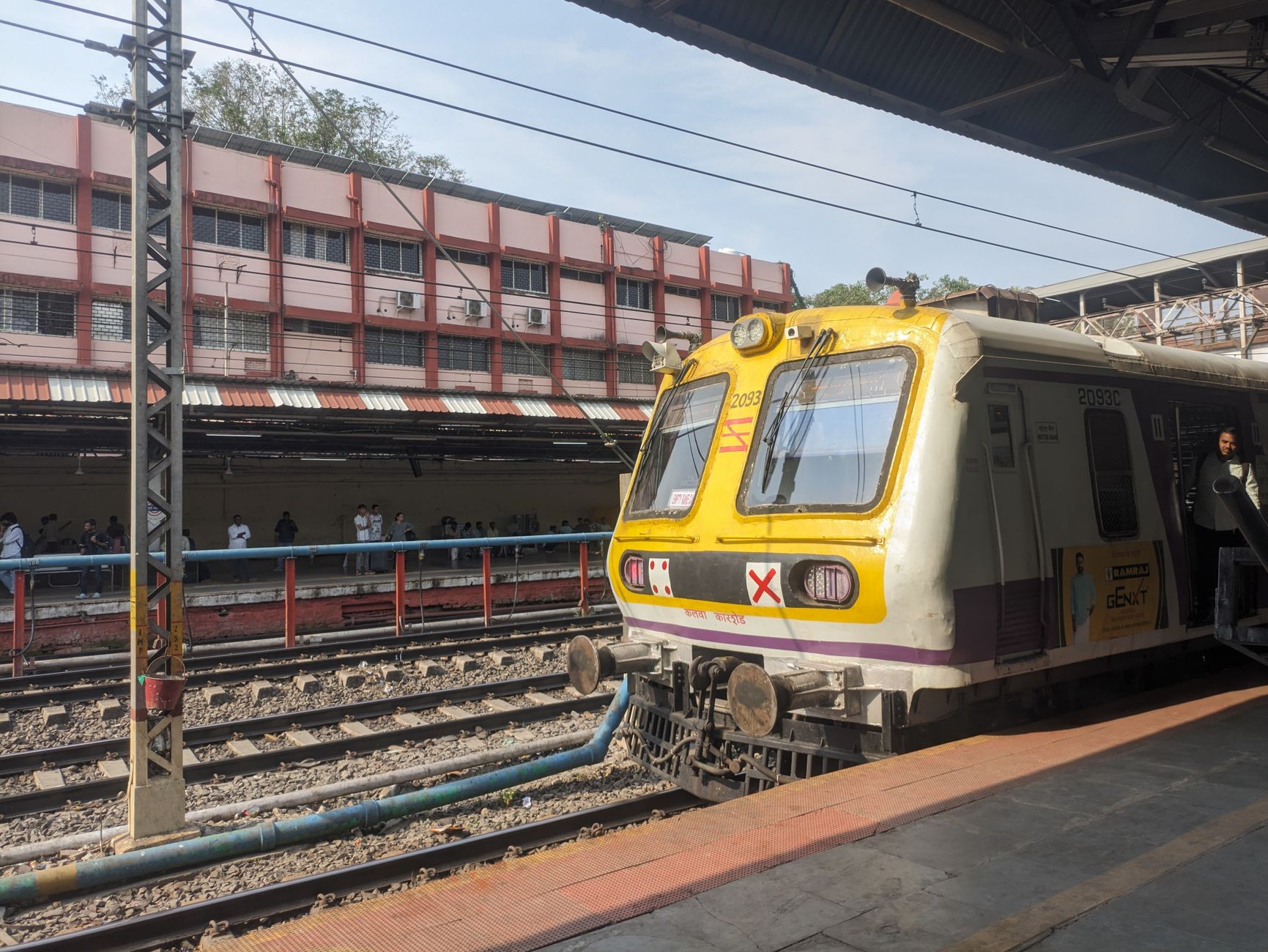
Photo: Paramveer Singh / Pexels
Mumbai's Local Trains and Monsoon: Problems, Progress and Fixes
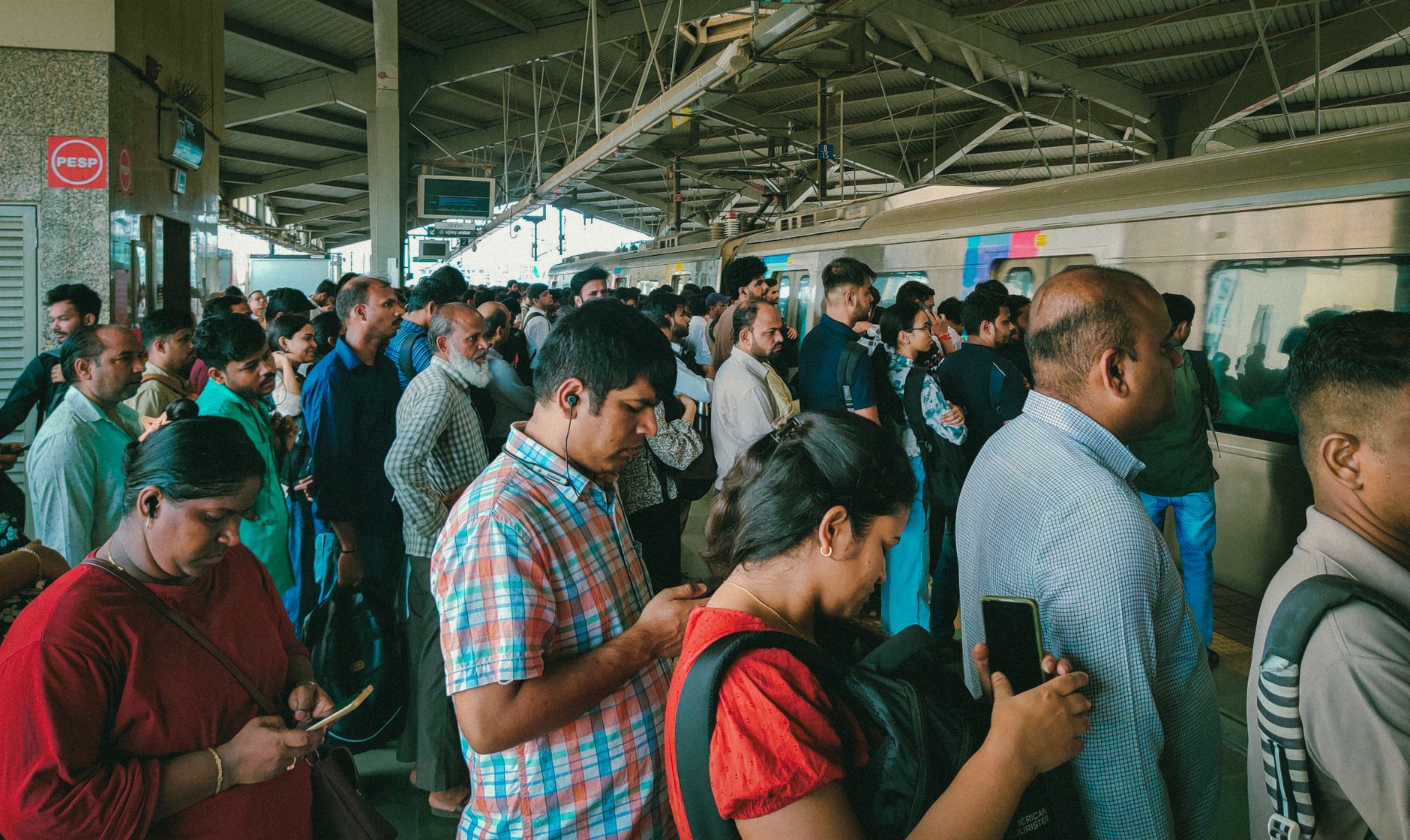
Every working morning, roughly 7.5 million people squeeze onto Mumbai's suburban trains, a number larger than the population of most countries. The network is the closest thing the city has to a circulatory system, and for much of the year it performs a daily miracle of moving that crowd on time. The trouble is that it does so at about 2.6 times its intended capacity, and once the monsoon arrives, the strain on both the trains and the civic infrastructure around them turns visible, and sometimes fatal. This is an analysis of where the pain is real, what has genuinely improved, and which fixes the people who study the system keep returning to.
It is worth saying at the outset what this piece is not. It is not an attempt to assign blame to any government, party or official. Mumbai's commuting crisis has been built over decades by demographics, geography and competing priorities, and untangling it will take the railways, the state and the municipal corporation pulling in the same direction. The useful conversation is about systems, not scapegoats.
The human cost behind the numbers
The statistics are sobering precisely because they are so routine. Death tolls on the suburban network once peaked near 3,500 a year, an average of nearly ten lives a day. That figure has fallen — to 2,468 in 2024 and 2,287 last year — which is real progress, but the absolute numbers remain among the worst for any urban transit system in the world. Of these, roughly 700 deaths a year come from people falling off moving trains, while others are killed crossing tracks or slipping into the gap between train and platform.
The causes are consistent enough to have names: overcrowding, trespassing and platform gaps. In June 2025, five commuters died and nine were injured near Mumbra when passengers standing on the footboards of two trains passing in opposite directions brushed against each other — investigators pointed to something as small as a protruding backpack triggering a domino effect. The incident captured the core problem in a single image. People ride on footboards not from bravado but because there is no room inside.

When the rain shuts the lifeline down
The monsoon multiplies every weakness. The 2025 season opened with the earliest monsoon onset in about 75 years and a single-day burst of around 135 mm in the city. By August, services on the Harbour and Main lines were repeatedly suspended as water pooled over the tracks. At low-lying chokepoints such as Chunabhatti, water rose to roughly 12 inches after the Mithi river overflowed, and the Harbour line reportedly stayed shut for more than 15 hours before services limped back at 3 am.
The physics are unforgiving. When water rises above the rail head, traction current must be cut to prevent electrocution and short circuits, so trains simply cannot run. A handful of flooding hotspots — culverts, subways and stations sitting in natural depressions — are enough to paralyse the whole spine of the city. For the daily commuter, a flooded stretch near one station can mean a four-hour ordeal getting home.
The memory underneath all of this is 26 July 2005, when Mumbai absorbed 944 mm of rain in 24 hours, one of the heaviest single-day downpours ever recorded anywhere, and over 900 people died. Much of the city's current flood-control thinking was born from that disaster.
What is actually working
It would be unfair, and inaccurate, to suggest nothing has changed. Several reforms are genuinely in motion, and some are already paying off.
- Safer rakes are coming. After the Mumbra tragedy, the Railway Board committed to new train designs with automatic door closure, roof-mounted ventilation, louvred doors and vestibules that let passengers move between coaches. The first prototype was targeted for late 2025, with service introduction to follow testing and certification.
- More AC and 15-car trains. Air-conditioned rakes with sealed doors are being added to both lines, and longer 15-car formations squeeze more capacity onto the same tracks.
- Physical safety works. Central Railway has been building a 41-km boundary wall, about 2.7 metres tall, at 139 locations identified as the worst trespassing spots, alongside more escalators, foot-overbridges and Railway Protection Force watch points at crowded stations like Dadar.
- Drainage muscle. Ahead of the 2025 monsoon the municipal corporation made all 16 pumping stations operational from mid-May and deployed more than 550 dewatering pumps, monitored through an IoT-enabled central dashboard with staff working in three shifts. In one four-day spell, the stations pumped out 16,451 million litres of water, with the Irla station alone handling 3,768 million litres.
The falling death toll, the desilting contracts and the steady drumbeat of new pumps are not nothing. They show that focused engineering and money do move the needle.
The big modernisation bet
The most consequential reform is also the least visible to a commuter on a wet platform. The Mumbai Urban Transport Project (MUTP), running since 2002 through the Mumbai Railway Vikas Corporation, has reached its fourth phase. MUTP-4 is studying new corridors across the metropolitan region and, crucially, the rollout of modern signalling — Communication-Based Train Control (CBTC) and the Kavach anti-collision system.
Why does signalling matter more than another flyover? Because CBTC lets trains run safely with shorter gaps between them, the single most powerful lever for adding capacity without laying new tracks. More trains per hour means less crushing inside each coach, which is the root cause of footboard deaths. The railways have also floated a tender for 2,856 air-conditioned Vande Metro coaches, signalling a long-term shift toward sealed, higher-capacity trains. These are decade-scale projects, but they are the structural answer rather than a seasonal patch.
The reforms experts keep recommending
Transport planners, civic groups and railway engineers tend to converge on a similar short list. None of it is exotic; the difficulty is in sequencing and follow-through.
- Finish the drainage backlog. Two of the eight pumping stations recommended by the Chitale Committee after 2005, at Mogra and Mahul, remain incomplete two decades on. Completing them and de-silting the Mithi and major nullahs before, not during, the rains would remove several of the chokepoints that shut the trains down.
- Treat rail and drainage as one project. Flooding hotspots and railway flooding spots overlap. Raising track beds, sealing culverts and building dedicated track drainage at known low points would keep traction current live through more of a storm.
- Cut headways with signalling, then add platforms. Faster signalling only helps if stations can absorb the crowds, so dispersal capacity — wider foot-overbridges, more escalators and staircases — has to scale alongside it.
- Close the platform gap. Standardising platform heights and curvature, and adding gap-fillers at the worst stations, directly targets a category of death that pure engineering can eliminate.
- Spread the load. Staggered office hours, flexible work and better feeder bus and metro links would flatten the brutal peak that forces people onto footboards in the first place.
- Publish the data. Real-time, public dashboards on flooding, pump status and accident hotspots build trust and let citizens plan, while keeping agencies accountable to measurable targets.
What comes next
The encouraging reading of Mumbai's situation is that almost every fix is known, costed and, in many cases, already begun. The harder truth is that the network and the city's drainage were designed for a smaller, drier Mumbai, and climate change is delivering more intense bursts of rain than the original engineering ever assumed.
Progress will be measured less by ribbon-cuttings than by boring metrics: how many monsoon hours the trains keep running, how the fall-from-train number trends, how quickly a flooded line is restored. If the signalling upgrades, the new rakes, the boundary walls and the completed pumping stations arrive on something close to schedule, the daily miracle could become a little less dangerous. That is a governance challenge of coordination and persistence — unglamorous, achievable, and overdue.