Photo: Justin Brinkhoff / Pexels
India's Ration System Works Better Than It Used To — and Still Leaves People Out
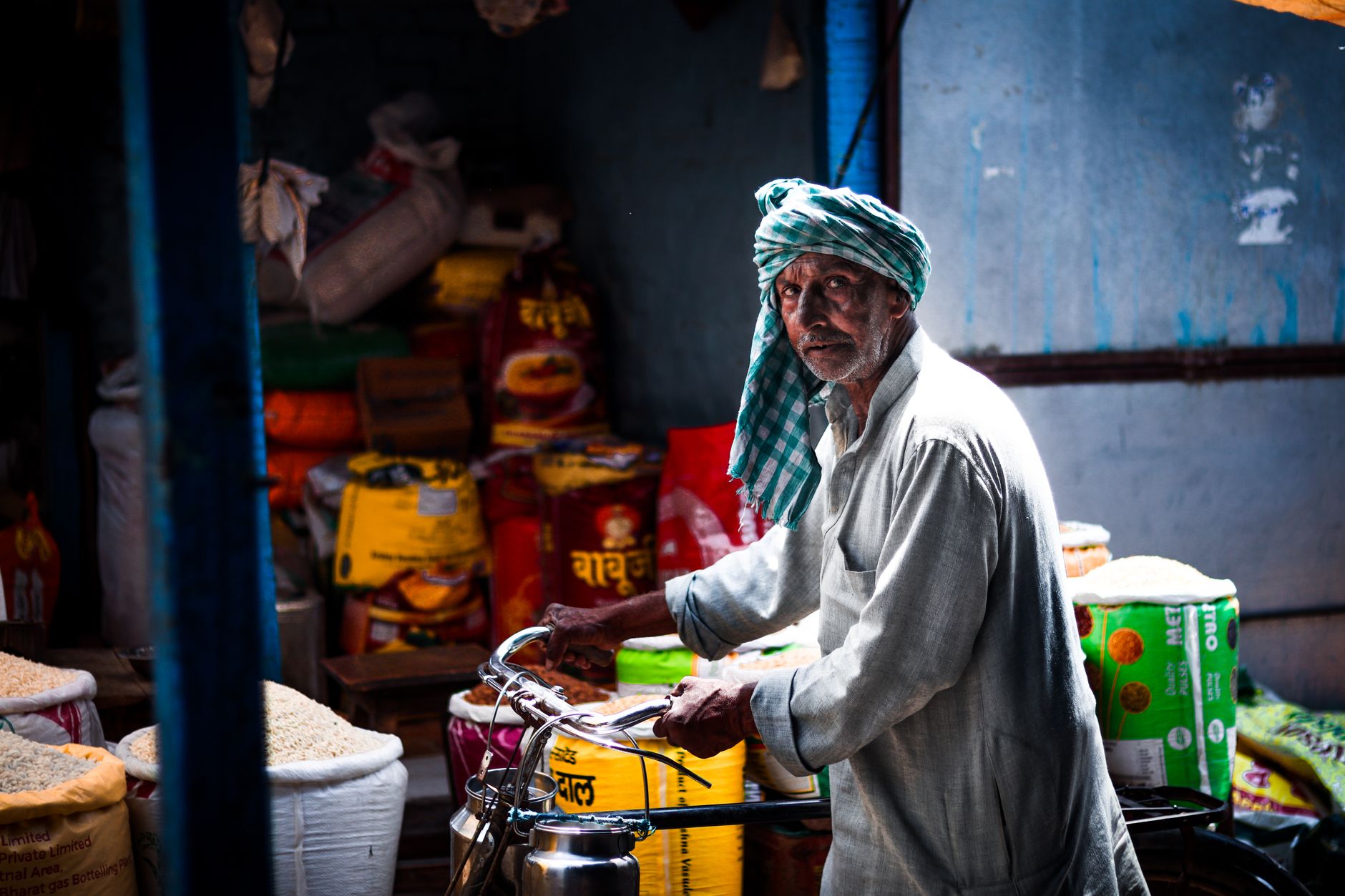
Walk into a fair price shop in almost any district and you will see a small machine on the counter that did not exist a decade ago. A cardholder presses a thumb on it, a slip prints, and the grain is weighed out. That quiet device — and the database behind it — explains both why India's public distribution system is in far better shape than it was, and why the arguments over how to fix it are not finished.
This is an analysis, not a verdict. The aim here is to look honestly at what ordinary citizens still struggle with, give due credit to what has actually improved, and lay out the specific reforms that economists and food-policy researchers keep returning to. No party owns this story, and no single official deserves the blame for a machine this large.
The scale we are talking about
The National Food Security Act of 2013 entitles roughly 81.35 crore people to subsidised foodgrain — wheat and rice at a few rupees a kilo, and for the past couple of years largely free under the central scheme. That grain moves through more than 5.3 lakh fair price shops, making this one of the biggest food safety nets anywhere on earth.
A system this size cannot be judged by anecdote. A single rude dealer or one empty sack does not condemn the whole network, and one glossy success story does not redeem it. The useful questions are about patterns: who is reliably reached, who is missed, and where the grain leaks before it gets to a plate.
What has genuinely improved
It is fashionable to dismiss the ration system as hopeless. The data does not support that.
Digitisation has been real. Ration cards and beneficiary records are now almost entirely computerised, and around 99.8% of cards are linked to Aadhaar. Roughly 97% of transactions happen through biometric authentication on the electronic point-of-sale machines at shop counters. That makes the old trick of drawing grain against ghost or duplicate cards much harder to pull off.
The second big shift is portability. One Nation One Ration Card lets a worker who has moved from, say, Bihar to a construction site in another state collect their entitled grain there instead of losing it. Every state and union territory is now part of it, and the scheme has recorded well over 100 crore portability transactions, channelling tens of thousands of crores in subsidy to people exactly when they are most vulnerable — far from home.
There has also been a nutrition push. The grain itself now increasingly arrives as fortified rice, blended with iron, folic acid and vitamin B12 at a standard of about 28 mg of iron per kilo, with free supply across welfare schemes extended through December 2028. For a country with stubbornly high anaemia, putting micronutrients into the staple people already eat is a sensible, low-friction idea.
Where citizens still get stuck
The honest other half of the picture is that real people still fall through gaps, and most of those gaps are structural rather than the fault of anyone at the counter.
The biggest is the coverage cap frozen at the 2011 Census. The number of people the law can cover is calculated from a population count that is now well over a decade old. India has added many crores of people since, including newborns and new households, yet the national quota has not moved with them. The result is a quiet exclusion error: families who are genuinely poor today but were not on a 2011-derived list can find themselves without a card until a state finds room.
Leakage is the other long-running worry, and here it is important to be precise rather than alarmist. Estimates vary a lot by method. One 2025 study by the think tank ICRIER put diversion at close to 28%, a fiscal loss it valued at about ₹69,108 crore a year. Other estimates built on household consumption survey data show leakage falling sharply over time — from above 40% in 2011-12 to single digits more recently. The truth is that the trend is downward but the destination is disputed, and a cautious reader should treat any single headline figure with care.
Then there are the everyday frictions:
- Authentication failures. Worn fingerprints — common among older people and manual labourers — or patchy network coverage can stop a legitimate cardholder from drawing grain on a given day.
- A thin food basket. The system delivers calories well but largely as cereals. Pulses, oil and other essentials that decide whether a diet is actually nourishing are mostly absent.
- Last-mile dependence on the dealer. Where grievance redress is weak, a single uncooperative shop can effectively gatekeep a family's entitlement.
The cash-versus-grain debate, fairly stated
Hovering over all of this is one big design question: should the state keep handing out physical grain, or simply transfer money and let people buy what they want?
The case for cash is straightforward. It cuts storage and transport costs, sidesteps a lot of the diversion that physical grain invites, and respects what families actually need to buy. The case for staying in-kind is just as real. Grain shields a household from food-price spikes, it is harder to divert away from food once it is in the kitchen, and in remote areas with thin banking and patchy markets, a sack of rice is more reliable than a bank credit that may be hard to withdraw or quickly spent elsewhere.
Most serious analysts no longer treat this as all-or-nothing. The sensible direction is a hybrid: keep dependable in-kind supply where markets and banks are weak, and offer a cash or voucher option where they are strong and people would prefer the flexibility.
The reforms experts keep recommending
Across policy papers and committee reports, a fairly consistent menu of fixes shows up. None of them require tearing the system down.
- Update the coverage cap. Re-base the eligible numbers on current population estimates rather than 2011 figures, so the safety net grows with the country instead of shrinking against it.
- Fix authentication fallbacks. Guarantee a clear offline or one-time-password route so a failed fingerprint never means a denied entitlement, and publish denial data so problems surface.
- Widen the basket. Add pulses and, where states can manage it, coarse grains like millets and edible oil, turning a calorie programme into a genuine nutrition programme.
- Decentralise procurement. Buy and distribute more grain closer to where it is grown and eaten. That trims the long, leaky logistics chain and supports local farmers at the same time.
- Make grievance redress real. A simple, well-publicised complaint line with time-bound resolution shifts power back toward the cardholder and away from a difficult dealer.
- Pilot the hybrid choice carefully. Test cash or voucher options in well-banked urban pockets, measure outcomes honestly, and scale only what demonstrably helps.
Why this is worth getting right
Food security is not an abstract line in a budget. For a large share of Indian households it is the difference between a stable month and a precarious one, and for children it shapes outcomes that no later policy can fully undo.
The encouraging part is that the system has already shown it can change — biometric counters, nationwide portability and fortified grain were all once proposals, and are now routine. The unfinished part is equally clear: a coverage formula stuck in the past, a food basket too narrow to nourish, and leakage numbers nobody can yet agree on. Treating those as solvable engineering problems rather than ammunition for argument is the most useful thing anyone can do with this debate. The plumbing works better than it did. The job now is to reach the people the pipes still miss.