Photo: Ravi Roshan / Pexels
Rupee at Record Low: Inside India's 'Gold Freeze' Gambit
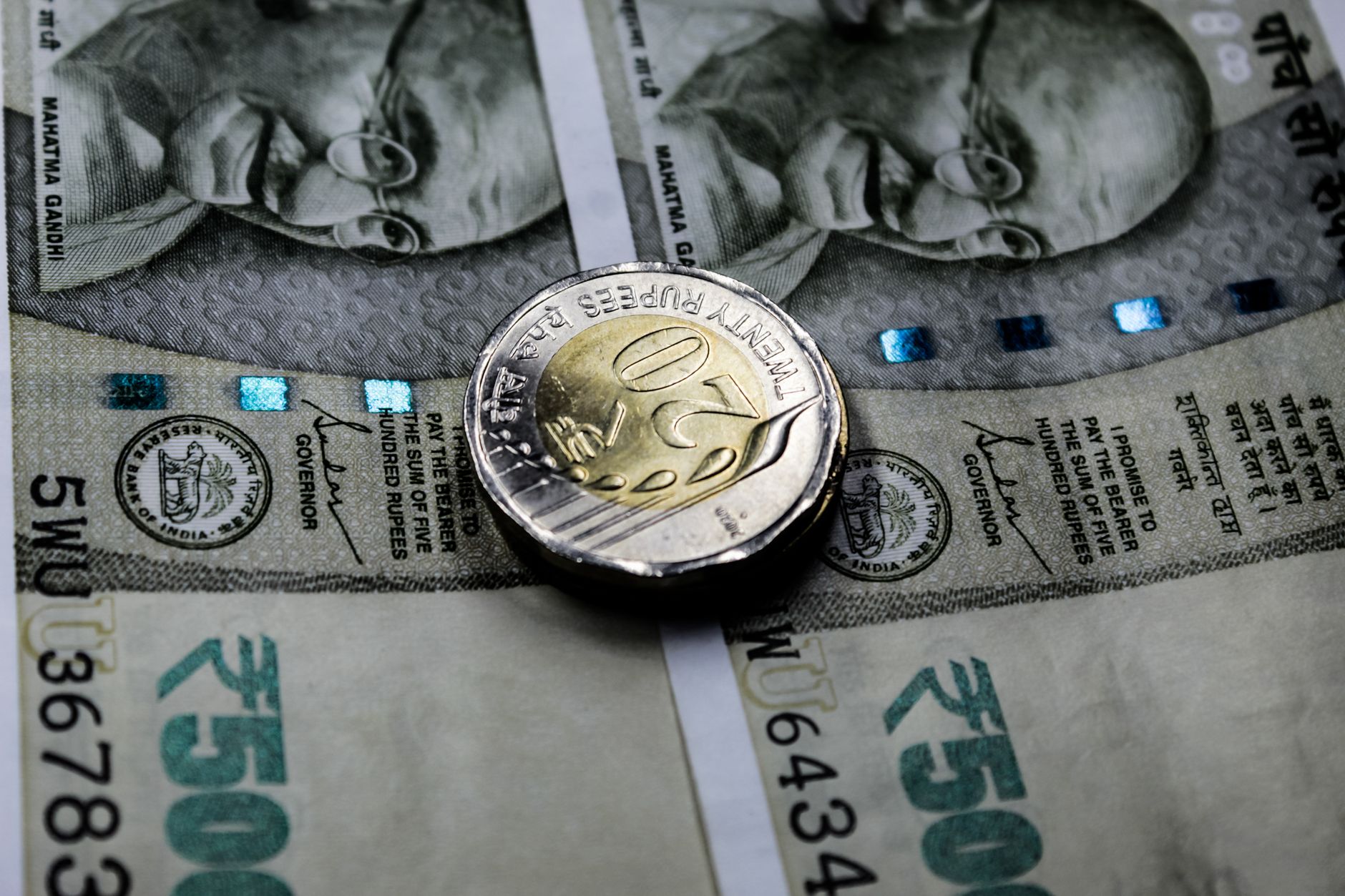
When a finance ministry quietly doubles a customs duty, markets shrug. When a prime minister stands up and asks 1.4 billion people to stop buying gold for a year, you know something deeper is breaking. That is exactly what happened in May 2026 as the Indian rupee slid to the worst levels in its history, dragging the country's most beloved asset into the centre of a currency-defence campaign few investors saw coming.
The rupee touched an all-time low of roughly 96.89 per US dollar on May 20, 2026, having sunk near 96.96 intraday before the Reserve Bank of India stepped in. It was the fourth record low in barely a fortnight, and it crystallised a brutal truth: India's two biggest dollar drains — oil and gold — had collided at the worst possible moment.

Why the Rupee Cracked
The rot began in late February 2026, when conflict involving Iran sent energy markets into a spin. Brent crude jumped more than 50% from the low-$70s to around $109–110 a barrel. For an economy that imports close to 88% of the crude it burns, that is a direct hit to the national wallet — analysts reckon every $10 rise in Brent adds roughly $14–15 billion to India's annual import bill.
From about 87 a dollar before the conflict, the rupee shed nearly 6% in under three months, its sharpest sustained slide in at least a decade. Foreign investors made it worse, yanking more than $22 billion out of Indian stocks and bonds since the war began — an exodus reminiscent of the COVID panic of March 2020. Every dollar pulled out has to be bought with rupees sold, and that selling pressure showed up on the screens day after day. The Sensex and Nifty have whipsawed through it all, with banking and energy stocks bearing the brunt before a late-May relief rally as crude eased.

Gold: India's Patriotic Habit Becomes a Problem
Here is the twist that makes this story different from a routine currency wobble. As the rupee fell, ordinary Indians did what they have always done in uncertain times — they bought gold. Lots of it. Gold imports in April 2026 surged 81.7% year-on-year, and silver imports exploded 157.2%. Across FY26, gold and silver shipments touched a staggering $84 billion, or nearly 11% of India's entire merchandise import bill.
That instinct, sensible for any single household, turned toxic at the national level. Gold is bought in dollars. So every tonne of bullion landing at Indian ports drained the very foreign-exchange reserves the country needed to pay for oil. The world's second-largest gold consumer was, in effect, exporting its currency stability one wedding necklace at a time.
So the government reached for a blunt instrument. With effect from May 13, 2026, it raised the effective import duty on gold and silver to around 15%. The basic customs duty was doubled to 10%, and the agriculture infrastructure and development cess was lifted sharply. Add the integrated GST, and the total levy on imported bullion roughly doubled to about 18.45% from 9.18% earlier. For good measure, duty-free gold imports were capped at 100 kg and certain silver shipments were shifted from the "free" to the "restricted" list.
The Prime Minister's Unusual Appeal
Duties are policy. What followed was something closer to a moral appeal. Around May 10, Prime Minister Narendra Modi publicly urged citizens to pause gold purchases for at least a year, framing restraint as an act of economic patriotism while the rupee was under siege. Asking a nation that treats gold as savings, status and sentiment to simply stop buying is an extraordinary request — and an admission of how stretched the situation had become.
The early numbers suggest people listened, at least for now. According to the India Bullion & Jewellers Association, gold demand collapsed nearly 70% after the duty hike, falling to about 7.5 tonnes in the fortnight ending May 27, 2026, against roughly 25 tonnes a year earlier. The finance ministry's stated aim was to curb non-essential imports through price signals; the appeal added a layer of social pressure that no tariff alone could deliver.
The RBI's Quiet War in the Background
While the headlines focused on gold, the Reserve Bank was fighting a less visible battle. Since late February it had deployed well over $38 billion from its reserves to slow the rupee's descent, selling dollars to prevent a disorderly collapse. India's foreign-exchange reserves fell to $681.4 billion in the week ending May 22, down $7.5 billion in a single week and well off the peak of about $728.5 billion.
The central bank also moved to fix a side effect of its own intervention. Selling dollars sucks rupees out of the banking system, and that had tightened cash conditions. So on May 26 the RBI ran a $5 billion dollar-rupee buy-sell swap auction for a three-year tenor — and demand was telling. Banks bid for nearly $9.8 billion, almost double the amount on offer, a sign that the financial system still trusts the RBI's hand on the tiller even as volatility bites. Officials signalled that everything remained on the table, from further swaps to overseas bond raisings and even a possible rate move.
What It Means for Your Money
For households, a weaker rupee is a slow-burn tax. Imported electronics, foreign travel, overseas education and fuel-linked costs all creep higher when the currency sags. The gold curbs sting too: with effective levies near 18%, domestic prices carry a hefty premium, and buyers eyeing a wedding or a festival now pay more for less.
For investors, the picture is more nuanced than the doom headlines suggest. A cheaper rupee is a tailwind for exporters — IT services, pharma and engineering firms earn in dollars and book the gains at home. It also makes Indian assets cheaper in dollar terms. Some fund managers argue that a rupee past 96 is precisely the point at which long-term money should lean into rupee-denominated equities and bonds rather than flee to dollars and gold, on the logic that currencies overshoot and India's growth story remains intact. The flip side: importers, airlines and companies with foreign debt face fatter bills, and any further oil spike could reopen the wound.
What Comes Next
The near-term fate of the rupee is tied to a barrel of oil sitting thousands of kilometres away. If the Iran-linked tensions ease and Brent keeps sliding — as it began to in late May — the single biggest pressure on the currency lifts, and the RBI can rebuild its reserves rather than burn them. If crude stays elevated, expect the central bank to keep intervening, more liquidity tools, and possibly a harder look at interest rates.
The gold experiment is the wildcard. A 70% demand crash is dramatic, but India's appetite for the metal has a long history of bouncing back the moment prices or sentiment turn, often through unofficial channels when official imports get pricey. Whether a one-year voluntary freeze holds — and whether it meaningfully moves the rupee — will be one of the more fascinating economic stories of 2026. For now, the message from New Delhi is blunt: in a fight to defend the currency, even the nation's favourite asset is being asked to sit one out.
Source: businesstoday.in


