Photo: Ian Probets / Pexels
Sydney Pram Crash: Two Brothers, 5 and 1, Killed in Cabramatta
A routine school-run hour in a busy Sydney suburb turned into one of the most painful stories of the week after a pram crash in Cabramatta killed two young brothers. The boys, aged five and one, were struck by a car while sitting in a pram on Wednesday afternoon. Both were rushed to hospital in a critical condition, and neither could be saved. The case has travelled far beyond Australia, picked up by newsrooms across the United States, Britain and Canada, partly because of its sheer cruelty and partly because of what strangers did in the moments after.
What follows is drawn from official police statements and verified reporting. Some personal details remain unconfirmed, and we have flagged those clearly rather than guess at a family's grief.
A quiet afternoon shattered in south-west Sydney
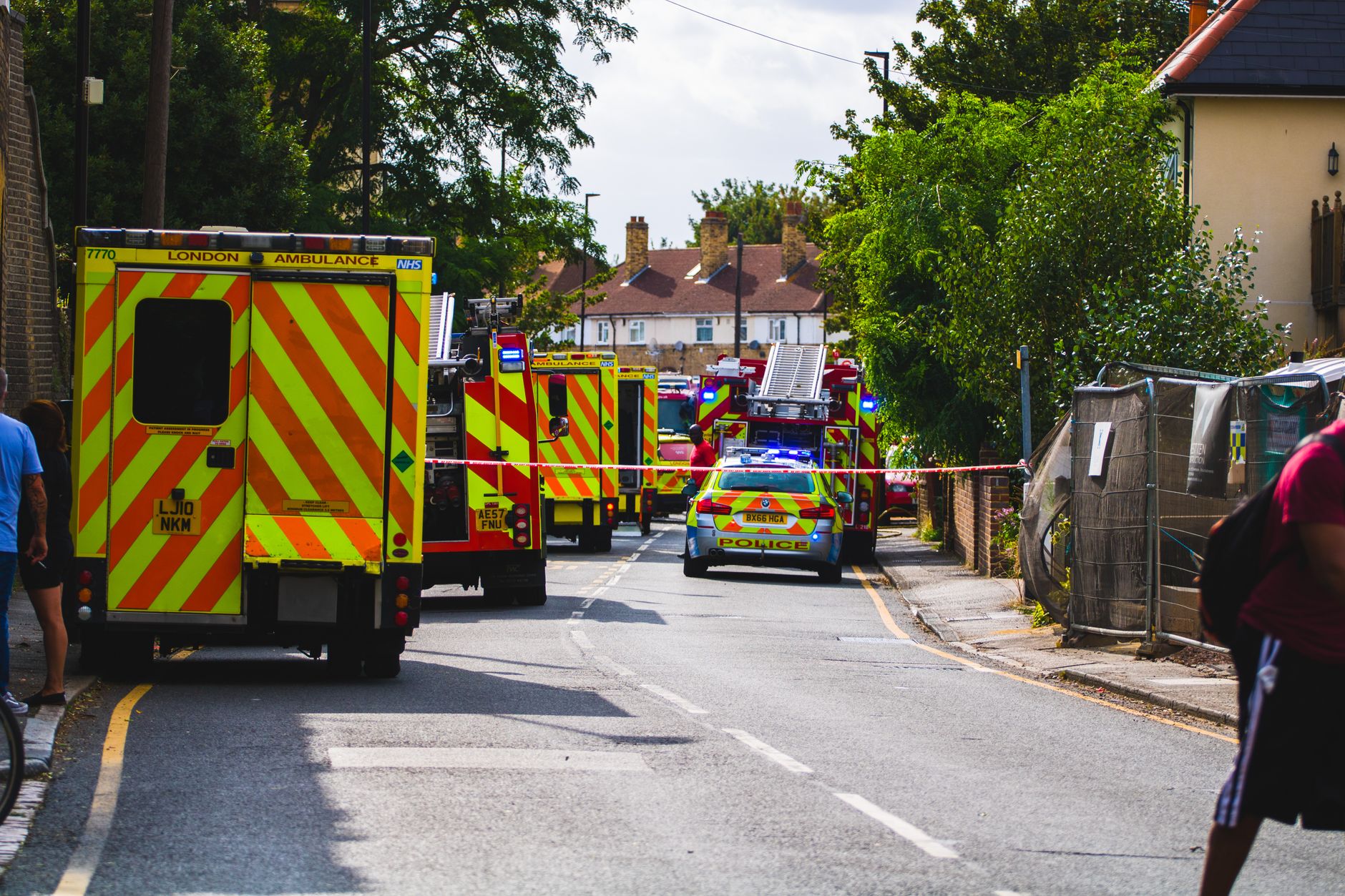
The crash happened at about 3:15pm on June 17, 2026, at the intersection of Joseph Street — part of the Cumberland Highway — and Gilbert Street in Cabramatta, a densely populated multicultural suburb roughly 30 kilometres south-west of central Sydney. It is the kind of corner thousands of families pass through every afternoon, lined with shops and pedestrian crossings.
NSW Police say a car struck the two children while they were in a pram. A 33-year-old woman known to the children, widely reported as their mother, was treated at the scene for minor injuries. The boys were taken to The Children's Hospital at Westmead, where they later died.
Reports describe the victims as brothers — a kindergarten-aged boy and his baby brother. As of the latest official updates, police had not yet formally identified them, which is standard procedure while next of kin are notified. We have chosen not to publish unconfirmed names out of respect for that process.

What police have confirmed
The verified facts are limited but clear. Here is what authorities have stated:
- Two children, aged five and one, were struck while in a pram and later died.
- A 56-year-old male driver was uninjured. He was arrested at the scene and taken to hospital for mandatory testing, a routine step after any serious crash in New South Wales.
- The children's mother, 33, suffered minor injuries.
- A stretch of the Cumberland Highway was closed southbound while specialist crash investigators examined the site.
- The investigation is ongoing, and no charges had been formally announced at the time of reporting.
Mandatory testing does not imply guilt or impairment. Under NSW law, drivers involved in fatal or serious collisions are routinely tested for alcohol and drugs so investigators can rule factors in or out. What caused the car to mount or veer toward the pram has not been established publicly, and police have asked for patience while their crash unit completes its work.
Strangers who lifted a car with their hands
The detail that has resonated most around the world is what bystanders did in the first frantic minutes. According to reporting from the scene, one of the children became trapped beneath the vehicle. Several motorists who had stopped didn't wait for emergency services. Together, they physically tipped the car onto its side to reach the child underneath, while other passers-by began CPR.
It is an extraordinary act under unbearable pressure. The combined strength needed to roll a vehicle is significant, and doing it while a parent screams nearby speaks to a kind of reflexive courage that most people hope they'll never have to test. Paramedics took over once they arrived, but the early efforts of ordinary people almost certainly bought time that the medical teams then fought to use.
Those witnesses will carry what they saw. Trauma support after roadside emergencies is something Australian first-responder services increasingly extend to members of the public, not just professionals, and several of the people who stopped may need it.
Why this crash is hitting so hard worldwide
Child road deaths are, statistically, rare in wealthy countries with strong traffic regulation. That rarity is part of why a story like this spreads. When the victims are a five-year-old and a baby in a pram, the usual emotional distance that lets readers scroll past a crash report collapses. Parents everywhere picture their own afternoon walk, their own pram, their own corner shop.
There is also the universality of the setting. A pram on a footpath is one of the most ordinary, lowest-risk images in daily life. The idea that it could be the site of a double tragedy unsettles a basic assumption people make about the safety of simply walking with their kids. That is why outlets from London to Toronto ran the story even though it has no direct connection to their readers.
Cabramatta itself carries history. It is one of Sydney's most prominent Vietnamese-Australian communities, a place that rebuilt its reputation over decades. A loss like this lands hard in a neighbourhood where local life is closely woven together.
The questions investigators now face
A crash investigation of this kind tends to move slowly and deliberately, and the public version of events can change as more is learned. Investigators will be working through several lines of inquiry:
- How the car came to strike the pram — whether it left the roadway, was turning, or struck the children on or near a crossing.
- Vehicle factors — mechanical condition, speed, and whether anything failed.
- Driver factors — the results of mandatory testing, medical episodes, and visibility.
- The road environment — sightlines, signal timing and pedestrian protections at that specific intersection.
Only once those threads are examined can police decide whether charges are warranted. It is worth being cautious about early speculation online; the difference between a deliberate act, a medical emergency behind the wheel, and a momentary error matters enormously in law, and none of those has been established here.
How rare, and how preventable, are crashes like this
Pedestrian deaths involving the very young are uncommon, but they are not random. Globally, road safety researchers consistently point to a handful of high-leverage measures that reduce them: lower speed limits in areas with foot traffic, physical separation between vehicles and footpaths, protected crossings with their own signal phase, and vehicle designs that are less lethal to pedestrians.
Australia has pursued many of these through its long-running road safety strategy, and child fatality rates have fallen sharply over a generation. Yet busy arterial roads that double as suburban high streets — exactly the kind of corridor the Cumberland Highway represents — remain a persistent pressure point, where through-traffic and pedestrian life share the same few metres.
This is not the moment to turn a family's loss into a policy lecture, and nothing about engineering changes the immediate human cost. But if the case prompts a fresh look at how the most vulnerable road users are protected at intersections like this one, that would be a meaningful response to an otherwise senseless afternoon.
For now, two little boys are gone, a mother is in hospital, a community is grieving, and a group of strangers who tried everything are left with a memory they didn't ask for. Police have urged anyone who witnessed the crash or has dashcam footage to come forward, and have asked the public to respect the family's privacy while the investigation runs its course.