
Photo: Ravi Roshan / Pexels
Treasury Bills via RBI Retail Direct: The Govt FD Alternative
Most Indians park their safe money in a bank fixed deposit and never look further. But there is a quieter option sitting one tier above the FD on the safety ladder — lending directly to the Government of India through treasury bills, bought yourself on the RBI Retail Direct portal for as little as ₹10,000. No bank in the middle, no fund manager taking a cut, and a borrower that does not go bust. For a large class of conservative savers, T-bills are the most under-used FD alternative in the country.
This is not an exotic instrument or a trading gimmick. It is the same short-term paper that banks, mutual funds and large institutions have used to park cash for decades. The only thing that changed is access: since RBI opened its retail window, an ordinary individual can now buy the exact same security on the exact same terms. Here is how it works, what you actually earn, and the one catch that decides whether it beats your FD.
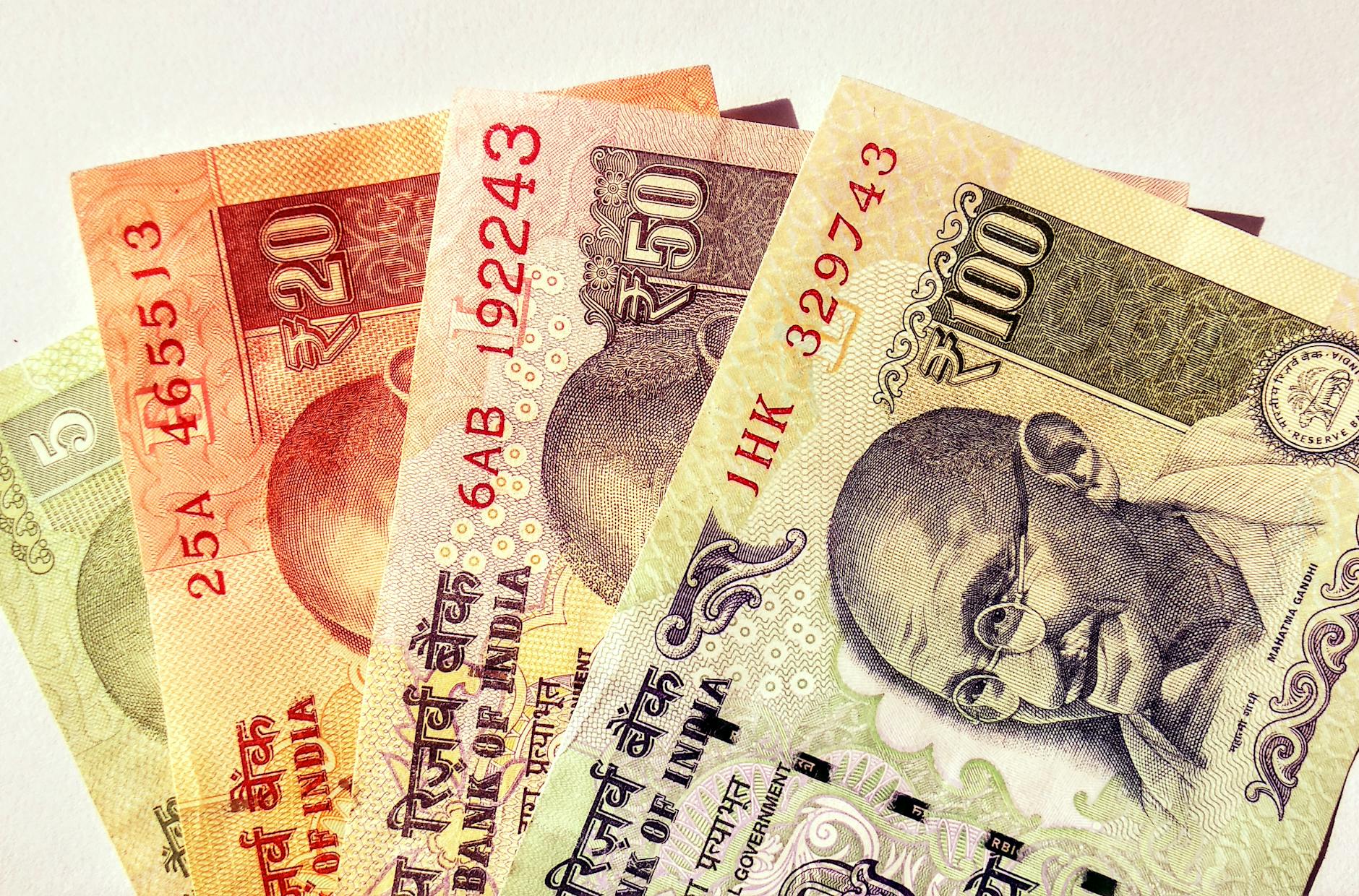
What a treasury bill actually is
A treasury bill is a short-term IOU issued by the central government to raise money for a few months. It comes in three tenures only: 91 days, 182 days and 364 days. There is no monthly interest and no coupon. Instead, a T-bill is a zero-coupon instrument — you buy it at a discount to its face value and get the full face value back at maturity.
Say a 364-day bill has a face value of ₹10,000. You might buy it today for roughly ₹9,350 and receive ₹10,000 when it matures a year later. That ₹650 gap is your return. Express it as a yield and it works out to roughly 6.5–7%, depending on the tenure and the day's auction. The shorter the bill, the smaller the discount, but the principle is identical.
Because the borrower is the sovereign, the credit risk is effectively zero. A bank can wobble; the Government of India simply does not default on rupee paper it can print. That single fact is why T-bills sit a notch above even AAA corporate bonds and above your bank FD on the safety scale.
Why it can beat your bank FD
The headline number on a T-bill is often comparable to, or slightly better than, what big banks offer on a one-year FD — and meaningfully better than the savings-account rate where most idle money rots. But the real edge is structural, not just the rate.
- Sovereign backing on the full amount. A bank FD is insured only up to ₹5 lakh per bank under DICGC. Beyond that, you are an unsecured creditor of the bank. A T-bill is backed by the government for every rupee.
- No reinvestment lock-in. When a bill matures you decide what to do next, rather than being auto-renewed at a rate the bank quietly sets.
- Rate transparency. Yields are set by open auction, so you are not at the mercy of a bank's internal FD card.
- No middleman cost. Opening and running the gilt account is free; there is no expense ratio as there would be in a liquid mutual fund.
For parking an emergency corpus, a child's near-term fee money, or cash you will need in under a year, that combination is hard to beat on pure safety-adjusted return.
How to actually buy one on RBI Retail Direct
The platform that makes this possible is RBI Retail Direct, a free portal run by the central bank where individuals open a Retail Direct Gilt (RDG) account. There is no fee to open or maintain it, and no brokerage. The steps are straightforward:
- Register at the Retail Direct portal with your PAN, Aadhaar-linked mobile, bank account and email, and complete the online KYC.
- Open your RDG account, which is created in your name and holds the securities directly — not through a broker's pool.
- Place a non-competitive bid in the weekly T-bill auction. "Non-competitive" simply means you accept the average price the big players set, so you don't need to guess the yield — you just say how much you want to buy.
- Fund the bid via UPI or net banking for a minimum of ₹10,000 face value, in multiples of ₹10,000.
- Hold to maturity, when the face value is credited straight to your linked bank account automatically.
T-bill auctions happen weekly, so you rarely wait long to deploy cash. A newer addition lets you set up a recurring SIP-style purchase of T-bills through the portal, so you can automate the habit the same way you would a mutual fund SIP — useful for steadily building a fixed-income base.
The tax catch nobody mentions
Here is the part that quietly decides whether T-bills win for you. The discount you earn is treated as short-term capital gains and taxed at your income-tax slab rate, because every T-bill matures in under a year. There is no special low rate.
The good news: there is no TDS deducted at redemption, so you receive the full face value and the cash flow is clean. The catch: you must report the gain and pay the tax yourself, and at the 30% slab a 7% pre-tax yield shrinks to under 5% post-tax — similar to what an FD would also deliver after tax.
So the honest verdict on tax is this:
- If you are in the 0% or low slab (and remember the new regime makes income up to ₹12 lakh effectively tax-free for many), T-bills are outstanding — a near-7% sovereign return you may keep almost entirely.
- If you are in the top slab, T-bills match an FD on net return but still win on safety, transparency and the absence of bank concentration risk.
The instrument is not magic; its advantage is greatest exactly for the savers FDs were supposed to serve — retirees, homemakers, the cautious middle, and anyone below the higher tax brackets.
Building a T-bill ladder for steady cash
The smartest way to use T-bills is not a single purchase but a ladder. Because the tenures are 91, 182 and 364 days, you can stagger buys so that a bill matures every few months, giving you a rolling stream of liquidity without ever breaking an FD or paying a penalty.
A simple starter ladder: split your safe corpus into thirds and buy a 91-day, a 182-day and a 364-day bill. As each one matures, roll it into a fresh 364-day bill. Within a year you have a self-renewing structure where money keeps coming free at regular intervals, every rupee earns the latest auction yield, and you are never fully locked in.
This is exactly how treasuries at large firms manage cash — and there is now no reason an individual cannot copy it for the price of a few minutes a quarter.
Who should use this, and who shouldn't
T-bills are not for chasing high returns; they will never beat equity over a decade and they are not meant to. They are a cash-management and capital-preservation tool. They shine for short-horizon money you cannot afford to risk: an emergency fund, a down-payment being assembled, school fees due next term, or a retiree's near-term living expenses.
They are a weaker fit if you want monthly interest in hand (a T-bill pays nothing until maturity), if you are firmly in the 30% slab and prefer a debt fund or an arbitrage fund for tax reasons, or if you genuinely need instant same-day liquidity, since secondary-market exit for retail lots can be thin.
For everyone else, the takeaway is simple. The safest borrower in the country is open for business, you can lend to it for ₹10,000, and the door is a free RBI portal most people have never opened. In a year when every basis point of safe yield counts, that is worth bookmarking.


