Photo: Monojit Dutta / Pexels
40 Crore Workers, No Pension: India's Social Security Gap
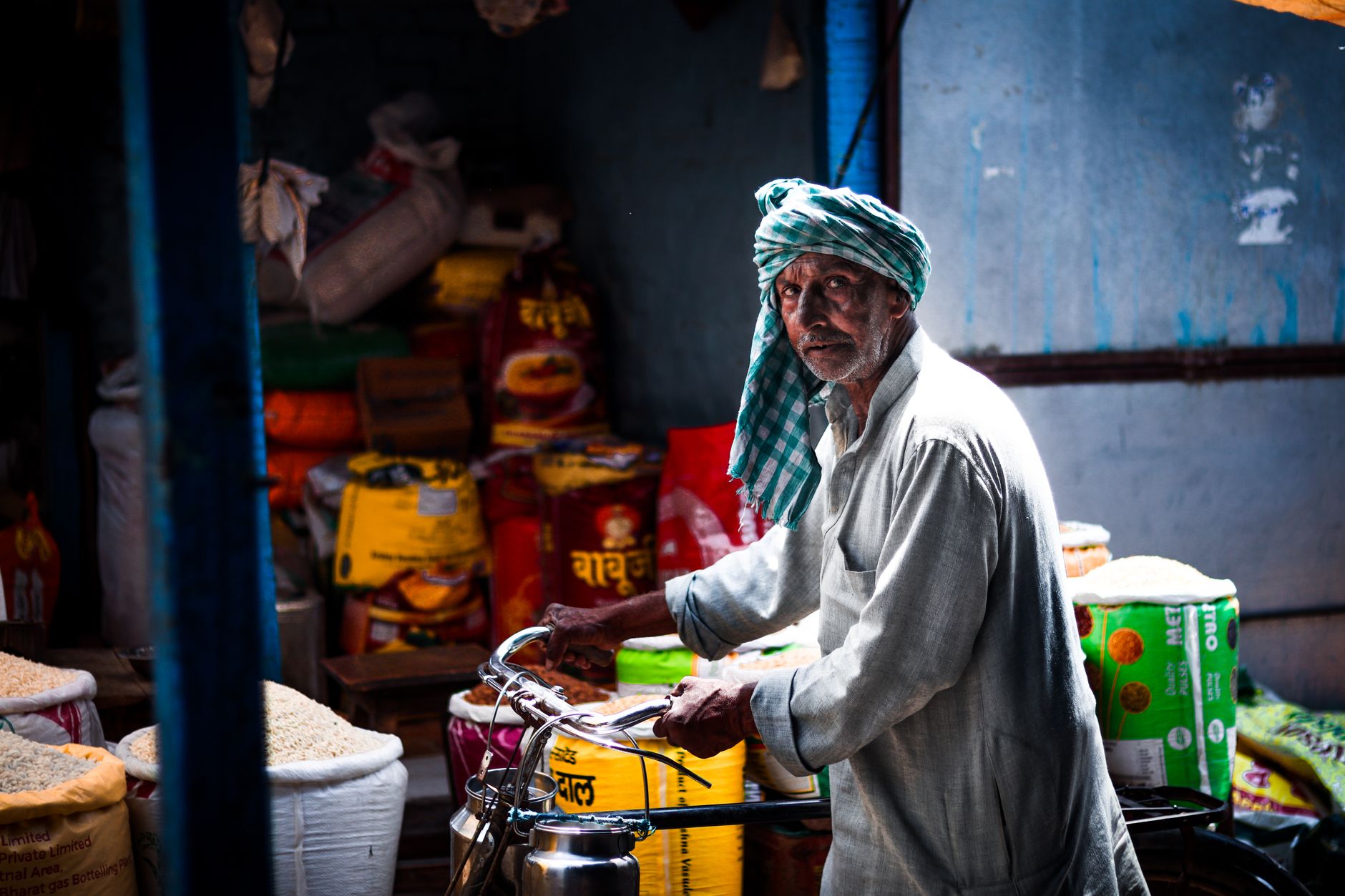
An auto driver in Indore, a tailor in Surat, a woman rolling agarbattis at home in Bengaluru, a delivery rider weaving through Gurugram traffic. They keep the economy moving, yet almost none of them will receive a pension cheque when they can no longer work. That is the quiet reality behind India's social security debate, and it touches more households than almost any other policy question we face.
Close to 90% of India's workforce is in the unorganised sector. The Economic Survey put the number of such workers at roughly 44 crore. These are people without a written contract, without paid leave, without an employer quietly setting aside money for their retirement. When age or illness arrives, the safety net is usually a son, a daughter, or nothing at all. This is not a partisan complaint; it is an arithmetic problem that successive governments of every stripe have wrestled with.

The gap between being counted and being covered
The single most important fact to understand is the distance between registration and protection. The e-Shram portal, launched in August 2021, has done something genuinely difficult: it has signed up more than 30 crore unorganised workers into one Aadhaar-linked database, making it among the largest such records anywhere. That is real administrative progress, and it deserves credit.
But a database is not a pension. e-Shram mainly gives a worker an ID and a free accident insurance cover. The flagship pension product for this group, Pradhan Mantri Shram Yogi Maan-dhan (PM-SYM), promises an assured ₹3,000 a month after 60. Despite that database of 30-crore-plus names, PM-SYM has enrolled around 50 lakh people, and in one recent year reportedly around 2.55 lakh subscribers dropped out. The scheme's own target was to add roughly two crore members a year. It has never come close.
So the structure exists, the workers are identified, and yet the pension reaches barely one in sixty of them. That is the heart of the issue.

Why ordinary workers stay out
It is tempting to blame apathy. The evidence points elsewhere. A few practical barriers explain most of the drop-off:
- Income is lumpy. PM-SYM asks for a fixed monthly contribution for decades. A worker whose earnings swing between a good festive month and a dry monsoon one finds a rigid auto-debit hard to sustain, and a single missed cycle can throw the account into arrears.
- The benefit feels distant. A 25-year-old earning ₹12,000 a month is asked to lock away money for 35 years to collect ₹3,000 later — by which time inflation will have eaten much of its value. The promise is real but the felt urgency is low.
- Awareness is thin. Many gig and home-based workers still assume social security is only for government staff or factory hands. The schemes are not reaching them in the language and channels they actually use.
- Too many doors. A worker may need to deal with e-Shram, a separate pension portal, a bank, and a Common Service Centre. Each handoff is a place to give up.
None of this means the worker is careless. It means the product was designed for a salaried life that most of its intended users do not lead.
What is genuinely working
A fair analysis has to acknowledge the wins, because they point to what good design looks like.
The clearest success is Atal Pension Yojana (APY). It has crossed roughly 8.3 crore subscribers, with women making up close to half. Why did APY scale when PM-SYM stalled? It is bank-led, the enrolment is almost frictionless for anyone with a savings account, contributions flow by auto-debit, and the worker can choose a pension slab from ₹1,000 to ₹5,000. The lesson is not that Indians won't save for old age — clearly tens of millions will — but that the channel and the simplicity decide everything.
The e-Shram "one-stop" upgrade of October 2024 is another step in the right direction. It began stitching multiple welfare schemes into a single view so a registered worker can see, in one place, what they are entitled to. And in November 2025 the long-pending Code on Social Security, 2020 finally came into force, becoming the first central law to actually define gig and platform workers and to require aggregators to pay between 1% and 2% of turnover into a workers' welfare fund. States moved first here — Rajasthan passed the country's pioneering gig-worker welfare law in 2023, and a handful of others have followed. These are real foundations to build on.
The reforms experts keep returning to
Across think tanks, labour economists and several official committees, a fairly consistent set of fixes comes up. They are technical, affordable and largely non-controversial.
- Make enrolment automatic, not optional. The APY experience suggests that opt-out beats opt-in. When a worker registers on e-Shram, a basic pension and insurance account could be opened by default, with the freedom to step out later.
- Build one portable, lifetime account. A worker who moves from construction in one state to a delivery gig in another should carry a single social-security account with them, the way a mobile number now travels across operators. Fragmented state and scheme silos are the enemy of coverage.
- Let contributions flex with income. Allow small, irregular top-ups — even ₹50 when there is cash — instead of a punishing fixed monthly debit. A few schemes already nudge towards micro-contributions; the principle should be the norm.
- Operationalise the gig welfare fund quickly. The law now mandates aggregator contributions. The pressing task is plumbing: a transparent fund, clear rules on what it pays for, and benefits that workers can actually claim without a fight.
- Co-contribute for the poorest. A modest government match, as PM-SYM already does, turns a tiny saving into a meaningful one. Targeting that match at the lowest-earning workers would stretch limited money furthest.
- Index the pension floor. A flat ₹3,000 promised decades out loses meaning. Linking the assured amount to wages or prices would keep the promise honest.
Why this deserves attention now
India is often described as a young country, and it is — for now. But the demographic window narrows, and the cohort of informal workers ageing into their sixties without savings is growing every year. A pension shortfall that looks manageable today becomes a much larger fiscal and social pressure in two decades, when the burden lands on younger families and on state welfare budgets.
The encouraging part is that none of this requires a leap of faith. The administrative spine exists in e-Shram. The proof of demand exists in Atal Pension Yojana. The legal scaffolding for the gig economy now exists in the Social Security Code. What remains is the unglamorous work of joining them up: one account, easy enrolment, flexible saving, and a benefit worth the wait. Get that right, and the auto driver in Indore and the tailor in Surat could one day retire with a cheque of their own rather than a hope that their children will manage. That is a goal worth holding every government, present and future, accountable to.