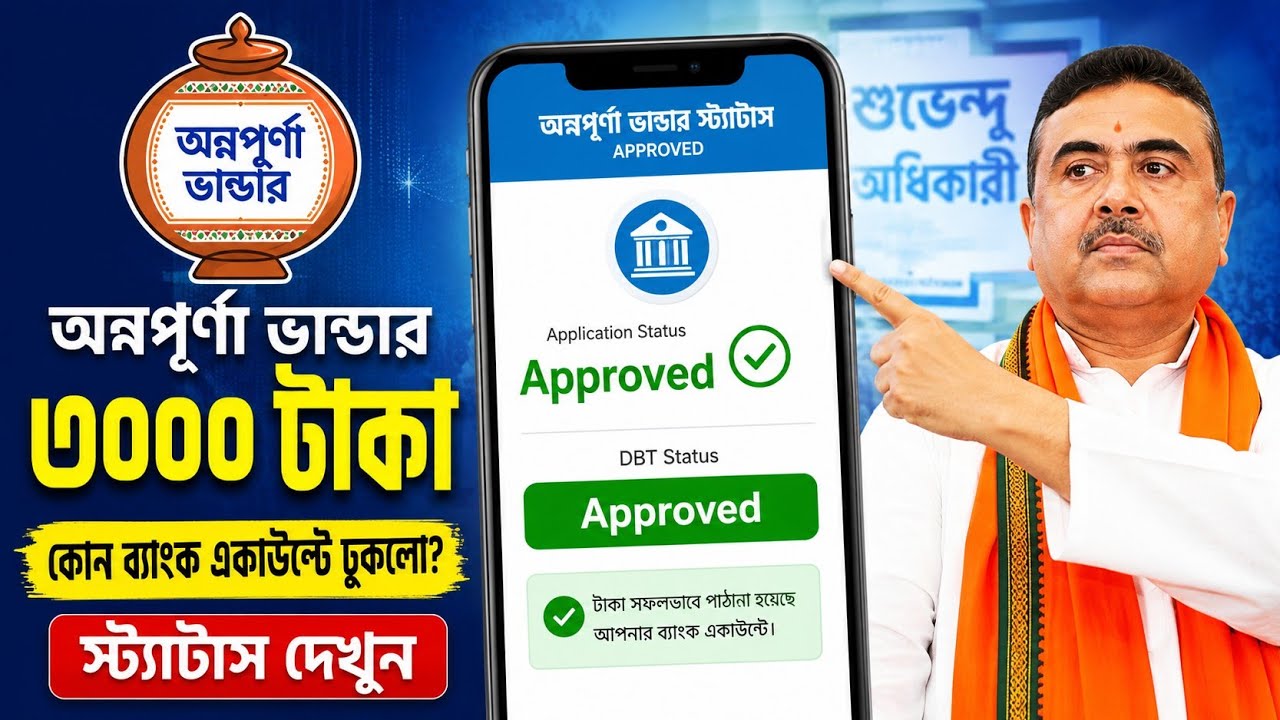
Annapurna Bhandar Status Check: Why This DBT Video Went Viral
A two-minute, fast-talking Bengali explainer titled around Annapurna Bhandar status check is quietly pulling in a flood of views — not because it is dramatic, but because it answers the one question millions of welfare beneficiaries actually lose sleep over: will the money land in my account, or not? The clip walks viewers through how to look up the status of a Direct Benefit Transfer (DBT) payment, and its popularity says more about how Indians now relate to government schemes than any single rupee figure does.
This is our own report on why a humble status-check tutorial is trending, what these checks really show, why payments stall for honest beneficiaries, and how to tell a legitimate process from the scams that always swarm around scheme season.
Why a simple status-check video is blowing up
The video belongs to a genre that has become one of YouTube's most reliable traffic magnets in India: the scheme status check. Whenever a state announces or revives a welfare benefit, search traffic spikes overnight for phrases like status kivabe dekhbo (how to check status) and taka pabo ki na (will I get the money or not). Creators who answer that quickly, in the local language, get rewarded with views.
The emotional hook is obvious. For a household waiting on a few thousand rupees of food or cash support, uncertainty is the worst part. People have heard that money was "released," yet their own account shows nothing. A short clip that promises to settle the question — eligible or not, paid or pending — is irresistible. That is why how-to DBT videos routinely outperform glossier content in rural and semi-urban Bengal, Bihar, Odisha and beyond.
There is also a trust gap at work. Many beneficiaries do not fully trust that a benefit announced on TV will actually reach them, so they look for an independent way to verify. A do-it-yourself status check feels like taking back a little control.
What 'Annapurna Bhandar' refers to
Annapurna Bhandar translates loosely to a "storehouse of food" or plenty, and the name has been used for more than one government initiative in India — typically schemes tied to food security, ration access or subsidised essentials. Because the trending clip is in Bengali and centres on a DBT payout, it is aimed at beneficiaries trying to confirm a specific disbursement linked to such a programme.
A word of caution before anyone acts on a viral video: scheme names, eligibility rules and portals vary by state and change over time. Readers should confirm the exact programme, the qualifying conditions and the official portal for their own state rather than relying on a third-party creator's framing. Treat the video as a prompt to check, not as the final authority on whether you qualify.
How DBT and a status check actually work
The machinery behind almost every modern cash or subsidy benefit is the DBT framework, which pushes money straight from a government department into a beneficiary's bank account, cutting out middlemen. Understanding it explains both why status checks exist and why payments sometimes fail.
A typical DBT payout depends on a chain of conditions, and a status portal essentially tells you where in that chain you are stuck. The key links are:
- Enrolment / eligibility: your name is on the approved beneficiary list for the scheme.
- eKYC: your identity is verified, usually via Aadhaar.
- Aadhaar seeding: your Aadhaar number is linked to a bank account.
- NPCI mapping: crucially, Aadhaar is mapped at NPCI to one specific active account where the money should go.
- Disbursement: the department generates a payment file and credits the account.
A status check is just a window into this pipeline. It may show your application as approved, pending, under verification, or rejected — and for paid cases, it confirms the credit. The single most misunderstood point is the difference between eligible and paid: you can clear eligibility yet still see no money if the bank-account link is broken.
Why your money may not have arrived
When beneficiaries say the cash "didn't come," fraud is rarely the cause. Far more often it is a quiet technical break somewhere in that chain. The recurring culprits are worth knowing because most are fixable:
- Incomplete eKYC — verification was never finished, so the file skips you.
- Aadhaar not seeded to any bank account, or seeded to a closed one.
- Wrong NPCI mapping — Aadhaar is mapped to an old account you no longer use, so money lands where you aren't looking.
- Dormant or frozen account that rejects the credit.
- Name or detail mismatch between Aadhaar, bank records and the scheme list.
- Eligibility filtering — income, location or document checks moved you off the final list.
The fix for the bank-side problems is usually a visit to your branch to update Aadhaar seeding and confirm which account is NPCI-mapped. This is also why the same family can have two members enrolled, with one paid and one pending — their account plumbing differs even if their paperwork looks identical.
The scam shadow that follows every scheme
Every wave of welfare attention brings a second, uglier wave: fraud. The moment a scheme trends, fake "helpline" numbers, lookalike websites and WhatsApp forwards appear, all promising to "release" stuck money for a small fee or an OTP.
The rule is absolute and worth repeating in every such article: no genuine official, agent or video creator can unlock a government payment in exchange for a fee, a card number or an OTP. DBT is automatic — if you qualify and your account is mapped, the money comes on its own. Anyone asking for payment to "speed it up" is running a scam.
Protect yourself with a few habits:
- Use only the official state portal for status checks; type the address yourself or reach it via a verified government site.
- Never share OTPs, PINs or full card details with anyone, however official they sound.
- Be wary of forwarded links and "limited-time" status-check pages.
- Report fraud attempts to the cyber helpline 1930 or your local cyber police.
Why these videos matter beyond the views
The quiet rise of Annapurna Bhandar status check content reflects a real shift: welfare in India has gone digital and self-service, and beneficiaries are teaching each other how to navigate it. That is broadly a good thing — an informed citizen who checks her own status is harder to cheat and quicker to fix a broken Aadhaar link.
But it also exposes a gap the state still needs to close. If lakhs of people feel they must rely on a stranger's YouTube tutorial to find out whether their own benefit is coming, the official communication and grievance system has work to do. Clear SMS alerts on each stage of the payment, simpler portals in local languages, and well-publicised genuine helplines would make most of these videos unnecessary.
What comes next
Expect more of these clips, not fewer. As states roll out and revamp food and cash benefit schemes, the demand for plain-language status guides will keep climbing, and creators will keep meeting it. The healthiest outcome is a feedback loop where this attention pushes departments toward proactive updates, so the answer to taka pabo ki na arrives by official SMS before anyone needs to search for it.
Until then, the advice for any beneficiary is steady and unglamorous: confirm your scheme and portal, finish your eKYC, make sure your Aadhaar is seeded and NPCI-mapped to the account you actually use, check status only on official channels, and never pay a rupee to anyone promising to release what is already yours by right.