'Body Thadi': How a YouTube Family Became a Haryanvi Hit
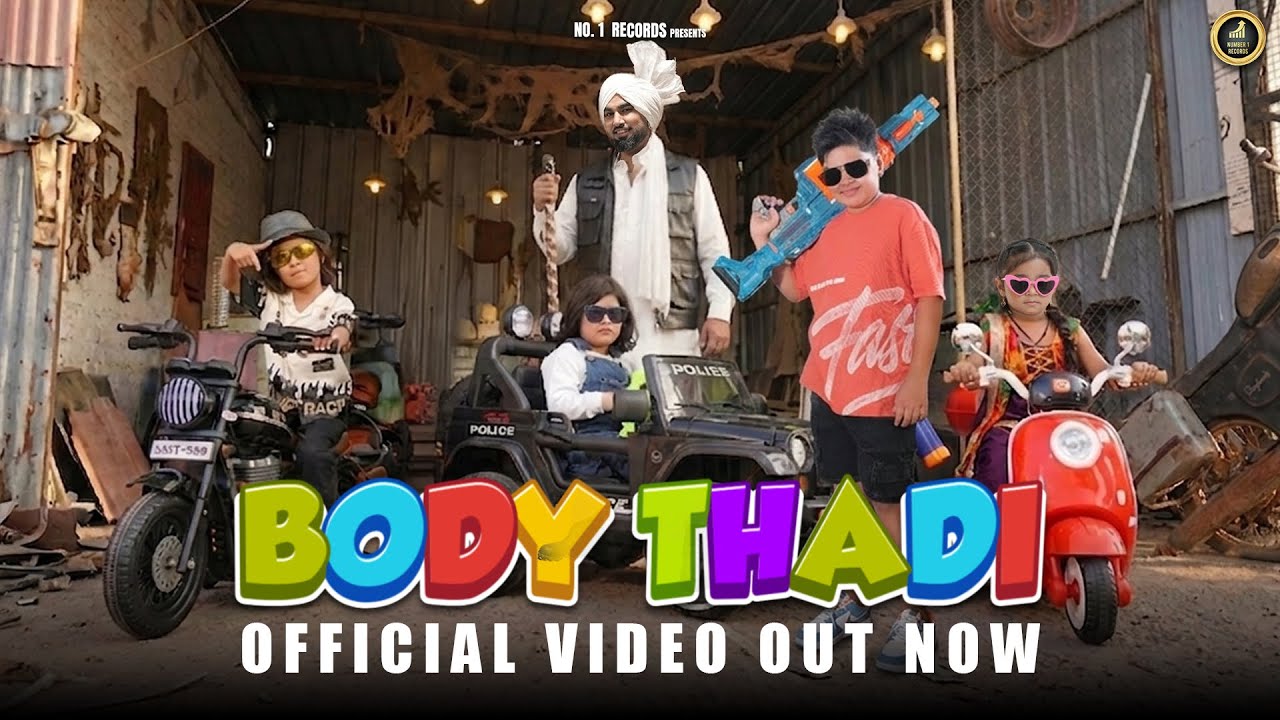
A new Haryanvi number called Body Thadi has been climbing YouTube's trending lists since its 2026 release, and the reason has less to do with the lyrics than with the people in the frame. The song is credited to Armaan Malik and features Chirayu, Zaid, Ayaan and Tuba — names that mean little to a casual pop listener but a great deal to the millions who already follow one of India's biggest family vlogging operations. This is a textbook example of how an audience built on daily home videos gets converted, almost overnight, into chart numbers.
Before anything else, a clarification that trips up half the internet every time this name surfaces.
Two Armaan Maliks, and why people keep confusing them
There are, confusingly, two well-known Armaan Maliks in Indian entertainment. One is the Mumbai-based playback and pop singer behind a string of Hindi film tracks. The other — the one attached to Body Thadi — is a social-media personality from Haryana whose fame grew out of family vlogs rather than recording studios.
The overlap in names regularly sends search traffic to the wrong person, and it has occasionally caused public friction between the two camps. For a song release, though, the shared name is almost an asset: a chunk of curiosity-driven clicks lands on the video simply because viewers aren't sure which Armaan Malik they're about to watch. That ambiguity is part of the early view surge.
What the song actually is
Body Thadi sits squarely inside the modern Haryanvi pop template: a punchy, repetitive hook, a heavy beat built for reels, glossy outdoor visuals, and a title phrase designed to be quoted in comments and captions. The genre rarely aims for lyrical complexity. It aims for replay value and shareability, and the production choices reflect that.
What sets this release apart is the casting. Instead of hiring established Haryanvi music-video faces, the track leans on the family unit already familiar to viewers from the channel's everyday content. When the same children and relatives audiences watch in vlogs suddenly appear in a styled, choreographed music video, the novelty itself drives clicks. Fans want to see how their favourite on-screen personalities translate to a song format.
The vlogger-to-music pipeline
The more interesting story here is structural. Over the past few years, India's largest family and lifestyle YouTube channels have discovered that a music drop is one of the most efficient ways to monetise an existing audience. The logic is simple:
- A channel with millions of subscribers already owns distribution — it doesn't need radio or a label to find listeners.
- A music video earns from ad revenue, streaming and brand integrations, often more per upload than a routine vlog.
- Songs have a longer shelf life than daily content; a hit can keep earning for years.
- Cross-promotion is free: the song gets plugged inside vlogs, and the vlogs get plugged inside the song's description.
For a household that has built its livelihood on YouTube, a track like Body Thadi is less a creative pivot than a sensible diversification of the same business. The audience is the product, and music is a new shelf to sell it on.
Why it's blowing up right now
Several forces are stacking up to push the video's numbers.
First, timing and familiarity. The featured names already carry a built-in audience that shows up on day one, which inflates the early view velocity that YouTube's algorithm rewards. A strong first few hours can snowball into days on the trending tab.
Second, the Haryanvi wave. Haryanvi music has quietly become one of the most-streamed regional categories on Indian YouTube, with several tracks crossing tens of millions of views. The genre's beats travel well onto short-video platforms, where a five-second clip can outrun the full song in reach.
Third, curiosity and controversy. Family channels of this scale tend to attract polarised reactions — devoted fans on one side, persistent critics on the other. Every release becomes a small battleground in the comments, and that engagement, whether admiring or hostile, feeds the same metrics. Outrage and applause both count as watch time.
The public reaction is split
Response to Body Thadi has broken along familiar lines. Supporters frame it as a self-made family expanding their brand on their own terms, turning everyday relatability into a polished product. They point to the catchy hook and the fun of seeing familiar faces in a new avatar.
Critics argue that the song's traction owes more to a pre-loaded subscriber base than to musical merit, and that view counts in this corner of YouTube can reflect curiosity and controversy as much as genuine appreciation. Some long-time Haryanvi music listeners grumble that vlogger-fronted releases crowd out working musicians who lack a ready-made audience.
Both readings can be true at once. A song can be engineered for virality and still be enjoyed sincerely by the people streaming it on loop. The numbers don't distinguish between the two, and that is precisely why this model works.
What the trend says about Indian YouTube
The rise of releases like this points to a larger shift in how regional music reaches listeners in India. The old gatekeepers — labels, radio, television — have been steadily bypassed. A creator with a phone, a loyal following and a competent video team can now mount a release that out-performs label-backed songs on the same platform.
This has democratised access in genuinely useful ways. Regional languages like Haryanvi, Bhojpuri, Punjabi and others now dominate view charts that were once skewed toward Hindi and English. Artists who would never have cleared a label's filter are finding audiences in the millions.
But it has also blurred the line between content and music. When the appeal of a song is inseparable from the personalities performing it, the work is judged less as a composition and more as another episode in an ongoing personal brand. That isn't necessarily bad — it is simply a different economy, one where attention is the currency and the family channel is the bank.
What may happen next
If Body Thadi sustains its momentum, expect the usual playbook to follow: a flood of short-video edits using the hook, reaction and dance clips from other creators, and a quick follow-up release to capitalise on the spike while the audience is still warm. Family channels rarely let a hit cool before lining up the next one.
There is also a reasonable chance the song outlives its launch buzz only modestly. Many vlogger-led tracks post huge opening numbers and then plateau, because the initial views come from existing fans rather than new discovery. The real test is whether Body Thadi travels beyond the channel's subscriber base into the wider Haryanvi-pop listenership.
For now, the safest reading is the simplest one. A popular YouTube family has done what popular YouTube families increasingly do — pointed its audience at a new product and watched the counter climb. Whether you call that savvy entrepreneurship or manufactured virality may depend on which side of the comment section you sit on. Either way, it is a snapshot of how fame, family and the algorithm now make a hit in India.