Photo: Sanket Sawale / Pexels
Cockroach Janta Party Names 3 Spokespersons: Who Are They?
A movement that started as a sarcastic Instagram joke just hired a press team. On June 3, 2026, the Cockroach Janta Party (CJP) announced three official spokespersons — an investigative journalist, an author-turned-filmmaker, and a former McKinsey management consultant — signalling that India's most unlikely political phenomenon of the year is no longer content to be a meme. The timing is deliberate: it comes days before a planned June 6 protest at Jantar Mantar in Delhi, and it tells you exactly how seriously this Gen Z outfit now takes itself.
For anyone who has watched the Cockroach Janta Party balloon across timelines without quite understanding what it is, the spokesperson announcement is the clearest sign yet of a satirical campaign growing a real spine. Here is who the new faces are, why the party picked them, and what the whole saga reveals about young India's mood.

From a courtroom insult to a movement
To understand the spokespersons, you first have to understand the strange origin of the party itself. The CJP was founded on 16 May 2026 by Abhijeet Dipke, a political communications strategist and Boston University graduate who had earlier worked with the Aam Aadmi Party. The trigger was a remark, widely circulated online, in which a senior judicial figure was reported to have likened idle, unemployed youth to "cockroaches" and parasites of society.
Instead of bristling, young Indians did something more dangerous for those in power: they laughed, and then they organised. Within a day, Dipke announced a "platform for all the cockroaches out there," listing tongue-in-cheek membership criteria such as being unemployed, perpetually online, and able to rant professionally. The name itself is a sly parody of the Bharatiya Janata Party, swapping the bee for the bug.
What followed was not subtle. By most counts the movement raced past 20 million followers on Instagram and hundreds of thousands of sign-ups within weeks, turning a self-deprecating slur into a badge of belonging. The cockroach — the creature that survives everything — became the perfect mascot for a generation that feels unkillable but unheard.
Who are the three new spokespersons?
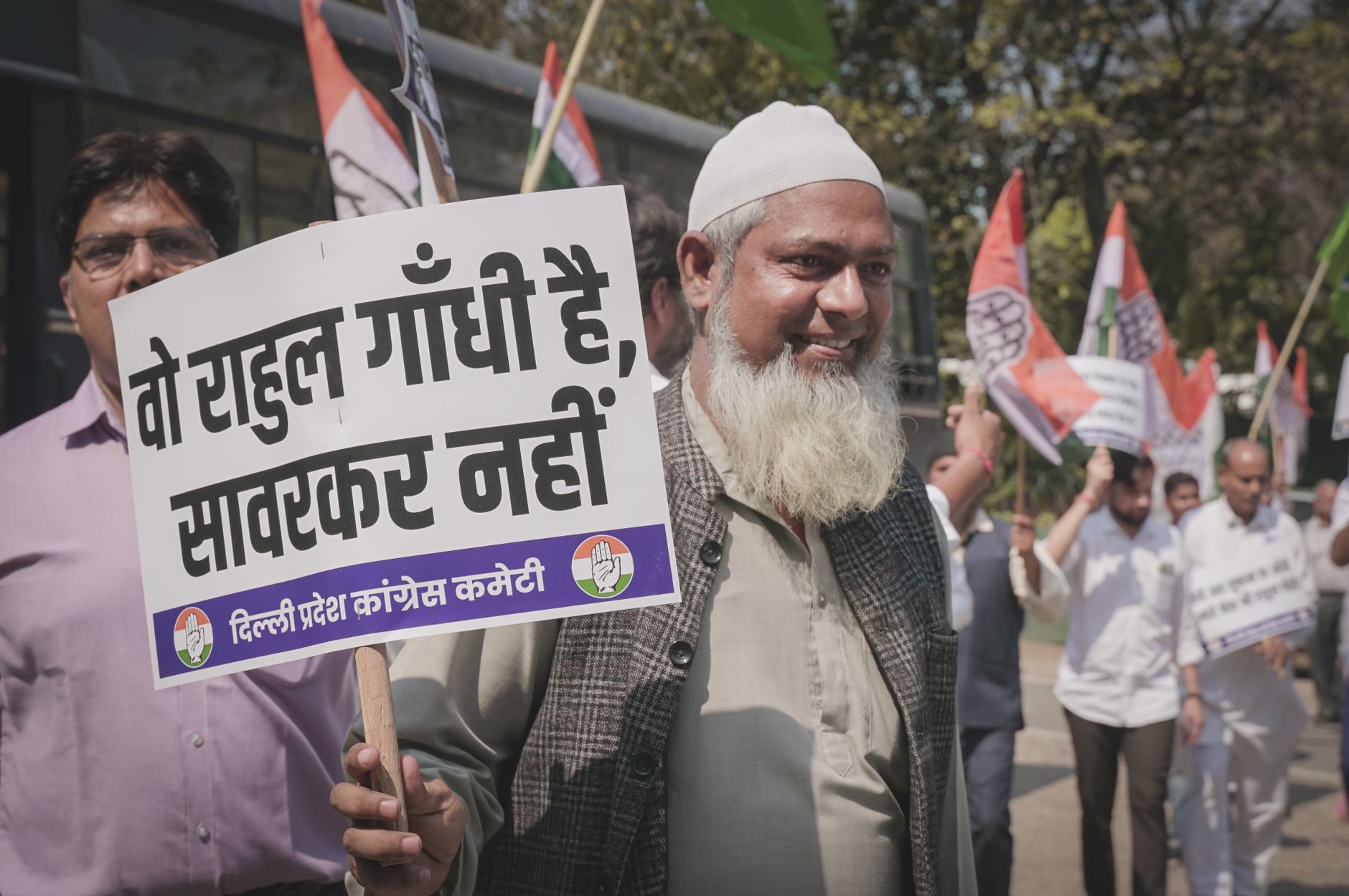
The June 3 announcement is where the satire starts wearing a suit. The party named three people to handle messaging and media, and the choices are revealing — a credibility play aimed at converting virality into legitimacy.
- Saurav Das (Chief Spokesperson): An investigative journalist known for reporting on legal, judicial and social issues. He was reported to be among the voices in the November 2025 anti-pollution protests at India Gate, giving him both protest experience and a reputation for scrutinising institutions. As chief spokesperson, he is expected to anchor the movement's arguments on institutional accountability.
- Vijeta Dahiya: A political researcher, author and filmmaker who has worked on content and research for several digital creators. She has authored books and written and directed Haryanvi-language films, bringing a storyteller's instinct and a regional, non-metro voice to a movement that lives mostly online.
- Ashutosh Ranka: Perhaps the most eyebrow-raising pick — a former McKinsey & Company consultant in London, and an alumnus of IIT Kanpur and the London School of Economics. He reportedly returned to India recently and has been associated with public campaigns in Jaipur on environmental, educational and youth issues, including those linked to the NEET paper-leak controversy.
The trio is, in effect, a deliberate balancing act: a journalist for credibility, a filmmaker for narrative, and a blue-chip consultant for the optics of competence. It is hard to dismiss a "cockroach" army as merely unserious when its public face includes an ex-McKinsey strategist and an investigative reporter.
Why these three picks matter
The smartest thing about the announcement is what it pre-empts. Satirical movements are easy to caricature — critics can wave them away as noise made by bored youngsters. By recruiting professionals with verifiable resumes, the CJP makes that dismissal harder and forces a more uncomfortable conversation about its actual demands.
There is also a strategic logic to the mix:
- Translation of a meme into messaging. A movement that speaks in jokes needs people who can speak in policy when a TV anchor or a court asks pointed questions.
- Reach beyond English-speaking metros. A Haryanvi filmmaker signals an attempt to push past the urban, online base into regional, vernacular India.
- The respectability shield. An IIT–LSE–McKinsey profile is the kind of biography establishment India instinctively respects, which complicates any effort to paint the party as fringe.
In other words, the CJP is doing what every insurgent campaign eventually must: professionalising without losing the irreverence that made it popular in the first place. That balance is genuinely hard, and it will be tested almost immediately.
The June 6 protest and the real demand
Beneath the cockroach branding sits a concrete, unfunny grievance: examination integrity. The movement has channelled anger over the NEET-UG paper leak and broader complaints about CBSE and CUET processes that, in students' telling, have repeatedly betrayed the trust of more than 10 million test-takers and their families.
The headline demand is the resignation of Union Education Minister Dharmendra Pradhan. An online petition pressing that demand has reportedly crossed 800,000 signatures, and the CJP has called a peaceful gathering at Jantar Mantar on June 6, the same day founder Abhijeet Dipke is expected to return to India. Reports also suggest education activist Sonam Wangchuk could lend his presence, which would add another layer of mainstream legitimacy.
The protest is the movement's first big offline test. Online numbers are intoxicating but slippery; a follower is not a foot-soldier. Whether 20 million digital cockroaches translate into a meaningful crowd on a hot Delhi afternoon will tell us a great deal about how durable this energy really is.
What this says about young India
Strip away the bug jokes and the CJP is a stress reading of a generation's frustration. The grievances it taps — leaked exams, scarce jobs, a sense of being talked down to by elders and institutions — are not new. What is new is the willingness to organise around an insult and weaponise humour as a political tool rather than a coping mechanism.
That approach has clear advantages. Satire lowers the cost of joining; it is far easier to follow a funny page than to attend a rally, and the page becomes the on-ramp. It is also slippery for opponents, because mocking a movement that is already mocking itself rarely lands.
But the risks are just as real. Movements built on irony can struggle to convert clicks into staying power, and a single clumsy moment can puncture the brand. Naming professional spokespersons is the party's bet that structure can carry it past the meme phase — that it can keep the joke while building something that outlasts the punchline.
What to watch next
The spokesperson announcement reframes the CJP from a viral curiosity into an organisation with a chain of command, a stated demand and a date on the calendar. The next few signals will matter more than any follower count:
- Turnout on June 6 at Jantar Mantar, and how peaceful and disciplined it stays.
- Whether mainstream figures publicly associate with the movement, lending it institutional cover.
- How authorities and the establishment respond — engagement, silence, or pushback each carry different consequences.
- Whether the satire survives the suits, or whether professionalising quietly drains the humour that built the base.
For now, India is watching something rare: a movement that began as a punchline calmly assembling a press desk. Whether the Cockroach Janta Party becomes a footnote or a force, its rise is a reminder that when a generation feels insulted, it sometimes answers not with rage, but with a joke sharp enough to draw blood.