Dhamaal 4 'Chatni' Song: Why the Track Is Everywhere
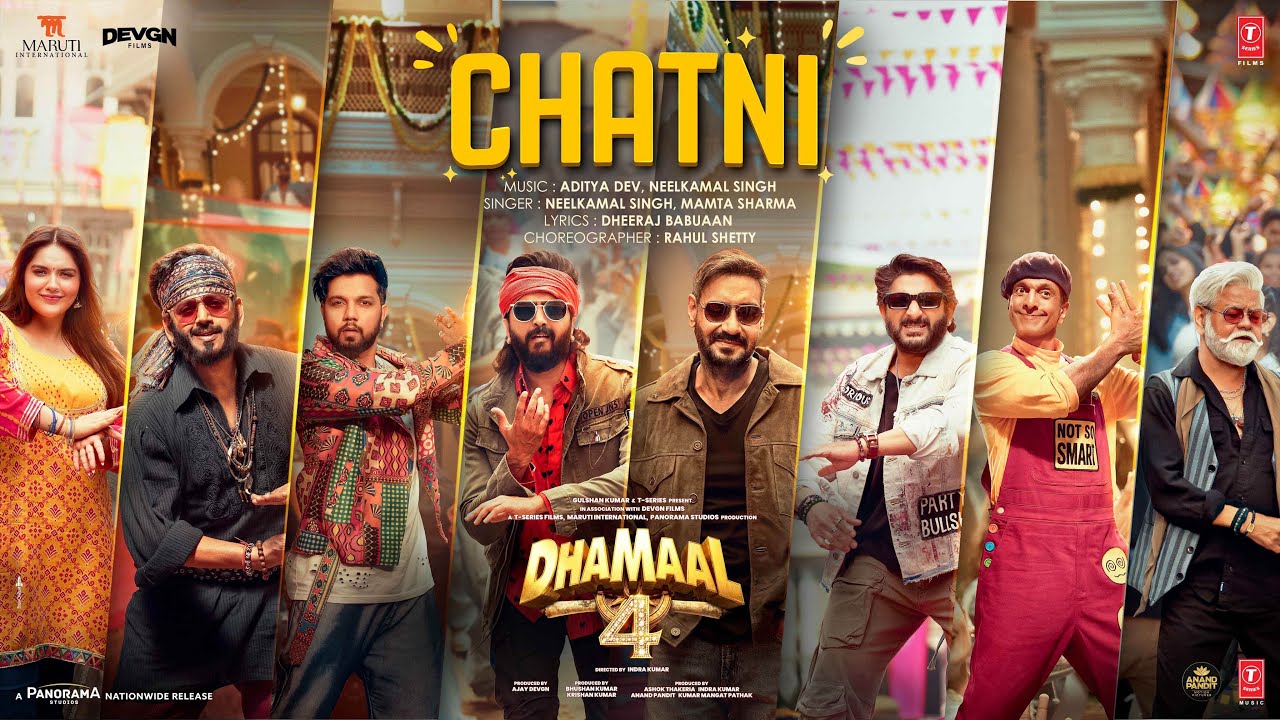
A song called "Chatni" has pushed Dhamaal 4 back into the conversation, and for once the chatter is not about a trailer or a release date but a three-minute dance number. The track, fronted by the franchise's familiar faces and voiced by Neelkamal Singh and Mamta Sharma, with Aditya Dev among those behind its music, is doing exactly what a launch single is meant to do: get stuck in people's heads, spill onto Reels, and remind audiences that one of Hindi cinema's longest-running comedy brands is back.
What makes the moment interesting is not the song alone. It is the test it represents. Big-screen comedy has had a rough few years, the franchise has been dormant since 2019, and the industry is watching whether a catchy hook and a reunited ensemble can still convert nostalgia into ticket sales.
What the Chatni song actually delivers
The number is built around a single sticky refrain and a loud, festive arrangement that leans on a Bhojpuri-flavoured flavour rather than a polished club sound. That choice matters. It places the song closer to wedding playlists and small-town dance floors than to a slick metro nightclub, which widens its potential audience considerably.
Visually, it does what these franchise songs always do: throws the lead actors into bright costumes, big group choreography and a few deliberately silly beats meant to be screenshotted. Rather than narrate every shot, it is enough to say the song is engineered for repeat viewing. The hook is short, the chorus repeats, and the energy stays high from the first second.
That construction is intentional. In an attention economy where a viewer decides within seconds whether to keep watching, a song that front-loads its catchiest line buys itself a better chance of being looped, shared and turned into a meme template.
The cast that made Dhamaal a brand
The pull here is the ensemble. Ajay Devgn, Arshad Warsi, Riteish Deshmukh, Jaaved Jaffrey and Ravi Kishan are names that carry their own fan bases, and seeing several of them together instantly signals continuity with the earlier films.
Arshad Warsi and Jaaved Jaffrey, in particular, are closely tied to the franchise's identity. Their comic timing was a big part of why the original films worked, and audiences who grew up on those movies respond to the familiarity. Ravi Kishan adds a strong regional draw, especially across the Hindi heartland, where his appeal extends well beyond Bollywood.
A few quick reasons the cast matters for a song launch:
- Each actor brings a distinct audience, so a shared promo reaches several groups at once.
- Familiar faces lower the risk for casual viewers deciding whether to click.
- Comic actors make even a simple dance number feel like an event rather than a filler track.
The presence of so many recognisable performers also tells you how the makers are positioning the film: not as a star vehicle for one name, but as a crowd of comedians doing what the brand promises.
Why a song is blowing up before the film
There is a reason studios now treat the first song as a marketing weapon rather than an afterthought. A trailer shows you the plot; a song shows you the mood. For a comedy built on chaos and rhythm, the mood is the product.
Chatni is benefiting from a few overlapping forces. The franchise name still has recall value. The cast generates curiosity. And the format of the song, short and loud and easy to mimic, fits perfectly into the short-video ecosystem that now decides what counts as viral. A hook that can be danced to in a fifteen-second clip travels faster than any paid campaign.
There is also timing. The Hindi film calendar has been hungry for a dependable, family-friendly comedy. When a recognisable brand drops its first single, the appetite that has been building for that genre finds something to latch onto.
It is worth being precise about what "viral" means here. High view counts and heavy sharing show interest and reach. They do not, on their own, prove a film will succeed. Plenty of songs trend and then fade before release, and plenty of films open big despite a quiet music phase. The honest read is that the song has cleared the first hurdle, attention, and nothing more yet.
The franchise's long, uneven road
Dhamaal is older than many of the people now sharing its songs. The first film arrived in 2007, a treasure-hunt comedy that became a word-of-mouth hit and spawned a brand. Double Dhamaal followed in 2011, and Total Dhamaal in 2019 pushed the series to its biggest commercial numbers yet, helped by a wide festive release.
The gap since then is the real story. Seven years is a long pause for any franchise, and the comedy landscape has shifted underneath it. Streaming has absorbed a lot of light, easy-watch humour. Audiences have grown choosier about paying for a theatre ticket. And the broad, slapstick style that defined the series has gone in and out of fashion.
That history cuts both ways. The brand carries genuine affection and instant recognition, which is rare and valuable. But it also carries expectation, and a fourth film has to prove it is more than a tired return to a winning formula. The song is the first signal of how the makers intend to thread that needle: stay loud, stay familiar, and bet that the core promise still lands.
What the public reaction tells us
Early reaction online has split along predictable lines, and that is useful to read carefully. A large chunk of viewers respond to the energy and the nostalgia, treating the song as a welcome sign that a comfort-watch franchise is alive again. Others push back on the formula, arguing that the genre has not evolved and that a catchy hook cannot paper over thin writing.
Both reactions are legitimate, and neither settles anything. Comment-section enthusiasm is not a reliable predictor of box office, and online cynicism often coexists with people quietly buying tickets anyway. The safest conclusion is narrow: the song has generated conversation, which is the entire point of a launch single.
What is harder to measure, and more important, is whether that conversation converts. Engagement that stays on YouTube and Instagram does not always walk into a cinema. The makers will be watching how long the song holds attention, whether it spawns user-made content, and whether the buzz survives the next few weeks rather than spiking and vanishing.
What comes next for Dhamaal 4
Expect the rollout to follow a well-worn path. A first song is typically the opening move in a longer campaign that builds toward a trailer, more music, and a release date pushed hard in the final stretch. If Chatni holds, look for a second track aimed at a slightly different audience, then the full theatrical push.
Readers chasing accurate details should be cautious. Cast confirmations, song credits, the director's involvement and the release date should come from the makers' official channels, not from aggregator pages that frequently post unverified information. Until the studio confirms specifics, the responsible position is to treat dates and finer details as provisional.
For now, the takeaway is modest but real. A dormant franchise has made noise again, a song has cleared the attention test, and a familiar cast has reminded audiences why the brand once worked. Whether Dhamaal 4 turns that goodwill into a hit is a question only the release will answer. The song has bought the film a seat at the table. The meal still has to be served.