Doorbin in Minecraft: Why Rebuilding an Old House Went Viral
A new upload titled "Building My Old House with Doorbin in Minecraft" is spreading across YouTube, and it taps into something quieter than the usual gaming clip. There are no jump scares, no speedruns, no leaderboard. Just a creator measuring out the rooms of a house he grew up in and rebuilding them, brick by digital brick, with a familiar sidekick named Doorbin along for the company. It is comfort content, and that is exactly why it is working.
The video comes from KarryKraft, a Hindi-language Minecraft channel built around a small cast of recurring characters. If the format feels instantly recognisable to younger viewers, it should. These narrative, character-driven Minecraft videos have become one of the most-watched genres on Indian YouTube, and the "old house" angle gives this one an emotional hook the battle videos rarely have.
A childhood home, rebuilt block by block
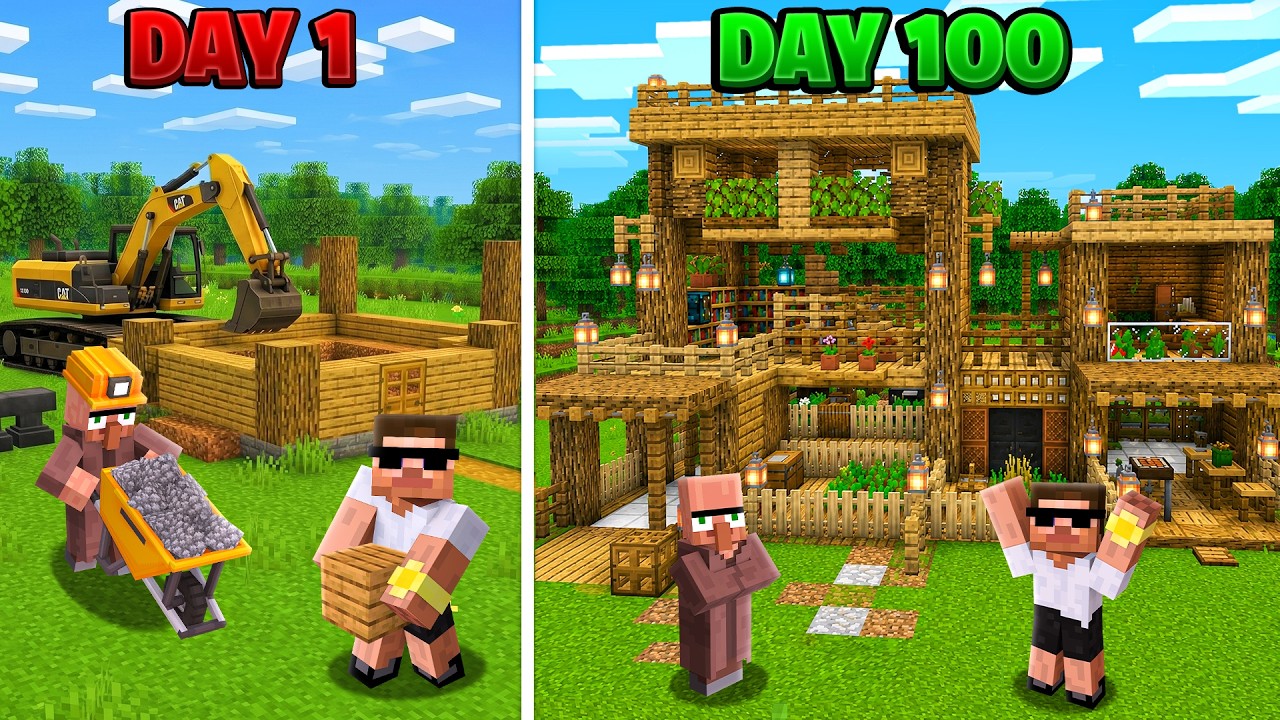
The premise is simple and oddly moving. Rather than designing a fantasy castle or a redstone contraption, the creator sets out to recreate the actual house he once lived in — the gate, the rooms, the layout he remembers from years ago. Doorbin tags along as the foil, reacting, questioning and occasionally getting in the way, which is the running dynamic of the channel.
What makes it land is the act of memory itself. Anyone who has moved cities, watched an old neighbourhood get redeveloped, or simply grown up knows the strange ache of a home that only exists now in your head. Minecraft, with its blocky grid, turns out to be a surprisingly good tool for that. You do not need the place to be photo-real. You need the floor plan and the feeling, and the game supplies the rest.
Who, or what, is Doorbin?
For viewers outside this corner of YouTube, the obvious question is who Doorbin actually is. Doorbin is a character, not a real-name creator who shows his face. On KarryKraft, the lead figure is "Carry" and Doorbin is the recurring companion who appears across dozens of videos — sometimes a friend, sometimes a rival, sometimes the butt of the joke.
The name carries a small joke of its own. In Hindi and Urdu, doorbeen means binoculars or a telescope, something you look through to see far away. It is a fitting handle for a character whose whole purpose is to observe, comment on and complicate whatever Carry is up to. The channel leans on inside jokes and catchphrases, and the broader Hindi gaming-YouTube scene has its own running gags — the much-memed "aloo khaoge?" ("will you eat potatoes?") line is one example of that shared comment-section vocabulary — with Doorbin sitting at the centre of the channel's own running bits.
One clarification worth making, because it trips up a lot of people: this is not CarryMinati. CarryMinati, real name Ajey Nagar, is one of India's biggest YouTubers, known for roasts, music and commentary. The "Carry" of KarryKraft is a separate, character-led Minecraft project. The name overlap is a source of constant confusion in comment sections, and it is worth keeping straight.
Why "build your old house" became a genre
The old-house build is not a one-off idea. Across Minecraft's global community, recreating a real, personal place — a childhood home, a grandparent's house, a school, a demolished building — has grown into a recognisable sub-genre with real emotional pull.
There are a few reasons it resonates:
- Memory beats graphics. You are not judged on realism. A few blocks standing in for a courtyard or a staircase are enough to trigger the actual memory, which does the emotional work.
- It is preservation. For homes that have been sold, knocked down or left behind in another city, a Minecraft rebuild becomes a small, permanent record you can walk back into.
- It is participatory. Viewers do not just watch; they immediately think about their own old house and how they would lay it out. That is rocket fuel for comments and shares.
- It is low-stakes and warm. In a feed full of rage-bait and high-skill flexing, a slow, sincere build is a genuine change of pace.
That last point matters more than it sounds. A lot of Minecraft's most durable content is not competitive at all. It is cosy — calm, narrative, slightly silly — and the audience returns to it the way people return to a familiar sitcom.
The Hindi Minecraft machine behind the clip
None of this is happening in a vacuum. India is now one of the largest audiences for Minecraft anywhere on the planet, and that scale has produced an entire ecosystem of Hindi gaming channels with enormous, mostly young followings. KarryKraft is one node in that network.
The formula these channels run is well honed. Take a simple, repeatable premise — a build battle, a survival challenge, a "poor vs rich" face-off, or in this case an emotional rebuild — wrap it in a recurring cast, add fast Hindi narration and broad humour, and publish relentlessly. The titles are deliberately plain and curiosity-driven, often trailing off with ".." to leave a question hanging. It is a production line tuned for the YouTube algorithm and for a mobile-first audience that watches in short, frequent bursts.
The characters are the real intellectual property. Doorbin, Carry and the rest function like a cartoon troupe: viewers do not tune in for any single video so much as for the ongoing relationship between familiar faces. That is why an "old house" episode can hit harder than a flashy build — the audience already has years of context with these characters, so a sentimental turn actually means something.
What the reaction says
The response to this kind of video tells you who is really watching. Comment threads fill up with the channel's in-jokes and catchphrases, but also with viewers describing their own homes — the house they left when the family moved, the village place visited only in summers, the flat that has since been redeveloped. The video becomes a prompt, and the audience supplies the stories.
There is a generational note here too. For a lot of young Indian viewers, Minecraft is a default creative space, the way a sketchbook or a set of building blocks was for earlier kids. Rebuilding a real home inside it is not a gimmick to them. It is a natural way to hold on to something, and to share it.
What comes next
Expect more of this, not less. Once an emotional format proves it travels, channels iterate fast: rebuilds of schools, of grandparents' houses, of entire old neighbourhoods, often crowdsourced from what viewers ask for in the comments. The "old house" build has the two things YouTube rewards most — it is repeatable and it is personal.
For the wider scene, the bigger story is durability. Hindi Minecraft channels are no longer a novelty; they are a stable, mainstream slice of Indian entertainment for under-18 audiences, and characters like Doorbin have become genuine recurring figures with their own fanbase. Whether that audience grows up and out of the format, or whether the channels mature with them, is the real question hanging over this corner of YouTube.
For now, a creator rebuilt the house he grew up in, a character called Doorbin watched him do it, and a lot of people felt something. In an attention economy that usually runs on noise, that is a quietly impressive thing to go viral on.