Photo: Eclipse Chasers / Pexels
Earth's Oldest Impact Crater Is Now Confirmed at 3 Billion Years
Long before there were forests, fish, or even a breathable sky, a rock from space slammed into the young Earth and left a wound so deep that traces of it survived for three billion years. Scientists have now confirmed that a battered patch of the Western Australian outback holds Earth's oldest known impact crater, formed about 3.024 billion years ago — roughly two-thirds of the way back to the planet's birth.
To put that number in human terms: when this asteroid struck, there were no animals, no plants, no continents as we know them. The only life on Earth was microbial, clinging to a world that was mostly ocean and volcanic rock. The crater predates the oxygen that fills our lungs. It is, quite literally, a scar from a different planet.

A record that smashes the previous one
Until recently, the title of oldest impact structure belonged to Yarrabubba, also in Western Australia, dated with remarkable precision to about 2.229 billion years. That was already staggering. The newly confirmed crater pushes the record back by roughly 800 million years — a leap so large it dramatically deepens the time depth of the impact record we can physically point to on Earth's surface.
The site sits in the Pilbara region, within a geological feature known as the North Pole Dome. The structure has been provisionally named Miralga. The Pilbara is one of the most precious places on the planet for geologists, because it preserves some of the least-disturbed Archean rocks anywhere — ancient lava flows, pillow basalts, and sediments that also carry some of the earliest chemical hints of life. It is one of the rare windows into what Earth actually looked like when it was young.

The clue that gives it away
How do you prove a three-billion-year-old hole in the ground was made by something falling from space, and not by a volcano or ordinary geology? The answer lies in a feature that only a violent, faster-than-a-bullet impact can produce: shatter cones.
Shatter cones are distinctive, cone-shaped fracture patterns that fan out through rock like frozen ripples. They form only under the immense shock pressure of a hypervelocity collision — the kind where an object hits the ground so fast that the rock briefly behaves like a liquid before snapping back into place. Find shatter cones, and you have a fingerprint that no earthly process can fake.
Researchers also found other tell-tale signs in the rock layers:
- Spherules — tiny droplets of once-molten rock that condensed out of the vapour cloud thrown up by the blast, preserved in a sedimentary band known as the Antarctic Creek Member.
- Shocked zircon crystals with strange, branching, skeletal shapes, evidence that the minerals were violently recrystallised by heat and pressure.
- Apatite crystals formed as hot fluids surged through the freshly fractured crust in the aftermath.
Together, these features build a case far stronger than any single clue could. This was an impact, and a big one.
Why the age was fiercely debated
Here is where the story gets genuinely human, because scientists did not simply agree overnight. The crater's age became the subject of a sharp back-and-forth that played out across competing studies.
The first team to announce the discovery, in early 2025, proposed an even more jaw-dropping age of about 3.47 billion years, along with a crater that may have stretched more than 100 kilometres across. That would have made it not just the oldest but one of the most enormous impact scars ever identified on Earth.
Then came the pushback. A separate analysis argued the impact was actually much younger — possibly less than 2.7 billion years old — and that the giant crater size was an overestimate, suggesting a far smaller structure. For a while, the headline-grabbing record looked shaky.
The most recent work, using careful mineral dating, landed in between. By reading the zircon and apatite crystal clocks independently — one returning roughly three billion years, the other about 3.019 billion — the team arrived at a figure of around 3.024 billion years. Two different minerals, dated by two different chains of reasoning, pointing to the same answer. That kind of independent agreement is what gives geologists confidence. The record survived, just at a slightly more modest age than the original splash suggested.
Why Earth keeps so few of its scars
There is a deeper mystery hiding inside this discovery. The Moon is pockmarked with millions of craters, some billions of years old, sitting frozen and pristine. Earth, which is far bigger and a fatter target, has only a couple of hundred confirmed impact structures, and almost none from its first two billion years. Why the difference?
The answer is that Earth is alive, geologically speaking. Plate tectonics drags old crust down into the mantle and forges new crust at ocean ridges. Wind, water, and ice grind down whatever is left. Mountains rise and erode; oceans open and close. Over billions of years, this churning machine erases almost every trace of ancient bombardment.
The Moon, by contrast, is geologically dead. Nothing resurfaces it, so it keeps a near-complete diary of every hit it has taken. That is precisely why the Pilbara crater is so valuable: it is one of the vanishingly rare cases where Earth's restless surface happened to preserve a record that should, by all rights, have been wiped clean.
What a three-billion-year-old crater can teach us
This is more than a trophy for the record books. Early Earth was pelted by far more impacts than today, and scientists increasingly suspect those collisions shaped the planet in profound ways. A large strike can fracture and heat the crust, drive hot mineral-rich fluids through the rock, and create exactly the kind of warm, chemically active pockets where early microbial life might have taken hold or thrived.
Studying a genuine Archean crater lets researchers test those ideas against real evidence rather than computer models. It offers a glimpse of how the constant rain of asteroids may have stirred the chemistry of a young world — possibly nudging the conditions that made life, including us, possible.
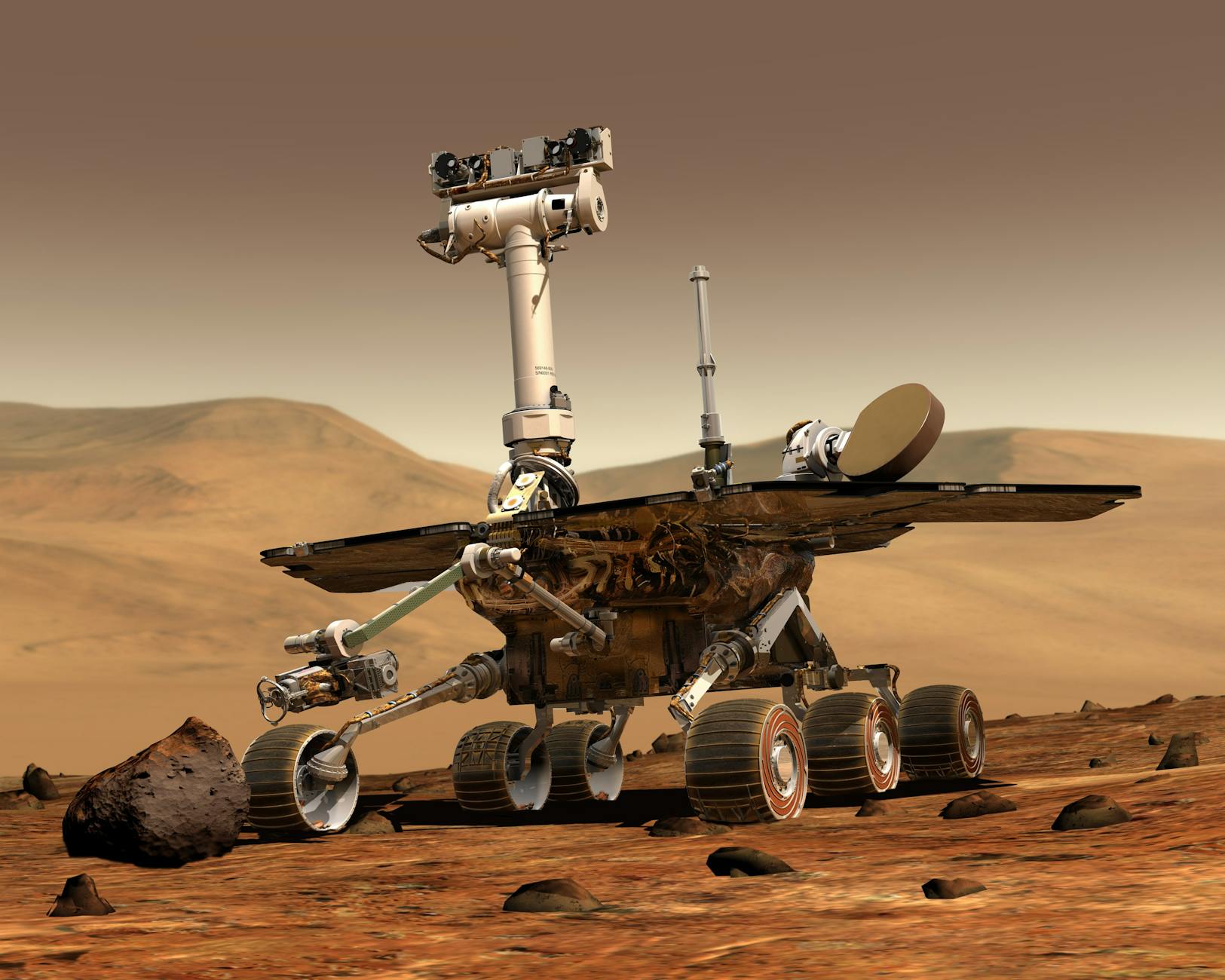
The Pilbara rocks have another role too. Their ancient, impact-scarred terrain is a useful stand-in for the surface of Mars, helping scientists sharpen the tools they will use to read the geological history of other worlds.
The bigger picture
For now, the headline holds: a remote stretch of Western Australian desert contains the oldest impact crater humanity has ever confirmed, a wound roughly three billion years in the making. The debate over its precise age and size shows science working exactly as it should — claims tested, challenged, and refined until the rock itself has the final word.
And somewhere out there, almost certainly, lie even older scars, buried under younger rock or long since recycled into the deep Earth. The next record may already be waiting in the ground. It just needs someone to find the shatter cones.