Photo: Pixabay / Pexels
Complex Carbon on Mars: Perseverance's Biggest Find Yet
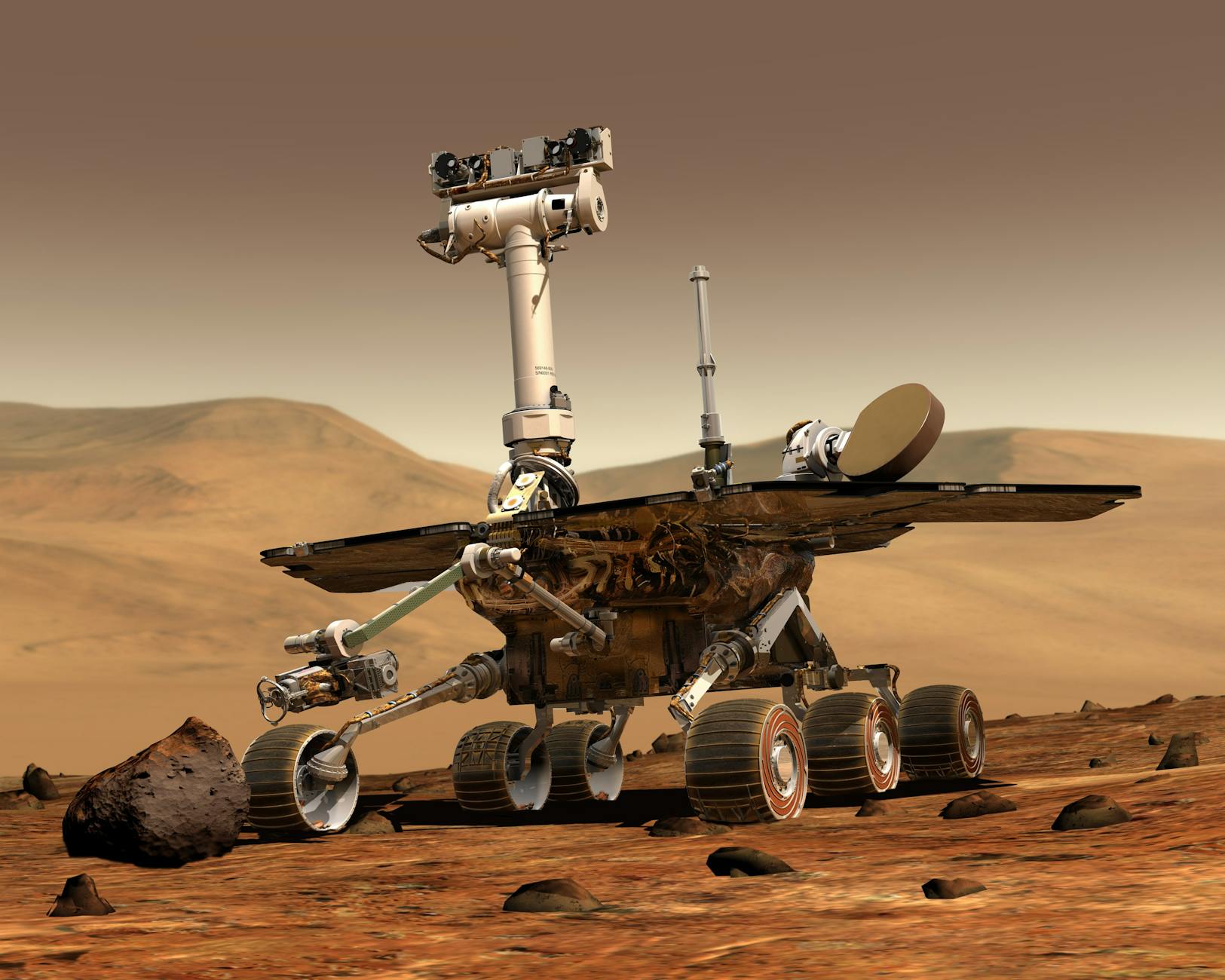
On a planet that has looked dead for billions of years, a six-wheeled robot the size of a car has just read a chemical sentence written in carbon. NASA's Perseverance rover has detected the most complex carbon molecules ever identified on the surface of Mars, locked inside ancient mud at the bottom of what used to be a river valley. The molecules are not little stray atoms. They are large, tangled chains of organic carbon, the kind of material that, on Earth, often traces back to living things.
That single fact is enough to make a geologist's coffee go cold. It is also, importantly, not a discovery of aliens. The gap between those two statements is the whole story, and it is more interesting than either extreme.

What the rover actually found
The new work centres on two mudstones in an outcrop called Bright Angel, which sits along Neretva Vallis, a dried-up channel that once carried water into the lake that filled Jezero crater. One of those rocks is the now-famous Cheyava Falls, a slab freckled with spots. The other is named Walhalla Glades.
Using its SHERLOC instrument, which fires an ultraviolet laser at a rock and reads the light that bounces back, Perseverance mapped what scientists describe as macromolecular carbon spread across the stone. This is not a single tidy compound. It is a web of carbon-rich material, more elaborate than the simple carbon chains found years earlier by the Curiosity rover on the other side of the planet.
The scale is what makes researchers sit up. The team, led by Ashley Murphy of the Planetary Science Institute and published in the journal Science Advances, logged hundreds of separate organic detections in these rocks. That makes it the most robust organic signal recovered in Jezero crater so far, and the only time macromolecular carbon has been seen sitting on a natural Martian rock face rather than inferred from heated, broken-down samples. It is also reported as the first such detection in Martian mudstones outside Gale crater.
Why complex carbon is such a big deal
Carbon by itself is everywhere in the cosmos. The excitement here is about complexity. Simple molecules can form through plain chemistry on any rocky world. Long, branching, macromolecular carbon is harder to make and, crucially, harder to keep. Radiation, oxidation and time tend to chop big organic molecules into rubble.
So finding intricate carbon preserved in surface mud raises two tantalising possibilities at once:
- Mars was once chemically richer and more hospitable than its rusty silence suggests.
- Something protected this material for billions of years, whether minerals shielding it or a more recent exposure of the rock.
Neither requires life. But both are exactly the conditions astrobiologists want before they go looking for it. You cannot find a fossil microbe if the chemistry that built it was never there. This says the chemistry was there, and that it survived.
The caveat scientists keep repeating
Here is the line every researcher on the project says out loud, because they know how a headline can run away. This is not evidence of life. Complex organic carbon can be cooked up without any biology at all.
The possible non-living sources are real and varied:
- Meteorites raining organic material onto the surface over aeons.
- Volcanic and hydrothermal activity forging carbon compounds in hot water and rock.
- Electrochemical reactions between minerals and the thin atmosphere.
Any of these could explain what Perseverance saw. The honest position, which the team holds firmly, is that the rover has found something worth chasing, not something settled. As one project scientist put it about the related rock, abiotic explanations are now less likely but cannot be ruled out.
How this fits the 'leopard spots' bombshell
This carbon find does not stand alone. It deepens a story that broke in September 2025, when NASA announced that a sample from Cheyava Falls, nicknamed Sapphire Canyon, carried one of the strongest potential biosignatures yet seen on Mars.
The rock's surface is dotted with what the team calls leopard spots, small reaction rings. Inside those rings, higher-resolution data revealed two iron-rich minerals: vivianite, a hydrated iron phosphate, and greigite, an iron sulfide. On Earth, vivianite turns up in bogs and sediments around decaying organic matter, and certain microbes can manufacture greigite as they feed. Put a lake, organic carbon and energy-releasing chemistry in one rock, and you have a recipe that, on our planet, life would happily exploit.
The macromolecular carbon now mapped across the same outcrop is the third leg of that stool. Water, energy, and complex organics, all preserved in one dried river valley. It is the most complete chemical picture of a possibly habitable ancient Mars that any mission has assembled in place.
Curiosity's quieter parallel
While Perseverance grabs the spotlight in Jezero, NASA's older Curiosity rover has been building a matching case half a world away in Gale crater. Its analyses of ancient lakebed mud have turned up organic molecules with chains running up to a dozen carbon atoms long, and a separate study reported more than 20 chemicals including a nitrogen-bearing molecule structurally similar to the building blocks of DNA, something not previously confirmed on Mars.
Two rovers, two ancient lakebeds, two independent toolsets, and both keep finding richer organic chemistry the harder they look. That convergence matters. A single lucky rock can be dismissed. A pattern across the planet is a trend, and trends are what move scientific opinion.
Only Earth can give the final answer
For all the laser maps and mineral fingerprints, there is a hard limit to what a rover can do. Distinguishing a molecule built by ancient microbes from one forged by volcanic water needs instruments far too large and delicate to fly to Mars. It needs a laboratory bench, on Earth, with human hands.
That is why Perseverance has been carefully sealing rock cores into sterile tubes as it drives, leaving a cache of Martian time capsules. The plan to fly them home, the Mars Sample Return effort, is the most ambitious robotic mission ever sketched, and its schedule and budget remain genuinely uncertain. The samples that could settle the biggest question in planetary science are sitting on Mars right now, waiting for a ride that has not yet been built.
Why you should care
Strip away the caution and one plain truth remains. A robot we built and flung across roughly 100 million miles of space is standing in a dead river on another world, reading the most complex organic chemistry ever found there, in rocks that also happen to carry minerals life likes to leave behind.
We have not found Martians. We may never. But the search has crossed a line it had not crossed before. The ingredients, the setting and the preservation are all now confirmed in one place. Whether anything ever stirred to life in that water is a question humanity has, for the first time, physically collected the means to answer. It just has to go and pick the samples up.