Photo: Himanshu Singh / Pexels
Why Tier-2 India Still Can't Catch a Bus — And How to Fix It
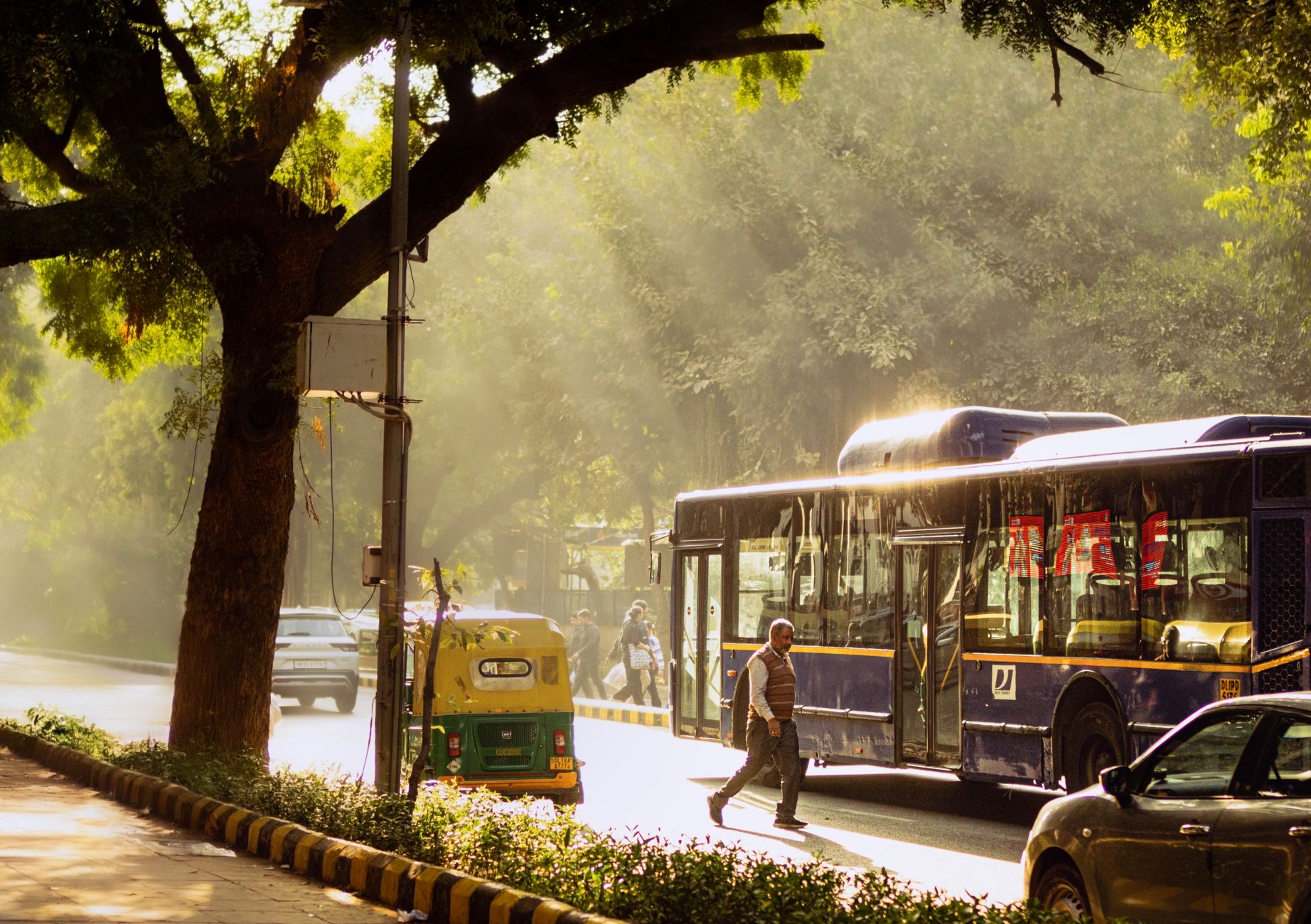
On paper, getting around a tier-2 Indian city should be simple. In practice, a commuter in a place like Nashik, Kanpur, Coimbatore or Ranchi often plans the day around the one bus that may or may not come, then negotiates a shared auto for the stretch it never covered. Public transport and last-mile connectivity in India's tier-2 cities remains one of the quietest governance gaps in the country — quiet because it rarely makes headlines, and a gap because tens of millions of people absorb its costs in lost hours and thinner wallets every single day.
This is not a complaint piece. The shortfall is real, but so is the recent push to close it, and there are concrete, tested fixes that planners broadly agree on. The point here is to look at all three honestly.

The numbers behind the daily struggle
Start with a benchmark almost no one outside transport circles has heard of. The Ministry of Housing and Urban Affairs suggests a city should run 40 to 60 buses per lakh population to offer a usable service. Many Indian cities operate at roughly 15 buses per lakh — less than half the floor, and in several smaller cities the organised fleet barely exists at all.
Researchers have a blunt term for what follows: transport poverty. It describes households that are effectively cut off from jobs, hospitals, colleges and markets because no affordable, reliable way to reach them exists. In a metro city the missing bus is an annoyance. In a tier-2 city it can decide whether a young woman takes the college admission, or whether a daily-wage worker can chase work two neighbourhoods away.
The scale of the deficit is easy to underestimate. One assessment by the Institute for Transportation and Development Policy estimated that the cities of a single large state, Maharashtra, need on the order of 24,000 additional buses to meet demand. Multiply that logic across the country and the shortfall runs into lakhs of vehicles.

The mile no one planned for
Even where buses do run, the journey usually breaks at the ends. A route drops you on the main road; home, office, school or the clinic is another two kilometres away. That stretch is the last mile, and in most tier-2 cities it is held together not by the state but by an informal army of shared autos, e-rickshaws, tempos and minibuses.
This layer deserves credit, not scorn. E-rickshaws in particular have spread fast through smaller cities and town fringes, offering cheap, zero-tailpipe-emission rides exactly where formal transport gave up. For lakhs of drivers they are also a livelihood with a low entry cost. The trouble is that this network is improvised. Routes shift with the driver's mood, fares are negotiated rather than fixed, safety and overcrowding go unchecked, and there is no timetable to plan a life around.
The consequence is predictable. When the public chain is unreliable from the first metre to the last, people who can afford it simply buy a two-wheeler or a car. That decision, repeated across a city, is what turns once-walkable towns into congested, polluted, parking-starved places. Weak last-mile links don't just inconvenience riders; they quietly manufacture traffic.
What governments have actually done
It would be unfair to pretend nothing is moving. The most significant recent step is PM e-Bus Sewa, a central scheme cleared in 2023 to put 10,000 air-conditioned electric buses on the road across 116 cities by 2027. Crucially, it is aimed squarely at the cities that have been neglected — those with populations between 3 lakh and 40 lakh, and it explicitly prioritises towns that have never had an organised bus service at all.
The design is thoughtful in places. With a total outlay estimated near Rs 57,613 crore and central support of about Rs 20,000 crore, the scheme funds not just buses but depots, charging infrastructure, accessible bus stops, intelligent transit management and National Common Mobility Card ticketing. Charging infrastructure support is fully centrally funded, which lowers the barrier for cash-strapped city governments. A second phase, reportedly aiming at another 35,000 buses, is said to be in the works.
State transport undertakings and city special-purpose vehicles have also been experimenting with cleaner fleets, app-based tracking, and digital ticketing. None of this is trivial, and for a citizen who finally sees a real, air-conditioned bus arrive on a route that had none, it is a genuine improvement.
The honest caveat is scale. The allocation under the first phase covers only a slice of what cities actually need — in Maharashtra, for instance, the sanctioned e-buses worked out to well under a tenth of the assessed requirement. A welcome start is still a start, not a finish.
Why good schemes sometimes stall
Money and buses are necessary but not sufficient. Two structural problems tend to swallow the gains.
The first is how operations are contracted. Many cities ran services on a net cost contract, where a private operator keeps the fare revenue and bears the risk. When ridership disappoints, operators cut frequency, skip unprofitable routes, and let quality slide — exactly the routes the poor depend on. Planners increasingly favour the gross cost contract model, in which the operator is simply paid per kilometre to run an agreed service while the public authority keeps the fares and sets the standards. It aligns incentives toward showing up reliably rather than chasing only the lucrative routes.
The second is fragmentation. In a typical tier-2 city, the bus undertaking, the traffic police, the development authority, the e-rickshaw permits and the road-building agency answer to different masters who rarely plan together. A bus stop ends up nowhere near where autos wait; a new flyover ignores where people actually board. The network breaks because nobody owns the whole journey.
The fixes experts keep coming back to
There is more consensus here than the daily chaos suggests. The recurring recommendations are practical and, for the most part, affordable:
- Fix frequency before adding flash. A modest fleet running every 10 minutes on legible routes beats a glamorous project that arrives twice an hour. Reliability is what wins riders back from two-wheelers.
- Bring the last mile into the system. Instead of treating e-rickshaws and shared autos as a nuisance, formalise them as licensed feeder services with fixed routes, fare meters and designated stands at bus and metro points. Battery-swapping stations, already trialled in some cities, keep electric feeders moving.
- One mobility authority per city. A single Unified Metropolitan Transport Authority to plan buses, feeders, stops, fares and road space together ends the turf wars that strand commuters between agencies.
- Adopt gross-cost contracts with real monitoring. Pay operators to run service, not to gamble on routes, and audit performance with the GPS and ticketing data the new buses already generate.
- One ticket for the whole trip. Common mobility cards and integrated apps so a bus, a feeder and a metro ride are a single, predictable fare rather than three separate haggles.
- Design for the rider on foot. Footpaths, lit and shaded bus shelters, safe crossings and ramps decide whether the last 500 metres is walkable, especially for women, the elderly and people with disabilities.
Why this is worth getting right
It is tempting to file city buses under unglamorous municipal housekeeping. That undersells the stakes. A working transport network is, in effect, a quiet engine of opportunity: it widens the radius of jobs a person can take, the colleges a student can attend, the hospitals a family can reach in time. It also does the climate and the household budget a favour, since every reliable bus or shared feeder is several cars and two-wheelers that never had to be bought.
The encouraging part is that none of the fixes require a technological miracle. They need steadier funding past the first headline, smarter contracts, and the political patience to let one authority own the entire journey. Tier-2 India has shown it will ride public transport the moment it can actually depend on it. The task in front of governments, planners and citizens alike is simply to make it dependable — one frequency table, one feeder stand and one honest contract at a time.