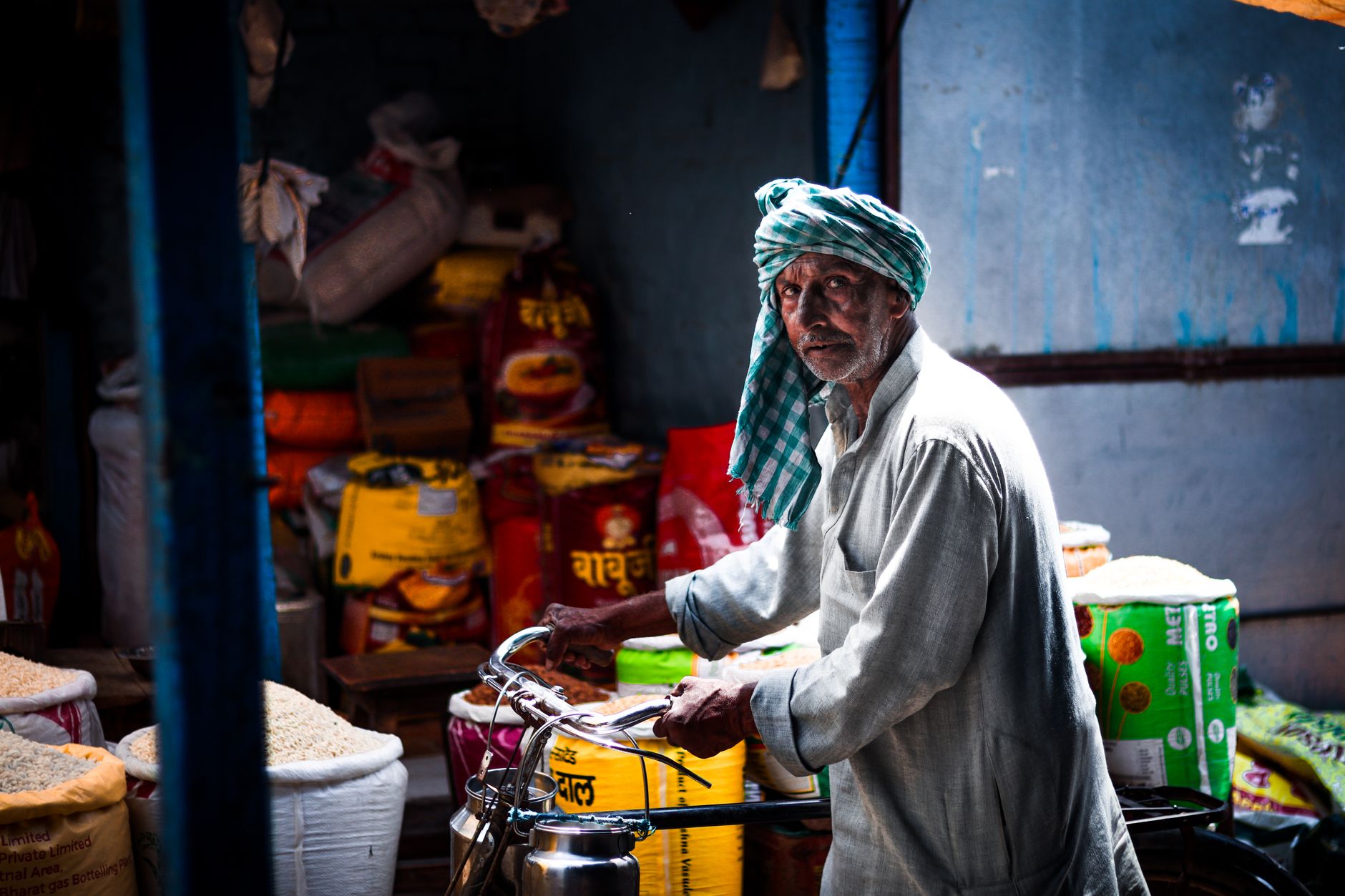
Photo: Chirag Gudhka / Pexels
Your Parents Over 70 Get Free ₹5 Lakh Health Cover — Income No Bar
Most middle-class families assume government health schemes are only for the poor. That single assumption is quietly costing them lakhs. The Ayushman Vay Vandana Card breaks the old rule completely: if you are 70 years or older, you get ₹5 lakh of free hospital cover a year, and it does not matter whether you are a retired bank manager, a landlord, a taxpayer or a daily-wage worker. Age is the only qualification.
Launched on 29 October 2024 as an extension of Ayushman Bharat PM-JAY, this is the first time India has offered a national health benefit purely on the basis of age, with no income ceiling, no asset check and no ration-card requirement. If your parents are in their seventies, the card they're probably entitled to is sitting unclaimed.

Why the income-blind design matters
India's flagship health scheme, PM-JAY, was built for the bottom 40% of households identified through old census data. That left out a huge swathe of retired, lower-middle-class and even comfortable families — exactly the people who get wiped out by a single cardiac surgery or a long ICU stay in their final decades.
The Vay Vandana variant fixes that gap for one specific group. Every citizen aged 70 and above is now covered, whether they live in a slum or a gated society. This is deliberate. Healthcare costs in old age fall on everyone, and a heart bypass or cancer line in a private hospital can swallow a lifetime of savings in weeks. By dropping the means test for seniors, the government is treating advanced age itself as the risk worth insuring.
There's a subtle benefit here too. A 72-year-old with diabetes and hypertension is almost uninsurable in the private market — premiums are brutal, and pre-existing clauses lock out the conditions that actually need treatment. This card ignores all of that.
What the ₹5 lakh actually buys
The cover is a family-level ₹5 lakh per year for cashless, paperless treatment at empanelled hospitals — and there are nearly 30,000 of them, including more than 13,000 private facilities, across the country. The benefit list runs to roughly 2,000 procedures, spanning surgeries, intensive care, diagnostics, implants and the medicines tied to a hospital admission.
The most important clause for older patients: pre-existing diseases are covered from day one. There is no waiting period. Blood pressure, diabetes, kidney disease, heart conditions — all are in from the moment the card is issued. That alone makes it more useful than most retail policies a senior could buy at this age.
A few practical limits to keep in mind:
- It is geared to secondary and tertiary care — the big hospital events, not routine OPD visits or chemist bills.
- Cover is cashless at empanelled hospitals only, so check that your preferred hospital is on the list before an emergency, not during one.
- The ₹5 lakh resets every year; it is not a one-time pot.
The top-up math families miss
This is where it gets genuinely clever, and where most people misread the benefit.
If the household is already a PM-JAY beneficiary, the 70+ members don't simply share the existing family cover. They get a separate ₹5 lakh top-up reserved exclusively for senior members of that family. So a poor household with an elderly parent can effectively access up to ₹10 lakh in a year — the original ₹5 lakh family floater plus the seniors-only ₹5 lakh.
If the family is not under PM-JAY, the 70+ members get their own dedicated ₹5 lakh cover on a family basis. Where two or more seniors live under one roof — say both grandparents — that ₹5 lakh is shared between them rather than multiplied. Each can hold an individual card, but they draw from the same senior pool.
The takeaway is simple. Poorer families gain the most because the cover stacks on top of what they already have. Better-off families gain a brand-new, no-questions-asked safety net they never had before.
The one catch: you may have to choose
Nothing here is entirely free of fine print, and this is the clause that trips people up.
Seniors already covered by certain government schemes — CGHS, ECHS or CAPF-type cover — must choose between their existing scheme and the Vay Vandana benefit. You cannot bill the same hospitalisation episode to both. A retired central-government employee on CGHS, for instance, has to weigh which gives better access at the hospitals they actually use.
The rule is friendlier for the private market. If your parent holds a private mediclaim policy or is on ESIC, the government card can run alongside it. That opens up smart combinations: use the Vay Vandana cover first to protect a private policy's no-claim bonus, or treat the government ₹5 lakh as a top-up once a private sum insured is exhausted. For families paying steep premiums on ageing parents, this can take real pressure off renewals.
How to get the card, step by step
The whole process is digital and free. Nobody should pay an agent for it.
- Download the Ayushman app or open beneficiary.nha.gov.in on a browser.
- Enter the senior's Aadhaar number and verify identity. The app's face authentication lets you complete e-KYC without waiting for an OTP — useful for elders who fumble with messages.
- Confirm the auto-filled details and submit.
- Once e-KYC is approved — often within 15 to 30 minutes — download the Vay Vandana Card as a PDF straight to the phone.
Keep the card image and number saved on your own phone too, so it's reachable in an emergency when the patient can't dig it out. If you get stuck, the Ayushman helpline is 14555, and there's a dedicated missed-call line for this scheme on 1800-110-770, after which a callback walks you through enrolment.
Do this before the next health scare
The worst time to discover a hospital isn't empanelled, or that the card was never made, is at 2 a.m. in a casualty ward. Spend twenty minutes now: generate the card for every parent or grandparent over 70 in the family, save the PDF, and check which nearby hospitals are on the empanelled list.
For crores of older Indians who were priced out of private insurance and excluded from PM-JAY, this is the most valuable piece of paper they can hold without paying a rupee. The benefit exists. The only thing standing between your family and ₹5 lakh of cover is the five-minute enrolment most people never get around to.