World Cup 2026 Standings: The Daily Tracker Video Boom
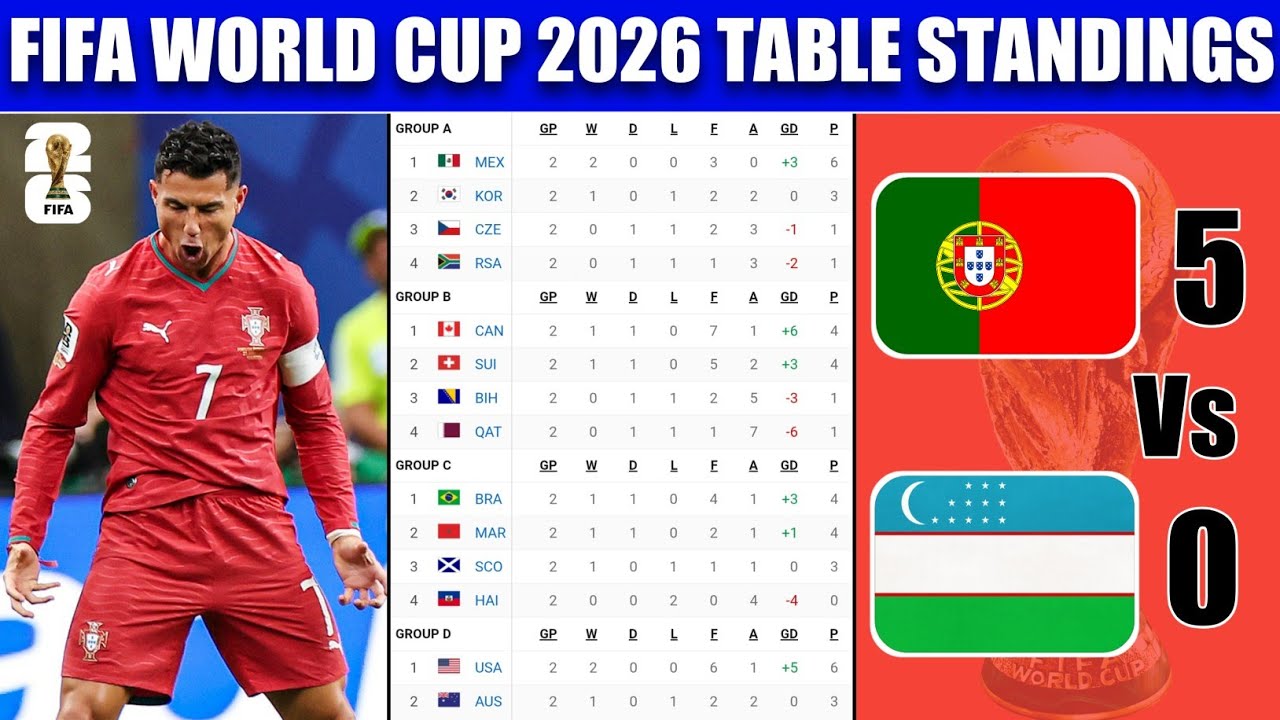
A video titled simply as a World Cup 2026 table update, timestamped 24 June 2026, has become an unlikely magnet for views this week. There is no match action in it, no goals, no commentary worth the name. It is a scoreboard. And yet thousands of football fans, a large chunk of them in India, are refreshing these clips the way they once refreshed live cricket scorecards. The World Cup 2026 standings have turned into appointment viewing of their own.
This is the strange new ritual of the first expanded men's World Cup. With 48 teams, 12 groups and a knockout race that depends on results across the whole tournament, the league table is no longer a static thing you glance at once a day. It moves. And an entire cottage industry of YouTube channels has sprung up to track every nudge.
Why a standings video is outdrawing highlights
The pull is easy to understand once you sit with the format. In the old 32-team World Cup, qualification was clean: finish in the top two of your group and you were through. A third-placed team packed its bags. That simplicity meant the table told you almost everything at a glance.
The 2026 edition broke that comfort. Now the top two from each of the 12 groups advance, and so do the eight best third-placed teams. That last clause is the engine of all the anxiety. A nation can finish third and still progress, but only if its points, goal difference and goals scored stack up favourably against third-placed sides in eleven other groups it never plays.
So a goal scored in a dead-rubber game in one group can quietly knock a team out of contention in a completely different one. The table becomes a living document. People are not watching these videos for drama; they are watching to find out whether their team is, at this exact hour, inside or outside that magic cut-off.
The numbers fans keep checking
Strip away the noise and a handful of figures decide everything. The tracker videos that do well are the ones that present these cleanly rather than burying them.
- Points: three for a win, one for a draw, the universal currency.
- Goal difference: a primary separator when teams are level, and the single most obsessed-over column in the third-place race.
- Goals scored: the next tiebreaker, which is why coaches keep chasing extra goals in games that look already won or lost.
- Head-to-head: used when two tied teams have actually met.
- Disciplinary record: a fair-play points system based on yellow and red cards can break a deadlock, a rule that has decided World Cup fates before.
That ladder of tiebreakers is precisely why the standings refuse to settle until the final whistle of the final group game. A team sitting comfortably one evening can slide below the line by the next, without kicking a ball, simply because someone else scored.
Not every table you see is real
Here is the catch, and it is worth saying plainly. Many of these viral standings clips are not official, and a good number are not even accurate. They are produced by fan channels, faceless content accounts and automated uploaders, some of which generate a fresh video every single day to ride the search traffic.
Several of them mix completed results with simulated outcomes, projecting how the table might look after games that have not yet been played. That is a perfectly fun exercise, but it is presented with the same confident graphics as a genuine result, and a casual viewer cannot always tell the difference. A simulated 2-0 win looks identical to a real one in a thumbnail.
Before you take any of it to heart, a quick checklist:
- Read the date and time on the upload, not just the title. A clip labelled "today" may have been auto-scheduled.
- Check whether games listed have actually finished. If a scoreline exists for a match still to be played, you are looking at a simulation.
- Cross-check the official FIFA table for anything that affects qualification. Treat the videos as a scoreboard, not as the source of record.
- Be wary of channels that post the same format daily with no analysis. Volume usually means automation, and automation makes mistakes.
None of this makes the videos worthless. As a fast, visual scoreboard they do a real job. The problem is only when a projection gets mistaken for a result, and a fan celebrates or mourns a qualification that has not happened.
Why India is so plugged in
India has no team at this World Cup, which makes the appetite for these clips all the more telling. A large, football-literate audience has adopted favourites the way it always has, from Argentina and Brazil to Portugal and the African sides, and now follows their fortunes through whatever format the internet serves up.
The standings video fits the Indian viewing habit almost perfectly. It is short, it loads on a phone, it survives a patchy data connection, and it delivers the one piece of information a busy fan actually wants between work and sleep: are we through or not. In a tournament being played across distant time zones in North America, with several matches finishing deep in the Indian night, a clean morning table is more practical than a two-hour replay.
There is also the language angle. Many of these channels caption heavily or skip speech altogether, leaning on graphics, which lets them travel across a country with dozens of languages without any dubbing. A scoreboard needs no translation.
What comes next as the groups close
The coming days are when the standings stop being a curiosity and start being decisive. As the final round of group matches is played, those eight third-place spots will be settled by the thinnest of margins, and the trackers will be busiest precisely when they are most likely to be wrong, because so many will be projecting outcomes in real time.
Expect the qualification picture to swing right up to the last whistle, and expect at least one team to go through, or go home, on goal difference or goals scored. That is the format working as designed. It rewards attacking intent and punishes teams that shut up shop early, and it keeps even lopsided groups alive until the end.
For viewers, the smart approach is the calm one. Enjoy the daily table as the fast, fun pulse-check it is. Save your celebrations for the official confirmation. And remember that behind every tidy graphic of the World Cup 2026 standings sits a set of tiebreaker rules doing quiet, ruthless work, deciding which of 48 nations gets to keep dreaming and which goes home counting the goals it didn't score.