World Cup 2026 Standings Videos Are Blowing Up — Here's Why
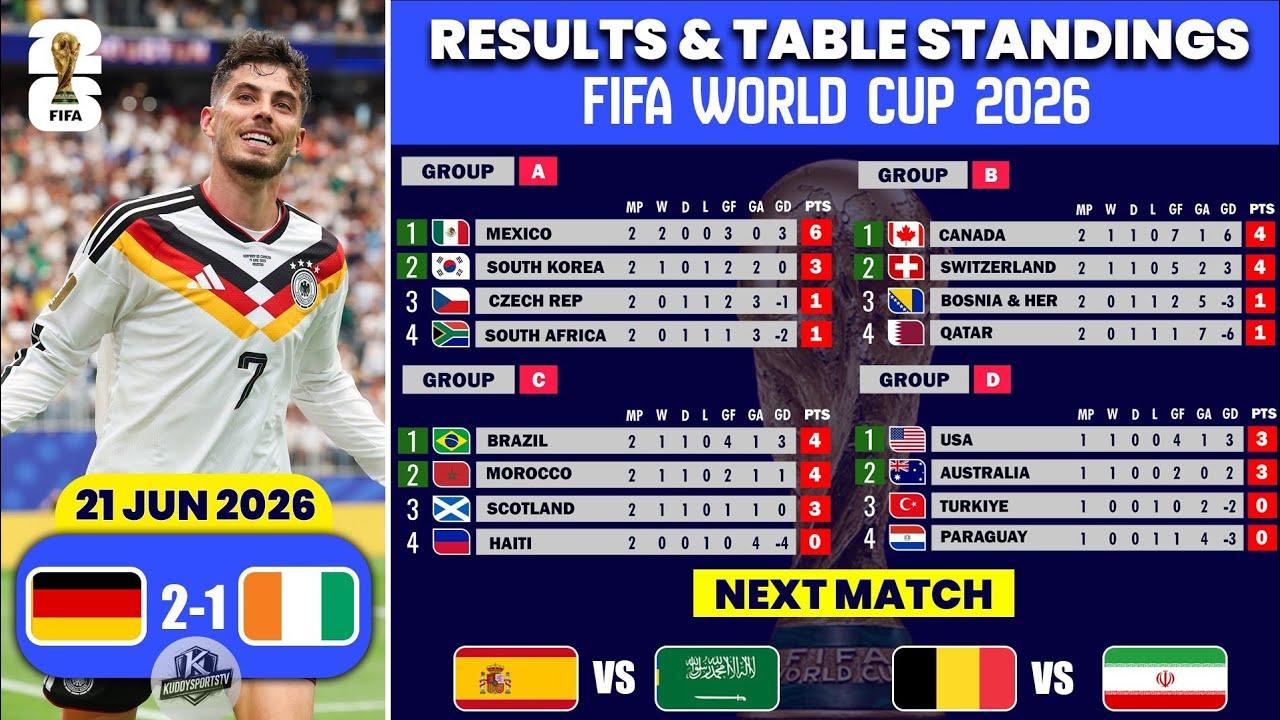
A simple YouTube upload titled around FIFA World Cup 2026 match results and table standings has quietly become one of the tournament's unlikely hits. No match footage, no star interviews, just numbers — group tables, scorelines and a running tally of who sits where. And yet people keep clicking. The reason says a lot about how the 2026 World Cup is being followed, and why this edition's format has turned a humble standings tracker into appointment viewing.
A scoreboard, not a highlight reel
The video does something broadcasters and big sports portals oddly struggle to do in one glance: it lays out every group, every result so far, and the live standings in a single, scannable place. There are no tactical breakdowns or slow-motion goals. It is closer to a spreadsheet brought to life, narrated and updated as the group stage rolls on.
That plainness is the appeal. Fans drowning in clips, reaction videos and rumour want a calm, factual snapshot of where their team actually stands. In a 48-team tournament, that snapshot is genuinely hard to assemble yourself. The clip fills a gap that the sheer scale of World Cup 2026 has created.
Why the new format breaks the old habits
For decades, reading a World Cup table was easy. Eight groups of four, top two go through, do the arithmetic in your head. The expanded 48-team competition has thrown that muscle memory out.
This time there are 12 groups of four. The top two from each group advance, which is familiar enough. The complication is the third spot: the eight best third-placed teams across all twelve groups also progress to a brand-new Round of 32. That single rule changes everything about how you read the standings.
- You can no longer judge qualification from your own group alone.
- A third-placed side's fate depends on results in groups it never plays in.
- Goal difference, goals scored and disciplinary records become cross-group tie-breakers that only make sense when every table is viewed together.
That is precisely why a video that stitches all twelve tables into one frame suddenly has value. The format has manufactured demand for exactly this kind of content.
The third-place scramble nobody can track in their head
The most fascinating wrinkle of World Cup 2026 is the race among third-placed teams. With eight of twelve such sides going through, a team can lose two matches, finish third, and still book a knockout berth. Another can take four points and go home. The line between the two is drawn not by your group but by the global ranking of all third-placed teams.
That ranking shifts with almost every result. A late goal in a distant group can quietly knock a team out of a qualifying spot it thought it held. Following that live is beyond casual mental maths, and it is why standings trackers, simulators and "who needs what" explainers have multiplied across YouTube this tournament. The viral results-and-table video is riding that exact wave.
FIFA experimented with a similar best-third-placed system at the 24-team Euros and in earlier expanded competitions, and even there fans found it fiddly. Stretched across 12 groups, the puzzle is bigger and the margins thinner.
Why it lands so hard with Indian viewers
For audiences in India, the appeal has a second layer: timing. Matches across the United States, Canada and Mexico fall at awkward hours in IST, with several kicking off deep into the night or early morning. Plenty of fans simply cannot watch every game live.
That makes a clean morning catch-up invaluable. Instead of scrolling through a dozen separate results, a viewer gets the overnight damage in one sitting — who won, who slipped, and whether their adopted team is still alive. India has no side in the tournament, so loyalty here is spread across Argentina, Brazil, Portugal, France and the rest. A neutral, all-in-one table speaks to that scattered, multi-team following better than any single broadcaster's coverage.
There is also a strong second-screen culture in Indian football fandom. Watching highlights while checking standings, arguing on WhatsApp groups, and comparing notes the next morning is now part of the ritual. A tidy standings video slots neatly into that routine.
The quiet rise of aggregator content
The success of this clip is part of a broader shift. Some of the most-watched sports content online is no longer the spectacle itself but the organising layer around it — recaps, trackers, simulations and scenario videos. Creators have realised that during a tournament this sprawling, the audience's real pain point is keeping up, not being entertained.
A few things explain why these uploads perform so well:
- Searchability. People literally type "World Cup 2026 table" and "results today" into YouTube, and these videos are built to match that intent.
- Repeat visits. Standings change daily, so viewers return again and again through the group stage.
- Low production, high utility. They are cheap to make and genuinely useful, a rare combination that rewards consistency over polish.
- Shareability. A single frame showing all the groups is easy to screenshot and forward.
None of this requires breaking news or exclusive access. It rewards being fast, accurate and clear — qualities the viral tracker leans on.
A word of caution on unofficial trackers
The flip side of this boom is reliability. These videos are unofficial uploads, not FIFA products. Most pull from official results and get them right, but standings during a live tournament are fragile things. Tie-breakers, third-place rankings and qualification scenarios can be subtle, and a small error or an out-of-date upload can mislead.
For casual catching up, that is harmless. For anything that matters — settling an argument, planning which knockout fixture to stay up for — it is worth confirming final scenarios against official sources. The best of these channels timestamp their updates and note when tables are provisional. The weaker ones recycle old graphics, which is how misinformation about who has "already qualified" tends to spread mid-tournament.
There is also the predictable wave of copycats. A viral format invites imitation, and viewers will soon see dozens of near-identical thumbnails promising the latest table. Sorting the carefully maintained ones from the lazy reuploads becomes its own small skill.
What comes next
Expect this kind of content to get louder, not quieter, as the group stage closes. The final round of group matches is when the third-placed maths reaches peak tension, with several teams' fates decided simultaneously across different venues. That is exactly the moment a single, all-in-one standings view becomes most useful — and most viral.
Once the Round of 32 is set, attention will swing toward bracket predictors and knockout simulators, the natural sequel to group-stage trackers. The underlying lesson holds either way: by expanding to 48 teams, FIFA did not just add games, it added complexity. And complexity, it turns out, is its own kind of content engine. A plain video full of tables going viral is the clearest sign yet that fans want help making sense of the biggest, most tangled World Cup ever staged.