Photo: Pixabay / Pexels
Complex Carbon on Mars Edges NASA Closer to Ancient Life
Billions of years before anything walked the Earth, a Martian mudflat may have been quietly assembling the chemistry of life. We now have a physical hint of it: tucked inside a single rock that NASA's Curiosity rover drilled, scientists found a ring of carbon atoms laced with nitrogen — the very same molecular shape that, on our planet, forms the backbone of RNA and DNA. It had never been seen on the Martian surface before.
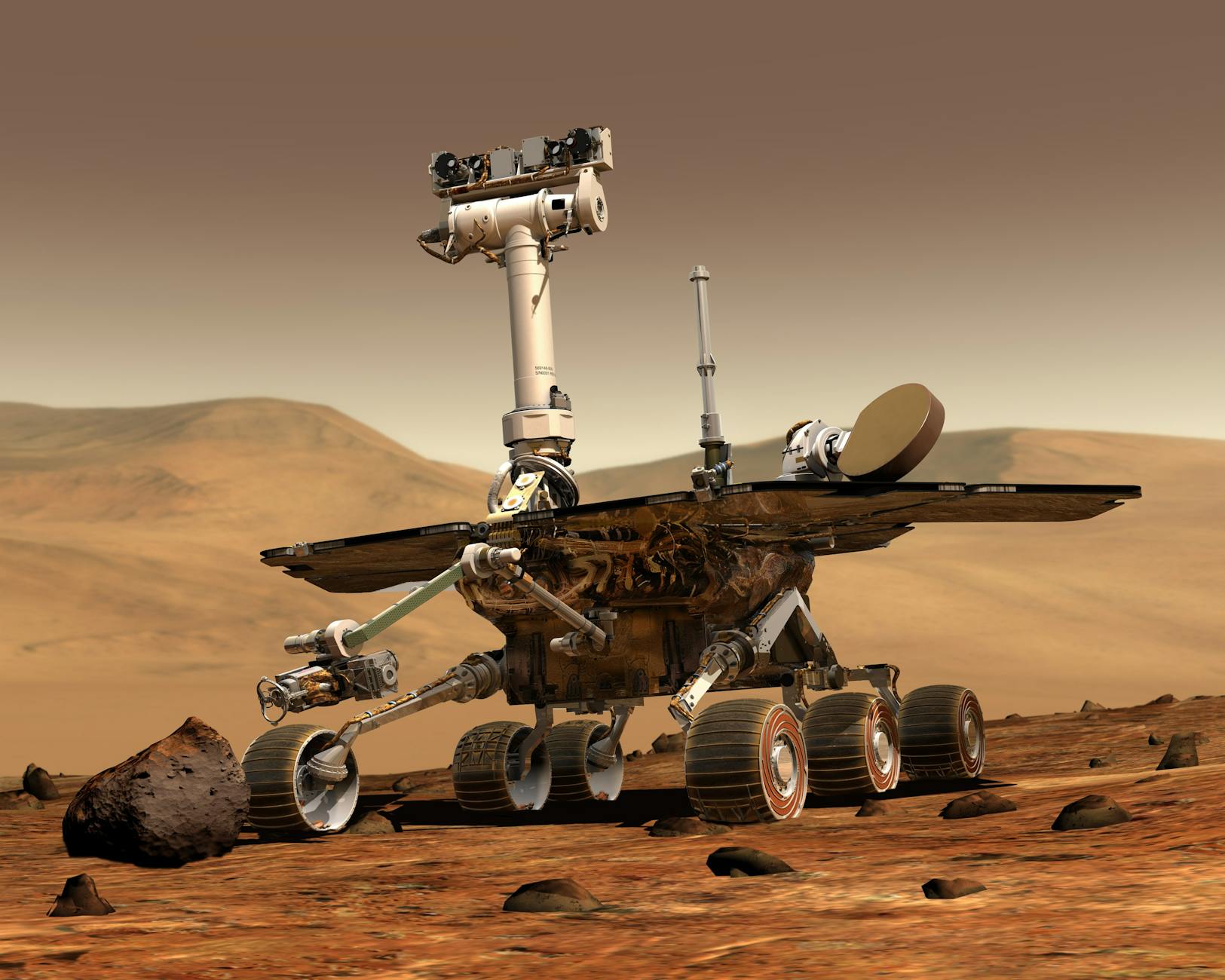
That single find sits inside a larger, steadily building story. Over the past two years, NASA's two working rovers have pulled increasingly complex carbon out of ancient Martian rock, sharpening the long hunt for signs of ancient life on Mars. None of it is proof. All of it is the kind of evidence that, a decade ago, scientists weren't sure Mars could still be hiding.

The molecule that stopped people in their tracks
The headline find came in a study published in Nature Communications on April 21, 2026. Curiosity's onboard chemistry lab, an instrument called SAM (Sample Analysis at Mars), heated a powdered rock sample and sniffed out 21 carbon-containing molecules. Seven of them had never been detected on Mars.
The standout was that nitrogen-bearing carbon ring, a nitrogen heterocycle. On Earth this class of molecule is a chemical relative of the bases that spell out genetic code. Lead researcher Amy Williams noted that nothing like it had been confirmed on the Martian surface until now. The same sample also gave up benzothiophene, a molecule built from carbon and sulfur.
The rock carries a quietly poetic name — Mary Anning 3, after the 19th-century English fossil hunter — and Curiosity drilled it back in 2020. It sat in a clay-rich stretch of Mount Sharp, inside Gale Crater, a region once washed by ancient lakes and streams. Clay is the detail that matters: fine, water-laid mud is exactly the kind of material that can cradle delicate organic molecules and shield them from radiation for eons.
Then came the biggest molecules Mars has ever shown us
The nitrogen ring didn't arrive out of nowhere. A year earlier, in March 2025, the same rover and the same instrument delivered another jolt: the largest organic molecules ever found on Mars.
These were three long-chain hydrocarbons — decane, undecane and dodecane — named for the 10, 11 and 12 carbon atoms strung along each one. They turned up almost by accident. Curiosity had been searching an old rock nicknamed Cumberland, drilled in 2013 at a spot called Yellowknife Bay, for amino acids. It found none. But as the sample baked in SAM's oven, it quietly released these heavier carbon chains instead.
Here's why that set pulses racing. Long chains can snap off from bigger, more fragile parent molecules during heating. Working backward, the team proposed the trio were fragments of fatty acids — specifically undecanoic, dodecanoic and tridecanoic acids. On Earth, fatty acids are a core ingredient of the membranes that wrap living cells.
That does not mean Mars had cells. Fatty acids can form through ordinary geology and chemistry, with no biology involved at all. What it does mean is that Mars ran a far richer organic chemistry, far longer ago, than many scientists once allowed.
A different rover, a different crater, a 'leopard-spotted' rock
While Curiosity worked Gale Crater, NASA's newer rover Perseverance was prospecting a separate ancient lakebed half a planet away in Jezero Crater. In September 2025, it produced what NASA called one of the strongest potential biosignatures found on Mars to date.
The rock is an arrowhead-shaped slab, roughly a metre across, nicknamed Cheyava Falls. It sat in the Bright Angel formation along Neretva Vallis, a quarter-mile-wide channel that water once carved as it poured into Jezero. From it, Perseverance drilled a sample named Sapphire Canyon.
What caught the science team's eye were strange markings the researchers dubbed leopard spots — small reaction fronts ringed by two telltale minerals:
- Vivianite, an iron phosphate that on Earth shows up in bogs, sediments and around decaying organic matter.
- Greigite, an iron sulfide that certain microbes here are known to produce.
Using its PIXL and SHERLOC instruments, Perseverance detected organic carbon and chemical reactions that, on Earth, can power microbial life. Published in the journal Nature, the finding came with a careful definition: a potential biosignature is something that might have a biological origin but needs more data before anyone can call it. NASA was blunt that it had not found life — only that abiotic explanations, while still possible, looked less likely.
Why nobody is saying 'life' yet
It's worth sitting with the caution, because it's the most honest part of the whole story. Every one of these discoveries lands in the same frustrating, fascinating gap: the molecules and minerals are real, but biology and geology can both produce them.
The rovers are extraordinary, yet their instruments can only go so far. To settle the question, scientists need to study the rock's isotopes, its microscopic textures and its precise mineral structures with the kind of sensitive equipment that fills a room — far too large to fly to Mars and back.
That is the whole logic behind the long-discussed plan to return sealed Martian samples to Earth. Perseverance has been caching tubes like Sapphire Canyon for exactly this purpose. Until those rocks reach a terrestrial lab, the verdict stays open.
What the carbon is really telling us
Strip away the suspense and a remarkable picture remains. Two craters. Two rovers. Multiple ancient water environments. And in each, complex organic chemistry preserved for billions of years in the shallow Martian subsurface.
A few threads tie it together:
- Mars kept its chemistry. Scientists once doubted fragile organics could survive the planet's harsh radiation. They clearly can, especially under protective clay.
- The ingredients line up. Carbon-rich molecules, nitrogen rings, possible fatty-acid fragments, and minerals tied to energy-yielding reactions — the chemical starter kit for life, all present.
- The locations were habitable. Every find comes from a place that once held standing or flowing water.
None of that is a fossil. But it answers a question that mattered: was ancient Mars even capable of the chemistry life requires? On the evidence now sitting in Martian rock, the answer is yes.
What comes next
The near future is about confirmation, not new headlines. Researchers will keep cross-checking these results, and the field's attention increasingly turns to getting Perseverance's cached tubes home, where the biology-or-geology question can finally be pinned down.
For now, the most accurate way to describe the moment is also the most exciting. We have not found Martians. We have found, again and again, that the early Red Planet was building the same kinds of carbon molecules our own living world is made from — and then locking them away, in stone, for us to read.