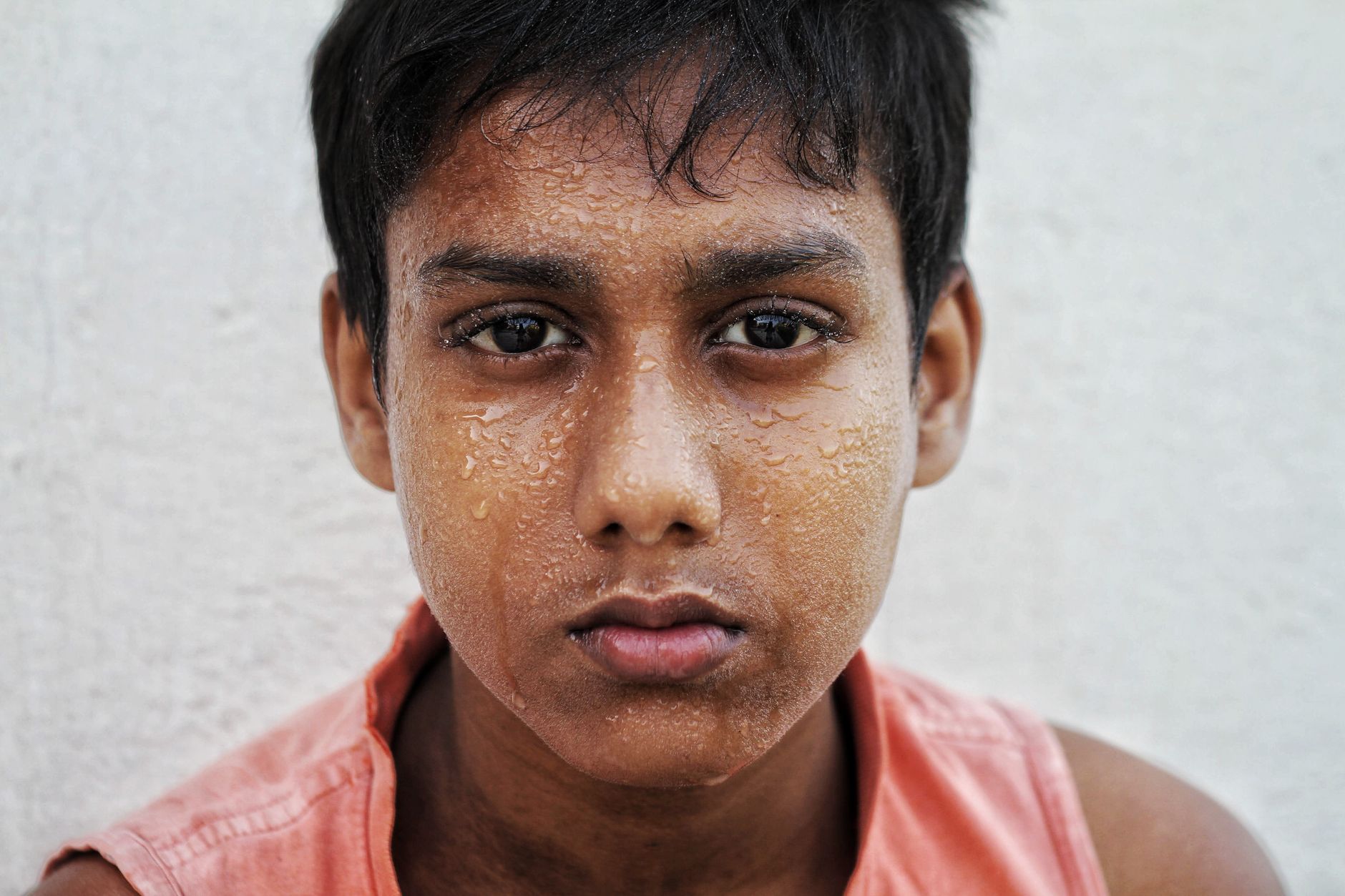
Photo: Pabitra Sarkar / Pexels
The 32°C That Can Kill: Wet-Bulb Heat in India
Every Indian summer, the conversation fixes on one number: the maximum temperature. Delhi touches 45, the headlines scream, and a coastal city sitting at a milder 36 gets ignored. That ranking is misleading. The number that actually decides whether a heatwave is uncomfortable or lethal is the wet-bulb temperature, and it can make a 36°C afternoon in Mumbai more dangerous than a 44°C one in the desert.
Wet-bulb temperature is not a comfort score invented by a weather app. It is a hard physical measurement of how much cooling your body can still pull from the air. Once you understand it, you read summer differently — and you make better decisions about when to step outside, when to stop working, and when to worry about an elderly relative in a room without an AC.

What wet-bulb temperature actually measures
The name comes from the instrument. Wrap a wet cloth around a thermometer bulb and spin it through the air. Water evaporates off the cloth, and evaporation takes heat with it, so the thermometer reads lower than the air temperature. How much lower depends entirely on the humidity. In bone-dry air, evaporation is fast and the wet-bulb reading drops a lot. In saturated, sticky air, almost nothing evaporates and the wet-bulb sits close to the actual temperature.
That thermometer is a stand-in for you. Human beings are evaporative coolers. We sweat, the sweat evaporates, and that carries heat off the skin. The wet-bulb temperature is, in effect, the coldest your skin can get by sweating in the surrounding air. If that number climbs too high, your body loses its only reliable way to dump heat, and core temperature starts rising no matter how much water you drink.
So two days can share the same air temperature and behave completely differently. A dry 42°C afternoon might carry a wet-bulb of 24°C, which is survivable. A humid 36°C evening on the coast might carry a wet-bulb above 30°C, which is genuinely dangerous. The thermometer everyone quotes hides this.

The 35°C myth and the lower real limit
For years the textbook figure was a wet-bulb temperature of 35°C as the theoretical survival ceiling. The logic is clean: human skin sits around 35°C, and if the air can no longer pull your skin below that, heat stops flowing out of you at all. At 35°C wet-bulb, even a healthy person resting in the shade with unlimited water would eventually overheat and die within hours.
That number was always a ceiling, not a safety threshold. More recent laboratory work, where volunteers were monitored as heat and humidity were pushed up, found that real bodies start failing much earlier. For young, fit adults the practical limit landed closer to 31°C wet-bulb, and for older people and those with heart or kidney conditions it is lower still. The body's cooling system degrades long before the theoretical wall.
The takeaway is blunt. By the time conditions approach the famous 35°C figure, vulnerable people have already been collapsing for hours. The danger zone for India is the band that gets reached far more often: wet-bulb readings in the low 30s.
Why India is on the front line
India combines the two ingredients that drive wet-bulb temperature in the worst possible way: ferocious heat and, across much of the country, high moisture. The Indo-Gangetic plains, the eastern coast, and the humid pockets around the Bay of Bengal can stack high temperatures on top of monsoon-season or pre-monsoon humidity.
Researchers tracking the most extreme humid-heat events on the planet have repeatedly flagged spots in South Asia and the Persian Gulf as the places that brush closest to the survivability limit. Parts of coastal Pakistan, eastern India and the Gangetic basin have recorded brief wet-bulb spikes that would have been considered almost impossible a generation ago.
This is why ranking cities purely by maximum temperature fails Indians so badly:
- Dry-heat cities like Jaisalmer or Delhi in peak May can hit terrifying air temperatures but lower wet-bulb values, because sweat still evaporates.
- Humid cities like Mumbai, Chennai, Kolkata and the coastal stretches reach dangerous wet-bulb levels at far gentler-looking temperatures.
- Pre-monsoon transition weeks, when heat is still high but moisture is climbing, can be quietly the riskiest window of all.
A labourer in a humid coastal town at 35°C can be in more physiological trouble than one at 43°C inland, even though the inland number grabs every headline.
How to read your own risk without a fancy instrument
You do not need a sling psychrometer. Your phone already shows the two numbers that matter: temperature and relative humidity. The mental shortcut is simple — when both are high at the same time, wet-bulb is high, and the day is dangerous even if the temperature alone looks unremarkable.
A rough way to gauge it:
- Check the air temperature and the relative humidity together, not separately.
- Treat anything with high temperature and humidity above roughly 50-60% as a serious humid-heat day.
- Be most alert when a hot afternoon is paired with sticky, oppressive air that makes your sweat sit on your skin instead of drying.
- Watch the night-time numbers too. When humid heat keeps overnight wet-bulb high, the body never gets its recovery window, and that is when death tolls climb.
The sensation itself is a clue. Dry heat feels like an oven and your sweat vanishes. Dangerous humid heat feels heavy and slick, your shirt stays damp, and a fan stops helping. That second feeling is your body telling you evaporation has stalled.
What actually protects you when wet-bulb climbs
The instinct in any heatwave is to drink more water. Hydration matters, but on a high wet-bulb day it is not enough on its own, because the problem is not fluid loss — it is that evaporation has stopped working. Once the air is too humid for sweat to evaporate, pouring in water does little to lower your core temperature.
What genuinely helps:
- Get the temperature down, not just the thirst. Air conditioning, even for a couple of hours, resets your core. A cool shower or wet towels on the neck and wrists beat a fan in saturated air.
- Stop exerting. Muscle work generates internal heat your body can no longer shed. On a high wet-bulb day, physical labour is the single biggest avoidable risk.
- Move the vulnerable. Infants, people over 65, pregnant women, and anyone with heart, kidney or diabetic conditions cross the danger line earlier. A shared cool room can save a life.
- Respect the shade and the timing. Shift outdoor work to early morning, and treat the late-afternoon humid spike as a stop-work window.
A fan deserves a special warning. In dry heat a fan speeds evaporation and cools you. Once wet-bulb is very high, a fan can blow hot air over skin that can no longer evaporate sweat, and it stops helping or even adds heat. That reversal surprises people every summer.
Why this number is only going to matter more
As the planet warms, the headline temperatures rise, but the wet-bulb temperatures rise alongside them — and in humid regions they rise in the more dangerous direction. India's exposure is structural: a huge outdoor workforce, dense cities that trap heat overnight, and large populations without reliable cooling. The events that once looked like freak spikes are becoming part of the normal summer range.
India's weather agencies and health departments are slowly shifting toward heat warnings that factor in humidity rather than temperature alone, and city heat action plans increasingly talk about humid-heat risk. That is the right direction, because the old habit of judging a heatwave by a single dry number quietly underestimates the days that hurt people most.
The practical message is small enough to remember in a sentence. Stop asking only how hot it is, and start asking how hot and how humid together. On the days when both are high, the air has taken away your body's escape valve — and that is when heat stops being uncomfortable and starts being deadly.