Photo: Harshad Pendse / Pexels
Rural Government Schools in India: Fixing What's Broken
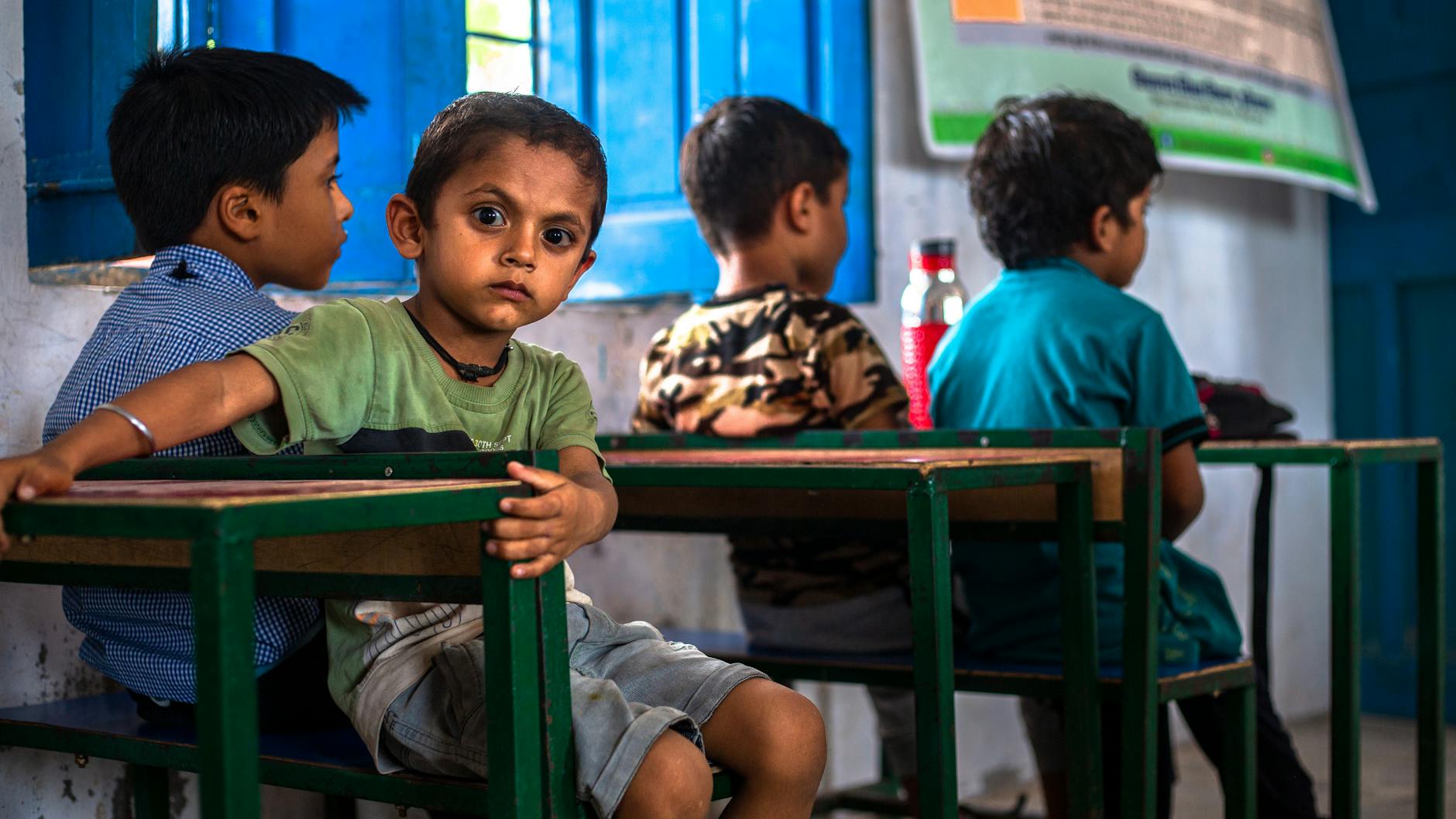
Walk into a primary school in a village in Bihar, Rajasthan or Odisha and you will often find the contradiction of Indian education in one room. There is a freshly painted building, a toilet that works, a hot midday meal on the way, and a wall chart proudly listing enrolment. There may also be one teacher trying to teach five grades at once, and a Class 5 child who cannot yet read a simple paragraph. Rural government schools are where the vast majority of India's children study, and their progress is real but uneven. This is an analysis of what genuinely ails them, what has worked, and what experts say could move the needle.

The numbers behind the daily struggle
The most trusted picture comes from the ASER 2024 survey, a household study that reached 649,491 children across 17,997 villages in 605 rural districts. Its headline is encouraging: basic reading and arithmetic among children in government schools are at their highest in over a decade. The share of Class 3 students in government schools who could read a Class 2 text rose from 16.3% in 2022 to 23.4% in 2024. The proportion of Class 5 children able to do simple division climbed from 25.6% to 30.7%.
The caution sits in the older grades. Roughly a third of Class 8 students still cannot read a Class 2-level paragraph comfortably, and barely 46% can handle basic division. When a child is promoted year after year without mastering the basics, the gap compounds until it becomes nearly impossible to close. This is the quiet crisis ordinary parents feel even when they cannot name it: a certificate that does not match a skill.
Staffing is the other pressure point. Across government schools, close to 7.5 lakh teaching posts reportedly lie vacant, roughly 15% of all sanctioned positions. Rural areas absorb the worst of it. Even after recent improvement, more than 1 lakh schools still run on a single teacher, affecting roughly 3.37 million children. One adult cannot realistically teach reading to a six-year-old and fractions to a twelve-year-old in the same hour.
What ordinary families actually face
Strip away the policy language and the problems are concrete:
- Multi-grade classrooms. Where one or two teachers handle the whole school, younger children are often parked with worksheets while the teacher manages older ones.
- Lost teaching days. Teachers are routinely pulled into election duty, census work, midday-meal logistics and survey forms, eating into the hours meant for the blackboard.
- A widening reliance on tuition. ASER data shows paid private tuition rising sharply in some states, with very high rates in Bihar and Jharkhand. When even Class 1 children need coaching, it is a signal that the school day alone is not delivering.
- The digital divide. Only about 63.5% of schools have internet and around 65% have computers, so "smart" learning often stops at the district town.
None of this means rural schools are failing wholesale. It means the burden falls hardest on the families least able to buy their way around it.
Credit where it is due
A fair analysis has to acknowledge what successive governments and administrators have got right, because some of the foundations are now genuinely strong.
On physical infrastructure, the change over two decades is striking. By UDISE+ 2024-25, 99.3% of schools have drinking water, 97.3% have a separate girls' toilet, and 93.6% have electricity. These are not trivial; a usable toilet is one of the biggest reasons adolescent girls stay enrolled. India also crossed 1 crore school teachers for the first time, pushing the pupil-teacher ratio comfortably within the policy benchmark on paper.
The PM POSHAN scheme, the world's largest school feeding programme, continues to anchor attendance and nutrition for crores of children. On learning specifically, the NIPUN Bharat mission, launched in 2021 under NEP 2020, has put foundational literacy and numeracy at the centre of primary teaching, with structured kits, teacher training on the DIKSHA platform and regular classroom assessment. The ASER gains in Class 3 are widely read as an early dividend of that focus. The PM SHRI programme is upgrading around 14,500 government schools into better-resourced model campuses. And the single-teacher school count actually fell by about 6% in a single year, evidence that the staffing problem is being chipped at, not ignored.
Why progress stalls after the early grades
If the early grades are improving, why does the system lose so many children later? Part of the answer is structural. For years schools were measured by enrolment and infrastructure, both easy to count, while learning was not tracked child by child. A school can hit every input target and still graduate children who cannot read.
The second reason is that remediation rarely happens. A child who falls behind in Class 2 is seldom brought back to grade level; the syllabus simply moves on. The third is teacher time. Even a well-trained, motivated teacher cannot deliver if a third of the year is consumed by non-teaching duties and multi-grade juggling.
The reforms experts keep returning to
There is more consensus among educationists than the headlines suggest. The most frequently cited, practical fixes are these:
- Fill and rationalise teaching posts. Clear the backlog of vacancies, and redeploy teachers so that no functioning school is left with a single adult for all grades. Geography-based posting and local-cadre recruitment help retention in remote areas.
- Ring-fence teaching time. Legally limit how many non-teaching duties a teacher can be assigned during the academic year, and shift data collection to dedicated staff or simple digital tools.
- Teach at the right level. Group children by current ability for a daily reading-and-maths block, a method repeatedly shown to lift the weakest learners fast, rather than teaching strictly by grade.
- Measure learning, not just enrolment. Use light, frequent assessments so a struggling child is spotted in weeks, and make those signals visible to parents and the local school committee.
- Strengthen community oversight. Empower School Management Committees of parents with real information and small untied funds, so accountability is local and continuous.
- Invest in foundational years, not just showcase schools. Model campuses matter, but the largest returns come from getting the ordinary village primary school's first three years right.
What to watch next
The near-term test is the 2026-27 deadline NIPUN Bharat set for universal foundational learning. It will not be met everywhere, but the direction of the ASER curve in the early grades suggests the strategy is sound and worth sustaining. The harder, slower work is carrying those gains into the upper-primary years and making sure a child who improves in Class 3 is not stranded again by Class 8.
The encouraging truth is that rural government schools are not a lost cause; they are a system that has solved its first set of problems and now faces a more demanding second set. Water, walls and meals were the achievable wins. Reading, reasoning and enough teachers are the harder ones. They are also the ones that decide whether a generation of rural children gets a real education or just a seat.