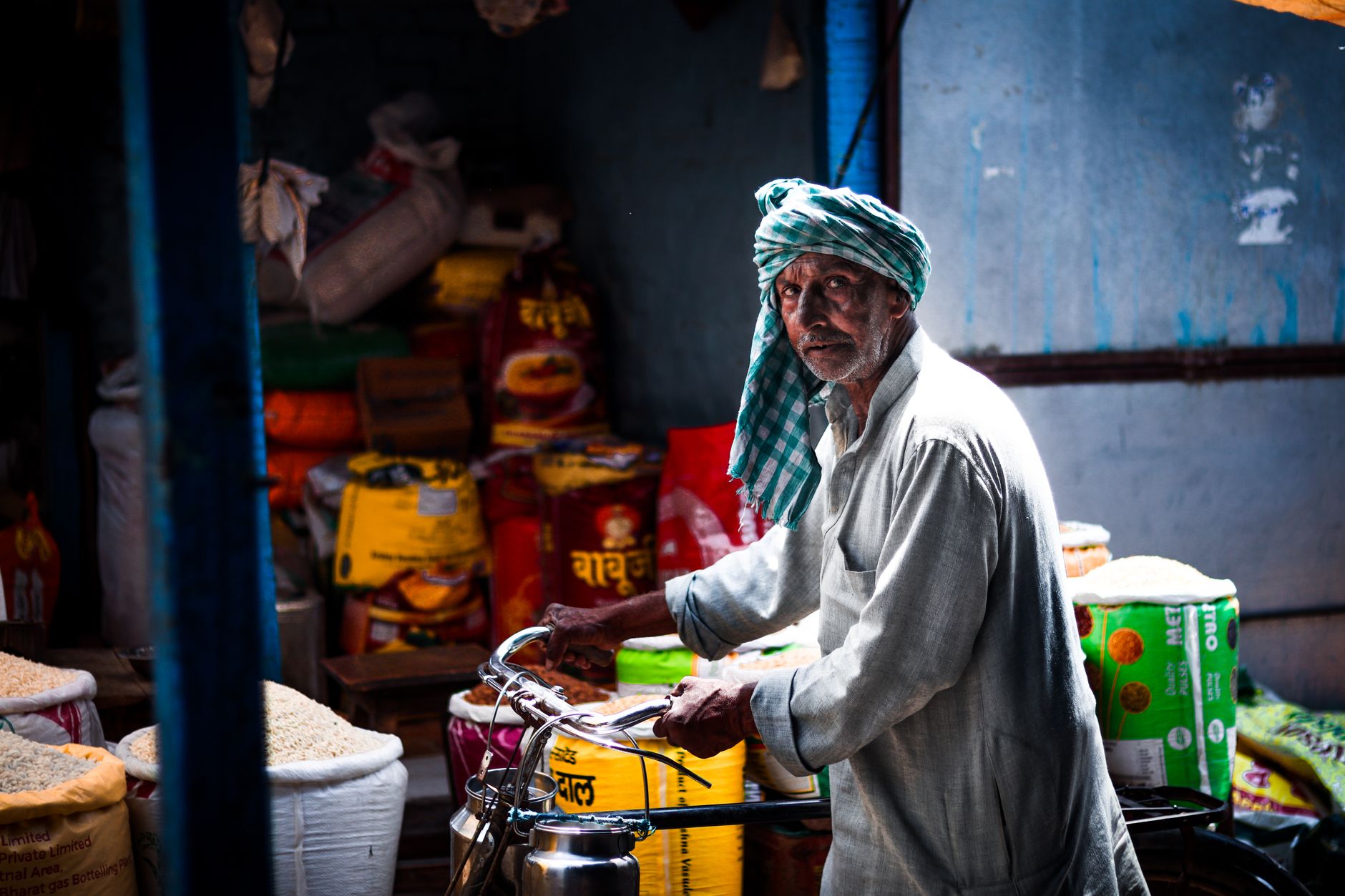
Photo: Chirag Gudhka / Pexels
Ayushman Vay Vandana: Free ₹5 Lakh Cover for Parents 70+
If your parents are over 70, there is a government health card sitting unclaimed that most families either haven't heard of or assume they earn too much to use. They're wrong on the second count. The Ayushman Vay Vandana card hands every Indian aged 70 and above a ₹5 lakh hospital cover, and for once the rulebook ignores how much you earn, what you own, or whether you file taxes.
This is the senior-citizen wing of Ayushman Bharat, carved out in late 2024 to fix an obvious gap: private health premiums for a 72-year-old with diabetes and a heart stent are brutal, and most retirees can't buy a fresh policy at all. The state's answer was to make age the only qualification. Here's what the card actually pays for, where it falls short, and the exact steps to get your parents enrolled this week.

What the Vay Vandana card covers
The headline is a ₹5 lakh family cover per year, used for cashless, paperless treatment at empanelled hospitals. It is built for hospitalisation — secondary care like a planned surgery or pneumonia admission, and tertiary care like cardiac procedures, cancer treatment, joint replacements and dialysis. The package rates are fixed in advance, so the hospital bills the government directly and your parent walks out without settling a bill at the counter.
Two features make this genuinely useful rather than a token gesture.
First, pre-existing conditions are covered from day one. There is no waiting period. A 74-year-old with long-standing blood pressure, diabetes or kidney trouble is covered for those very conditions the moment the card is active. No private insurer in India offers that to a new senior applicant.
Second, the ₹5 lakh is additional for the elderly. If your household is already enrolled under regular PM-JAY, the 70-plus member doesn't share the family pool — they get their own dedicated ₹5 lakh top-up. If a couple are both over 70, they share a ₹5 lakh cover between them. And if the family had no Ayushman link before, the senior simply gets a fresh ₹5 lakh of their own.
Who qualifies, and who doesn't
The eligibility line is refreshingly short. Any citizen aged 70 years or older, verified through Aadhaar, qualifies. That's it.
- Income is irrelevant. A retired bank manager with a pension and a paid-off flat is as eligible as a landless labourer.
- Caste, category and ration-card status don't enter the picture.
- It works across the country, at both government and private empanelled hospitals.
The genuine catch sits elsewhere. People already covered by CGHS (central government health scheme), ECHS (ex-servicemen) or ESIC are asked to choose — they can switch to the Vay Vandana benefit or stay with their existing scheme, not stack both government covers. Crucially, holding a private or employer health policy is no bar. You can keep both and pick whichever serves a particular admission better, which is exactly what smart families do: lean on the government card first or use it once a private policy is exhausted.
One more practical limit worth knowing: a handful of states were slow to roll out PM-JAY, so always confirm your state and your chosen hospital are inside the network before counting on the card.
How to enrol your parents, step by step
The enrolment is free. Anyone charging a "processing fee" is running a scam — this is the single most important thing to tell an elderly parent who gets a call about it.
You can do the whole thing on a phone in about ten minutes:
- Install the official Ayushman App (or open beneficiary.nha.gov.in in a browser).
- Log in as a beneficiary using your parent's mobile number and OTP.
- Enter the Aadhaar number; the system checks the 70-plus age automatically.
- Complete eKYC. The slickest route is Face Auth — it scans the senior's face through the phone camera and needs no OTP, which helps if your parent struggles with messages. Aadhaar OTP or fingerprint also work.
- Add a photo and confirm the details.
- Once approved, download the card as a PDF and save or print it.
If the online route stalls — and with elderly Aadhaar records it sometimes does, because of a mismatched mobile number or old biometrics — walk into a Common Service Centre (CSC) or any empanelled hospital's Ayushman help desk. Carry the Aadhaar card plus a second proof such as a voter ID or utility bill. The operator there can finish the eKYC and hand over the card.
For questions, the Ayushman helpline is 14555, and the Vay Vandana scheme runs a missed-call line at 1800-110-770.
Before you assume you're covered
A card in the wallet is not the same as a settled claim. A few realities trip families up at the worst possible moment.
The cover is for hospitalisation, not everyday medicine. Routine OPD visits, most diagnostic tests done without admission, and long-term outpatient drugs generally fall outside it. The scheme shines when something serious lands your parent in a bed for two days or more.
The card only pays at empanelled hospitals. A fancy private hospital around the corner may not be in the network, while a slightly farther one is. Check the list on the app before a planned procedure, and in an emergency ask the admissions desk whether they process Ayushman before you commit.
And treatments are reimbursed at government package rates. For a high-end private suite or a procedure priced well above the official rate, there can be a gap. The card removes the catastrophic risk; it doesn't guarantee a five-star room.
Why this is worth doing now
India's over-70 population runs into the crores, and the scheme was designed to reach roughly six crore seniors. Uptake has climbed steadily through 2025 and into 2026, but a large share of eligible parents still aren't enrolled — usually because their children assume a tax-paying retiree can't qualify, or because no one got around to the ten-minute eKYC.
Think of it as the cheapest insurance decision you'll ever make for your family: zero premium, no medical test, no rejection for age or illness, and a ₹5 lakh buffer that kicks in exactly when a hospital admission would otherwise drain a retirement corpus. Even families with solid private cover should treat it as a free second layer.
The move this week is simple. Sit with your parents, open the Ayushman App, run the Face Auth eKYC, and download the PDF. If the digital route fights you, take their Aadhaar to a CSC. A card that costs nothing and waives the waiting period on the exact illnesses older people actually face is not the kind of thing to leave for later.