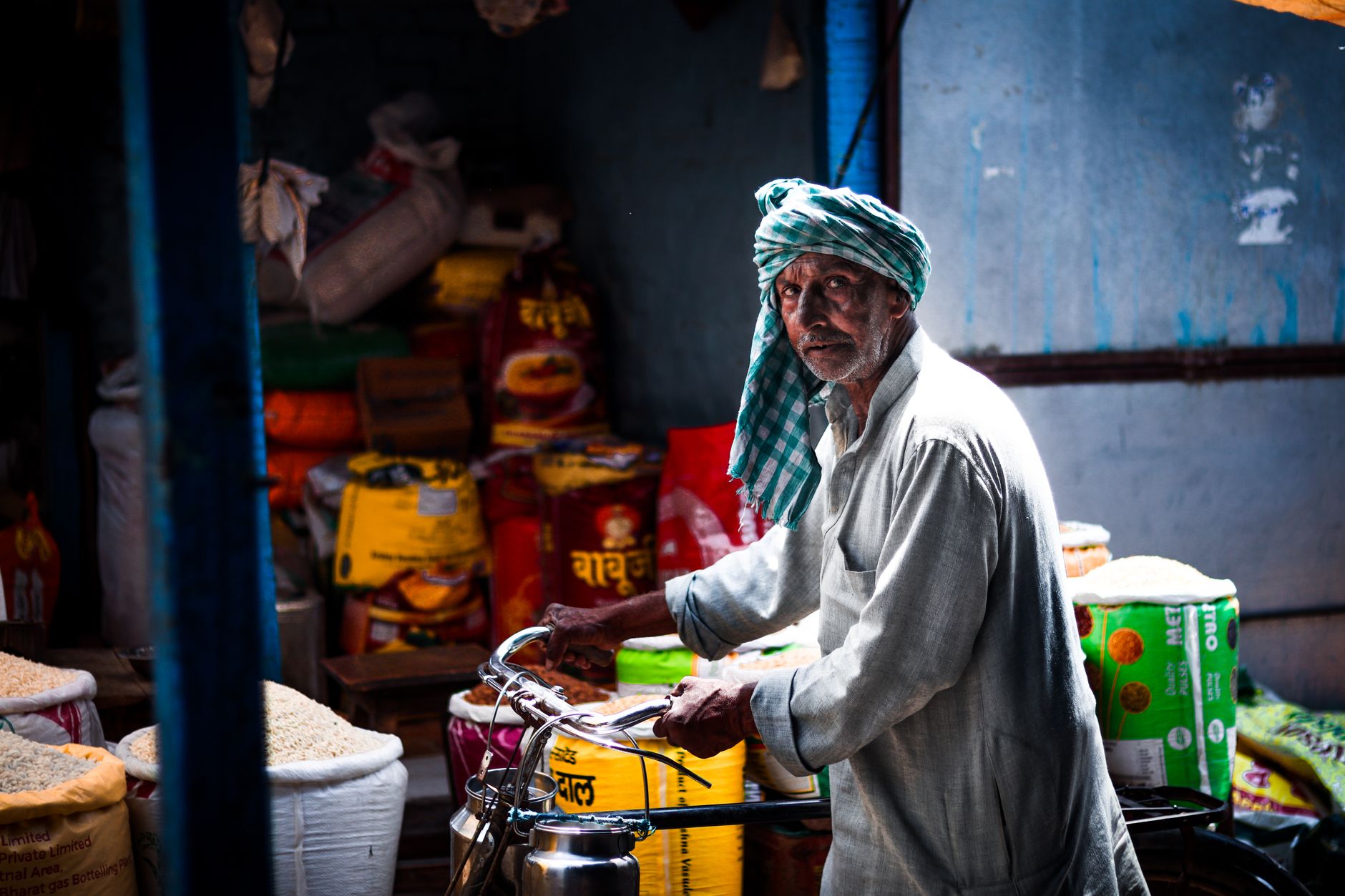
Photo: Chirag Gudhka / Pexels
Ayushman Vay Vandana Card: Free ₹5 Lakh Cover for Seniors 70+
If you are 70 or older in India — or you look after a parent who is — there is a government health card that almost no private insurer will sell you, and it costs nothing. The Ayushman Vay Vandana Card gives every senior aged 70+ a free ₹5 lakh annual hospital cover, and the single most surprising thing about it is what it ignores: your income, your assets and your bank balance. A retired bureaucrat in a Lutyens bungalow and a landless farmer are equally eligible.
Launched on 29 October 2024 as an extension of Ayushman Bharat PM-JAY, the scheme had issued more than 1.14 crore cards by early 2026. Yet huge numbers of eligible seniors still have not enrolled, often because they assume "government scheme" means "only for the poor." For this age band, that assumption is simply wrong. Here is exactly how it works and how to claim it.

Who is eligible — and why income does not matter
The rule is refreshingly simple. Any Indian citizen aged 70 years or above can get the Vay Vandana Card. There is no income ceiling, no ration-card requirement and no social-category test. Eligibility is established by one document — your Aadhaar — which proves both identity and age.
This is a deliberate policy choice. Older people are precisely the group that private insurers either refuse or price out: premiums for a fresh senior-citizen policy can run to tens of thousands of rupees a year, often with a sub-limit on the very ailments seniors get. By making the 70-plus cover universal, the government sidestepped that market failure entirely.
A few practical clarifications worth knowing:
- You can hold private insurance too. The Vay Vandana cover sits on top of any mediclaim or corporate policy you already have.
- Family already in PM-JAY? Seniors above 70 in those households get a separate, dedicated ₹5 lakh top-up — it is not carved out of the family's existing pool.
- New to the scheme? Seniors in a household get a fresh ₹5 lakh cover shared only among the 70-plus members of that family.
- CGHS, ECHS or similar? If you are covered by certain government schemes, you must choose between your existing scheme and Vay Vandana — you cannot stack both.
What the ₹5 lakh actually covers
This is not a token cover. The benefit is cashless and paperless at any empanelled hospital, meaning you do not pay upfront and claim later — the hospital bills the scheme directly. Across the network, roughly 2,000 medical procedures are covered, spanning diagnostics, medicines, surgery, ICU stays and post-operative care.
Three features make it especially valuable for older patients. First, there is no waiting period for pre-existing conditions — diabetes, hypertension, kidney disease and heart ailments are covered from day one, unlike most retail policies that impose a two-to-four-year wait. Second, the cover is renewable every year with the ₹5 lakh limit refreshing annually. Third, the network is large: tens of thousands of empanelled hospitals, including a substantial number of private facilities, accept the card.
What it does not do: it is a hospitalisation cover, not an OPD or routine-medicine scheme. Day-to-day consultations, regular pharmacy bills and most outpatient diagnostics fall outside it. Treat it as protection against the big, account-draining admissions, not your monthly chemist bill.
How to apply: the five-minute route
The entire process is digital and free — never pay an agent or a "facilitation" charge to get this card. There are three official routes.
- The Ayushman app (fastest). Download the official app, select the senior-citizen enrolment flow, and complete e-KYC. The app's Face Auth feature lets a senior verify identity by scanning their face — no OTP, no fumbling with a phone that may not be in their name.
- The web portal. Go to beneficiary.nha.gov.in, enter the Aadhaar number, complete e-KYC and, once approved, download the card as a PDF instantly.
- A Common Service Centre (CSC). For seniors uncomfortable with apps, any neighbourhood CSC operator can do the enrolment using Aadhaar.
Keep a linked mobile number handy for OTP-based verification if you are not using Face Auth, and make sure the senior's Aadhaar details — especially date of birth — are correct, since age is the one hard gate. If enrolment is rejected, a mismatched or missing date of birth on Aadhaar is the usual culprit; fixing the Aadhaar record first usually clears it.
Using the card when admission strikes
A card sitting in a drawer helps no one at 2 a.m. in a casualty ward. The moment hospitalisation is needed, present the Vay Vandana Card (or just the Aadhaar) at the hospital's Ayushman Mitra help desk — a dedicated coordinator most empanelled hospitals are required to have.
The desk verifies eligibility, raises a pre-authorisation request, and once approved, treatment proceeds cashless within the ₹5 lakh limit. Because the senior cover refreshes each policy year, a serious illness one year does not exhaust the protection for the next.
A practical tip: check empanelment before you choose a hospital. Not every hospital is in the network, and a non-empanelled facility cannot bill the scheme. The app and portal both let you search empanelled hospitals by city and speciality — do this in advance for your area, so you are not scrambling during an emergency.
Why this quietly matters for Indian families
Medical bills are one of the biggest drivers of household debt in India, and they hit hardest exactly when a family is least able to cope — when an elderly parent is admitted. A single cardiac or cancer admission can wipe out years of savings. For middle-class families who never qualified for older PM-JAY because their income was "too high," this universal 70-plus cover is the first time the state has offered them a real financial cushion for their parents.
The honest caveats remain. The ₹5 lakh limit can be consumed quickly by a long ICU stay or an expensive oncology course, and the cashless experience depends on the empanelled hospital cooperating smoothly. Treat the card as a strong foundation, not a complete replacement for a separate senior-citizen top-up if you can afford one.
The bottom line
If there is a parent or grandparent above 70 in your family, the action item is simple and free: enrol them now, before a hospital visit forces the issue. Keep the Aadhaar date of birth accurate, download the card to their phone and yours, and note one empanelled hospital near home. For queries, the scheme runs a helpline (14555) and a missed-call number. It takes minutes — and it can stand between your family and a six-figure hospital bill.