Morocco vs Haiti: Why a Fake World Cup Stream Went Viral
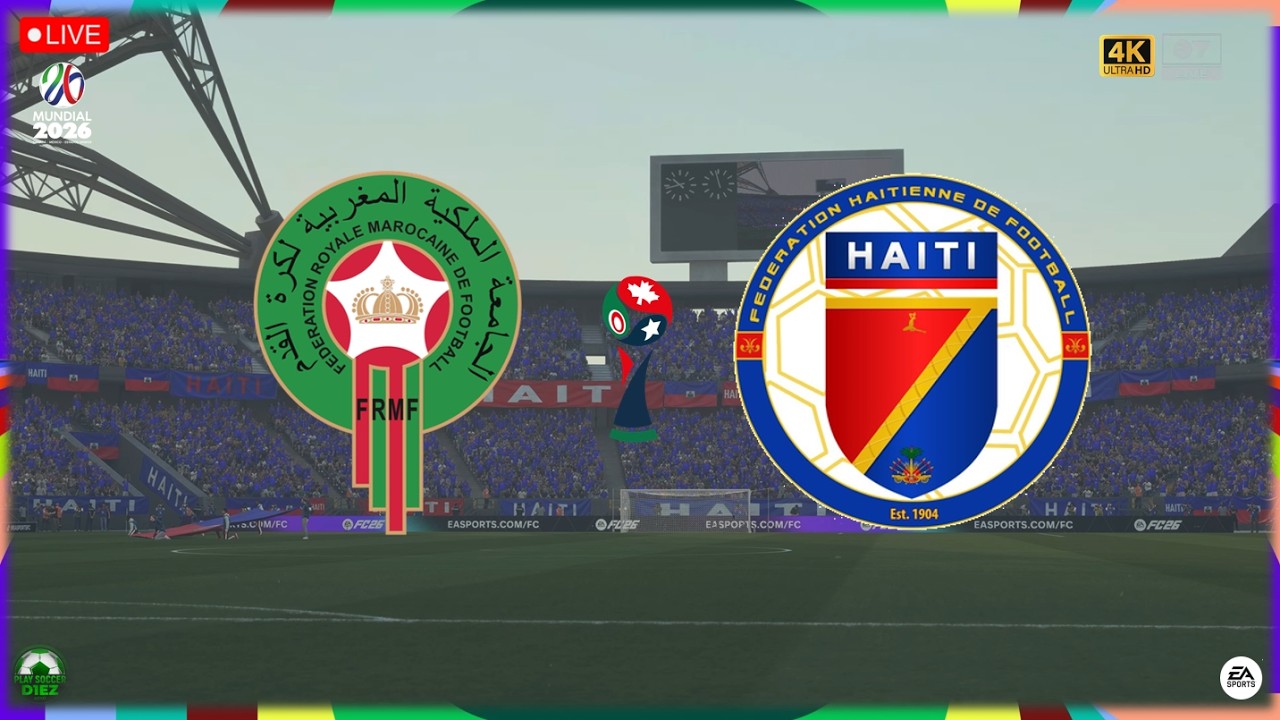
A glossy upload titled "MARRUECOS vs HAITÍ | COPA MUNDO 2026" in crisp 4K60 is racking up views and confusing a lot of football fans. It looks like a live World Cup broadcast. It is almost certainly not one. What you are watching is part of a fast-growing genre of simulated or unofficial match videos that flood YouTube whenever a big tournament approaches — and the Morocco vs Haiti clip is a textbook example of how they spread.
Before anyone clears their calendar for a Group C thriller, it is worth being plain about what this is, why it is trending, and what the actual stakes are for these two very different football nations heading into World Cup 2026.
What the viral video actually is
The giveaway is in the branding. The channel tag, the PSD1EZ™ styling, the suspiciously perfect 4K60 picture and the Spanish-language framing ("Marruecos" for Morocco, "Copa Mundo" for World Cup) all point to a fan-made production rather than a rights-holding broadcaster.
These videos typically fall into one of a few buckets:
- Game-engine simulations rendered in titles like EA Sports FC or eFootball, then uploaded as if they were previews of a real fixture.
- Re-skinned highlight reels that splice old footage under a new, future-dated title.
- Placeholder "live" streams that count down to a kickoff that may never be officially scheduled.
None of that makes them illegal or malicious on their own. Simulation content is a legitimate hobby and a huge corner of football YouTube. The problem is the packaging: a future date, a national-team pairing and a broadcast look can easily read as the genuine article to a casual viewer scrolling fast.
Why this clip is blowing up
The timing is everything. With the 2026 World Cup dominating search interest, creators know that publishing a fixture before it is played is a traffic goldmine. Anyone Googling "Morocco vs Haiti" lands on the video first, and YouTube's algorithm rewards that early click velocity.
There is also genuine curiosity baked into this particular matchup. Morocco are one of the most-watched sides in world football right now, and Haiti carry a romantic underdog story that travels well. Put those two names in a title and you have a hook that works in Casablanca, Port-au-Prince, and yes, on Indian football timelines too.
A third driver is the expanded 48-team format. With more nations, more groups and a tangle of qualification scenarios, fans are hungry for anything that helps them picture how the tournament might unfold. Simulation channels fill that vacuum, accurately or not.
Morocco: from 2022 dream run to genuine contenders
Strip away the fake stream and the real football story is the more interesting one. Morocco are no longer a feel-good outsider. Their run to the semi-finals at Qatar 2022 — the first by an African or Arab nation — rewired expectations for the whole continent.
That squad was built on a fierce defensive spine, a goalkeeper who became a national hero, and a diaspora-rich talent pool drawn from across Europe. The core of that team remains, and Morocco are widely treated as one of the sides capable of going deep again.
There is an added layer of motivation: Morocco is also part of the 2030 World Cup hosting plan alongside Spain and Portugal. A strong 2026 showing would feed directly into the national project of presenting Moroccan football as a permanent force rather than a one-tournament wonder.
Haiti: a 1974 story trying to repeat itself
For Haiti, the stakes are emotional and historic. The men's national team has appeared at the World Cup exactly once, back in 1974 in West Germany — a tournament best remembered for a Haitian striker briefly stunning Italy before the result turned. Half a century later, simply returning to the global stage would be a landmark.
That is the context that makes a "Morocco vs Haiti" video so clickable. It dangles a fairy-tale fixture: a 2022 semi-finalist against a nation chasing its first World Cup appearance in five decades, all while Haiti contends with deep political and security turmoil at home.
It has to be said clearly: as of now, any specific Group C pairing shown in these videos is unverified. Draws, fixtures and even final qualification can shift, and fan channels routinely invent matchups for views. Treat the on-screen scoreline as fiction until an official source confirms otherwise.
How to tell a real World Cup stream from a fake
This genre is only going to grow as 2026 nears, so a quick literacy check helps. A few reliable tells:
- Look for the broadcaster's logo. Genuine coverage carries a network or FIFA on-screen graphic, a score bug and commentary credits. Generic or absent branding is a red flag.
- Check the channel, not just the title. Official rights-holders have verified, established channels. A gaming-style handle pushing 4K60 "live" national-team games is fan content.
- Cross-check the fixture. If a match isn't on the official schedule, it isn't happening on that date.
- Mind the language and spelling cues. Stylised trademarks and tournament names translated loosely often signal a re-upload mill.
- Be wary of links in the description. Some "watch live" posts funnel viewers to dubious external sites; stick to known apps.
Where Indians can actually watch the 2026 World Cup
For readers in India, the practical answer is simple. After a months-long standoff, the World Cup's India media rights went to Zee Entertainment, which means matches stream on ZEE5 and air across its newly launched Unite8 Sports channels, with commentary in Hindi and English. FIFA's own FIFA+ platform is also streaming every match free.
That matters because the kickoff times for a North American tournament will be brutal for Indian viewers — many games will land deep in the night or early morning IST. The temptation to chase a random "4K60 live" link will be strong. Resist it. Beyond the legal and security risks, you will mostly find simulations, mislabelled reruns, or dead streams.
The bigger picture: AI, sims and the future of fixture hype
The Morocco vs Haiti clip is a small symptom of a larger shift. As rendering engines get sharper and AI tools make thumbnails, voiceovers and even fake "highlights" cheaper to produce, the line between preview content and real footage is blurring fast.
That creates a genuine challenge for fans and for tournaments alike. Simulated results can shape expectations, fuel betting chatter, and occasionally spread as misinformation when screenshots escape their original context. FIFA and broadcasters have a commercial incentive to crack down on anything masquerading as official, but enforcement always lags the upload button.
The healthier way to enjoy this stuff is to call it what it is: fan entertainment and a way to daydream about matchups we want to see. A simulated Morocco vs Haiti can be a fun watch. Just don't confuse it with the real thing — and when the actual World Cup 2026 kicks off, make sure the picture on your screen comes from a source that can prove it.