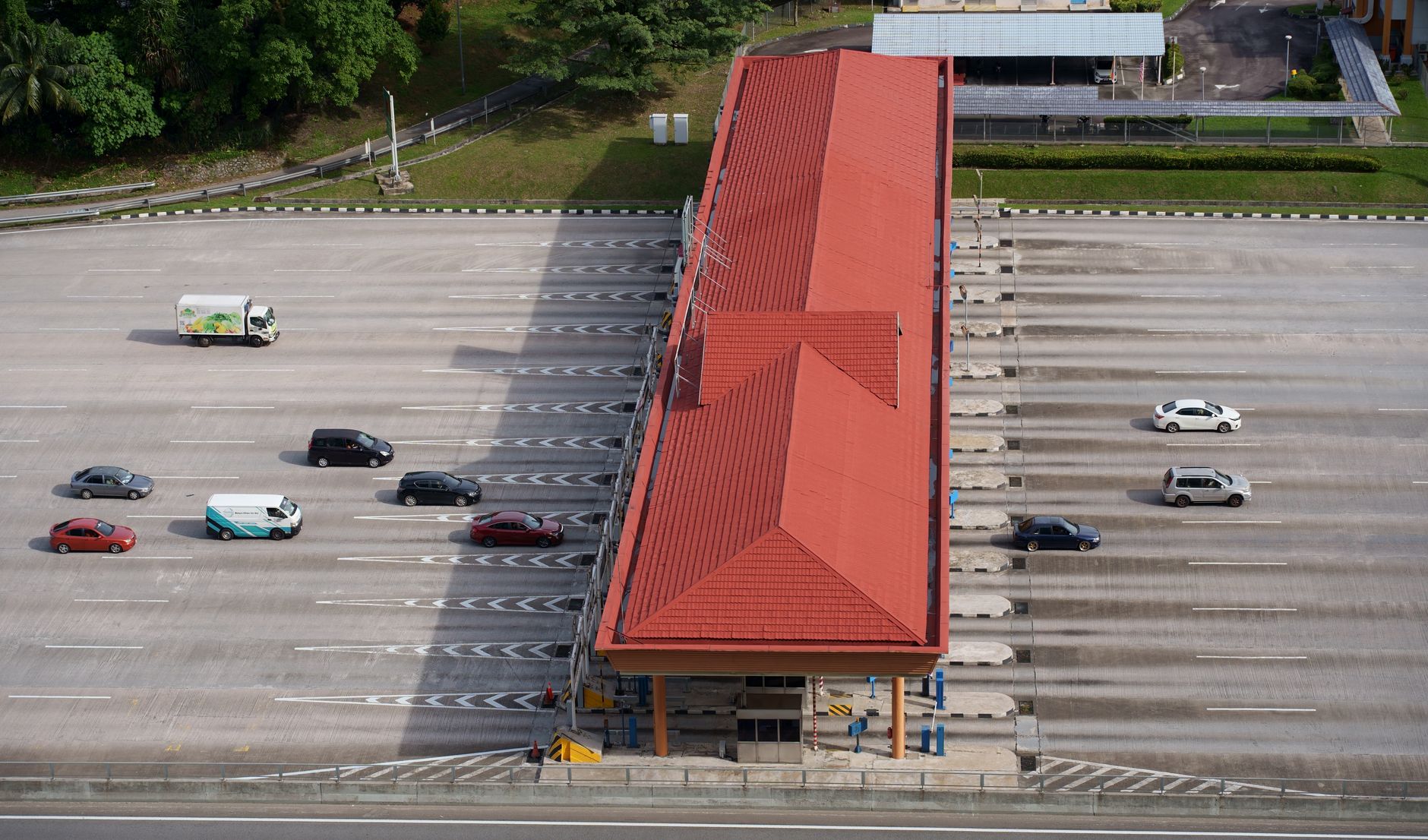
Photo: Araf Khan / Pexels
FASTag Annual Pass: Is ₹3,075 for 200 Toll Trips Worth It?
If you drive a private car on India's national highways even semi-regularly, the FASTag Annual Pass is quietly one of the better money-saving tricks of the year — and one of the most misunderstood. For a flat ₹3,075, you get up to 200 toll-plaza crossings, or one full year, whichever runs out first. No per-trip deduction from your wallet, no fumbling for balance, no surge on long-weekend traffic. But the pass only pays off under specific conditions, and plenty of buyers will end up worse off than if they'd just paid toll the normal way. Here is the honest, number-first guide to deciding whether it's for you.

What the FASTag Annual Pass actually is
Launched on 15 August 2025 by the Ministry of Road Transport and Highways, the pass is not a new device. It's an overlay on your existing FASTag — the same sticker on your windshield, the same wallet — that switches your tolling from "pay per plaza" to "draw down from a pre-bought bundle of trips." Once active, every time you cross an eligible national-highway toll plaza, the system deducts one trip from your 200-trip allowance instead of charging your FASTag balance.
The headline price started at ₹3,000 and was revised to ₹3,075 effective 1 April 2026. The validity is the lesser of one year or 200 trips. Hit 200 crossings in eight months and the pass expires early; cross only 40 times in a year and the unused 160 simply lapse. There is no rollover and no partial refund.
Crucially, this is a scheme for private, non-commercial vehicles — cars, jeeps and vans on white registration plates. Yellow-board taxis, commercial trucks and buses are excluded. Your FASTag must already be active and correctly linked to your vehicle registration number (VRN); a tag stuck on the dashboard rather than the windshield, or one tied to the wrong vehicle class, will cause the pass to misfire.

Where it works — and the trap that catches people
The single biggest source of disappointment is coverage. The annual pass is valid only at toll plazas managed by NHAI and MoRTH on national highways and national expressways. It does not work on:
- State highway toll booths run by state governments
- City and municipal toll points
- Privately operated or state-concession expressways
- Parking tolls at airports, malls or stations
So if your daily commute runs over a state-government toll bridge, the pass is useless to you no matter how many times you cross. Before buying, list the exact plazas you pass through most and confirm each one is NHAI/MoRTH-operated. A pass bought on the assumption that "all highways are covered" is the classic ₹3,075 mistake.
How a 'trip' is counted (this matters more than you think)
A "trip" is one tolling event, and the counting logic differs by toll system:
- Open/point-based tolling (a single barrier where you pay a fixed amount): each crossing equals one trip. Drive past it going out and again coming back, and that's two trips.
- Closed/distance-based tolling (you take a ticket or get scanned at entry and pay by distance at exit — common on long expressways): one entry plus its matching exit together count as one trip. But a round trip — out and back — uses two trips, because you re-enter the closed system on the way home.
The practical takeaway: 200 trips is not 200 journeys. For most people it is roughly 100 round-trips on point-based stretches. If your routine involves several plazas on a single one-way drive, those each count separately and your allowance burns faster. Map your typical journey plaza-by-plaza before you assume 200 will last a year.
The break-even math, in plain numbers
Divide ₹3,075 by 200 trips and you get an effective cost of about ₹15.4 per crossing — but only if you use all 200. That number is the heart of the decision.
- If your average toll per crossing is above ₹15.4 and you'll realistically use most of the 200 trips, you save. Many NHAI single-journey tolls for cars sit in the ₹70–₹150 range, so heavy users save dramatically.
- If you'll use only a fraction of the trips, the effective cost balloons. Use just 40 trips and you've paid ₹3,075 for them — over ₹76 each — which may be more than you'd have spent paying toll directly.
A quick worked example: suppose your weekend home visit crosses three NHAI plazas each way at an average ₹65 a plaza. That's ₹390 one-way, ₹780 round trip, and six trips off your allowance per round. Do that two weekends a month and you'll spend roughly ₹18,720 a year in normal toll while using about 144 trips — comfortably inside 200. The pass costs ₹3,075. The saving is enormous. Flip it around: an occasional driver who takes four highway trips a year should never buy it.
The rule of thumb: estimate your real annual toll spend and your real crossing count. If you'd otherwise pay well over ₹3,075 in toll and you'll cross at least 40–50 eligible plazas, it's a clear win. Anything below that, do the arithmetic carefully.
How to activate it, step by step
Activation is online and quick:
- Make sure your existing FASTag is active, KYC-complete, and linked to the correct VRN and vehicle class. Fix any mismatch first — this is where most failures happen.
- Open the official Rajmargyatra app (the government's highway-services app) or go to the NHAI website's toll-pass section.
- Enter your vehicle number, confirm it's a private four-wheeler, and verify the FASTag pulled up is yours.
- Pay the ₹3,075 fee through the in-app payment options.
- Wait for confirmation. The pass typically activates within about two hours of successful payment and verification.
You do not get a new sticker or card; the upgrade is purely digital and tied to your tag. Keep the payment confirmation and note the activation date, because validity counts one year from activation, not from purchase intent.
Who should buy it — and who shouldn't
Strong candidates:
- Daily or weekly inter-city commuters whose route is genuinely on national highways
- Families who make frequent weekend trips to a hometown over NHAI plazas
- Sales, field and gig drivers using a white-plate private car across NH stretches
- Anyone whose current monthly FASTag toll spend already exceeds ₹250–₹300
Skip it if:
- Your regular toll points are state highways, city booths or private expressways
- You drive highways only a handful of times a year
- You own a commercial or yellow-board vehicle (you're not eligible anyway)
- You're about to change or sell the car, since the pass is tied to that VRN
One more practical caution: because the pass is linked to a specific vehicle registration, it does not travel with you to a rental or a friend's car, and transferring it if you sell the vehicle is not straightforward. Buy it for a car you'll keep for the year.
What comes next
The annual pass is part of a broader push to move India away from cash-and-queue tolling toward fully automated, barrier-light highways — the long-term goal being satellite- and ANPR-based tolling that charges by distance without plazas at all. For now, the pass is a bridge: a way to give frequent drivers predictability while the back-end catches up. Expect the trip cap, price and coverage rules to be tweaked in future cycles, and watch for the scheme possibly extending to more expressways over time.
The bottom line is refreshingly simple. Pull up your last few months of FASTag statements, add the toll, count the crossings, and check that those plazas are NHAI-run. If your real spend clears ₹3,075 and your real crossings clear roughly 50, activate the pass today and stop overthinking it. If they don't, keep paying as you go — and revisit the math next time your driving habits change.