
Photo: Ketut Subiyanto / Pexels
Your Body Starts Fading at 35: What a 47-Year Study Really Found
Most of us treat our physical decline as a vague, far-off worry, something that belongs to grandparents and pension plans. A new analysis of one of the longest-running fitness studies ever conducted puts a far sharper number on it. Researchers who followed the same group of Swedish men and women for nearly half a century report that the body's raw physical capacity—aerobic fitness, muscle strength and muscle endurance—begins to slide at around the age of 35, and keeps slipping from there.
For a country like India, where a large share of the population is in or approaching that age band and increasingly desk-bound, the finding is less a curiosity than a wake-up call. Here is what the science actually says, and what it does not.

What the Researchers Did
The work comes from Karolinska Institutet in Sweden and draws on the Swedish Physical Activity and Fitness study, known as SPAF. What makes it unusual is its sheer patience: scientists tracked several hundred randomly selected adults across 47 years, repeatedly measuring the same individuals from their teens into their sixties—roughly from age 16 to 63.
That design matters. Most fitness research compares different people of different ages at a single moment, which can muddle generational habits with genuine ageing. By testing the same bodies again and again over decades, the SPAF team could watch capacity rise and fall within a single life, rather than guessing from a snapshot. The findings were published in the Journal of Cachexia, Sarcopenia and Muscle, with Maria Westerståhl of the Department of Laboratory Medicine as lead author.
The Age-35 Turning Point
The headline result is straightforward. Across the three measures the team cared about most—cardiorespiratory fitness, muscular strength and muscle endurance—the trajectories looked broadly similar. Capacity held up reasonably well through the twenties and early thirties, then began to decline from the mid-thirties onward. The drop was gradual at first and grew more pronounced with each passing decade.
This lines up neatly with a broader body of evidence on muscle ageing. Clinicians have long described sarcopenia, the progressive loss of muscle mass and function, as something that quietly begins in the fourth decade of life—roughly the thirties—before accelerating later on. Estimates commonly put the early rate of strength loss at around one percent a year, a figure that climbs steeply once a person crosses sixty. In other words, the Swedish numbers are not an outlier; they are a long-term, real-world confirmation of a pattern researchers had pieced together from shorter studies.
The practical takeaway is uncomfortable but useful. If you are 30 and feel invincible, the clock on your peak physical machinery is closer than it feels. The decline is not dramatic enough to notice year to year, which is precisely why so many people only register it when stairs, suitcases or a child's weight suddenly feel harder than they used to.
Why It Is Never Too Late
The more encouraging half of the study concerns what happens when sedentary people change course. Adults who took up regular physical activity during adulthood—not in childhood, not in some idealised youth, but later in life—improved their measured physical capacity by roughly 5 to 10 percent. The researchers framed this plainly: it is never too late to start moving.
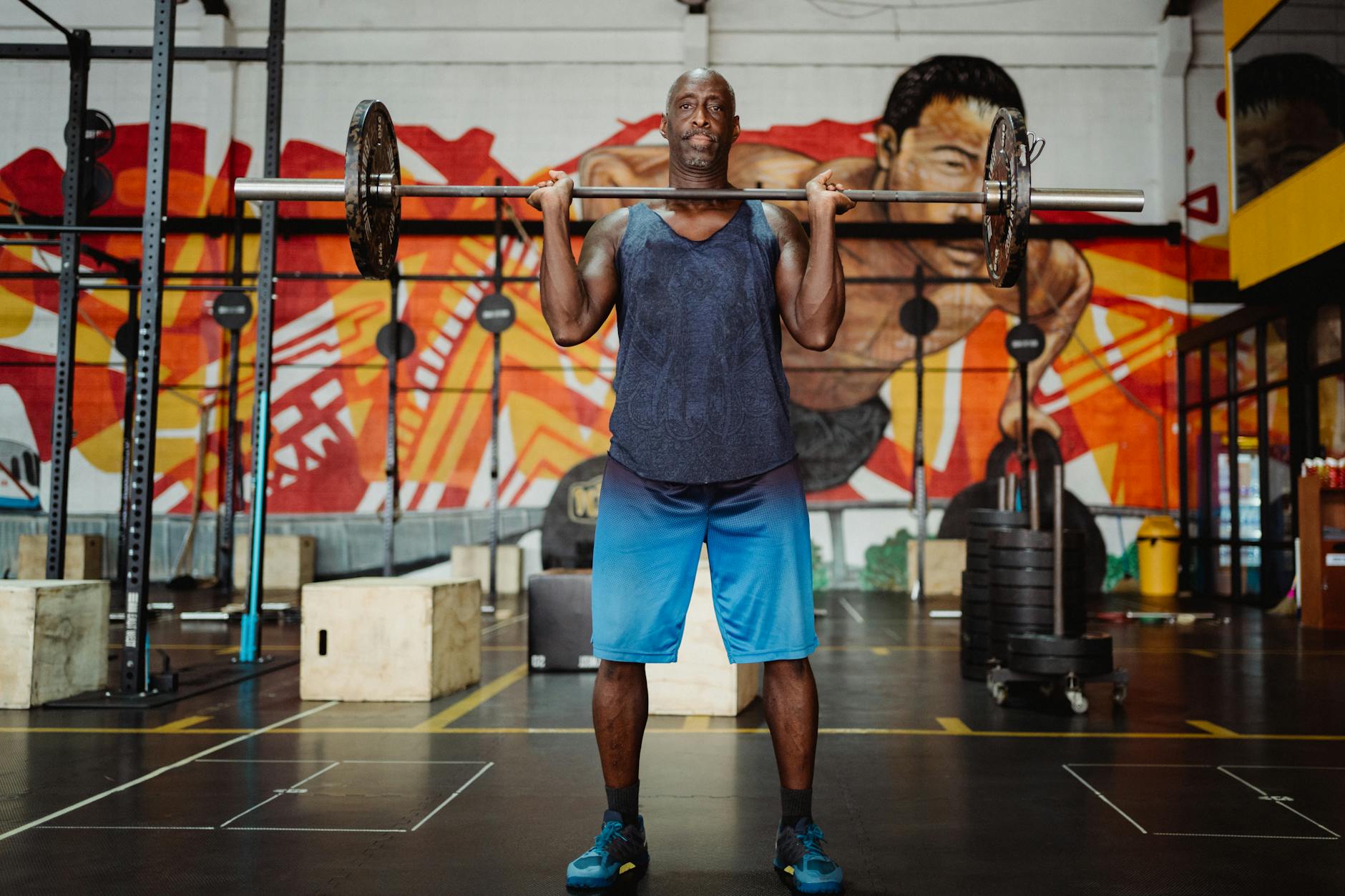
That optimism is backed by a deep literature on resistance training. Progressive strength work has repeatedly emerged as the single most effective, evidence-based way to both prevent and partly reverse age-related muscle loss. Randomised trials and reviews have found meaningful gains in muscle mass, strength, coordination and mobility even in people in their seventies and eighties. Some studies report strength improvements of 30 to 40 percent within a few months of starting structured resistance exercise, and modest monthly gains in muscle mass for those who stick with it.
The nuance worth holding onto is this: exercise slows the decline, it does not abolish it. The Swedish team itself flagged that movement cannot completely halt the downward slope—a question they plan to probe further when participants reach 68. So the goal is not to freeze the body at 25. It is to start the descent from a higher peak and to descend more slowly, so that independence and function last well into old age.
The Indian Angle
For Indian readers, the timing is pointed. The country is in the middle of a fitness reawakening, but it sits alongside rising rates of lifestyle disease, long commutes, screen-heavy jobs and diets that have shifted toward processed convenience. A separate recent survey of urban Indians, the India Health Quotient, found that the 25–34 age group scored the lowest on overall well-being and reported the highest levels of unmanageable stress—exactly the cohort the Swedish data suggests is about to hit its physical inflection point.
There is also a structural worry. Sarcopenia tends to be diagnosed late, often only after a fall or a fracture exposes how much strength has quietly drained away. In a health system already stretched, building muscular reserve in one's thirties and forties is a low-cost form of insurance against expensive frailty later. The good news is that resistance training requires neither a fancy gym nor heavy equipment: bodyweight squats, push-ups, resistance bands and household loads can all deliver progressive resistance if the effort rises over time.
What Counts As Enough
The study does not prescribe a single workout, but the wider science points in a consistent direction. Two themes recur. First, strength matters as much as cardio. For years public-health messaging in India leaned heavily on walking and steps, which are valuable but do little to preserve muscle. Most guidelines now recommend muscle-strengthening activity at least twice a week alongside aerobic exercise.
Second, intensity and consistency beat heroics. Short, regular bouts of vigorous effort appear to carry outsized benefits, and the bar for "getting started" is far lower than most people assume. The 5 to 10 percent improvement seen in previously inactive Swedish adults did not require athletic obsession; it required showing up. For someone who has never trained, the first few months tend to yield the steepest gains, partly because the nervous system learns to recruit muscle more efficiently before the muscle itself visibly grows.
The Bigger Picture
It is tempting to read a study like this as bad news—proof that we are all on a downhill track from our mid-thirties. The more accurate reading is that the human body is far more responsive than fatalism suggests. The decline is real and it is earlier than many imagine, but its slope is negotiable. The variable each of us controls is not whether we age, but how high the peak is and how gently the line falls afterward.
The SPAF researchers plan to keep following their participants, which means the most interesting answers—about why some people preserve performance longer, and what ultimately drives the loss—are still to come. Until then, the lesson is unglamorous and durable: the best time to build strength was a decade ago; the second-best time is this week.
Source: sciencedaily.com