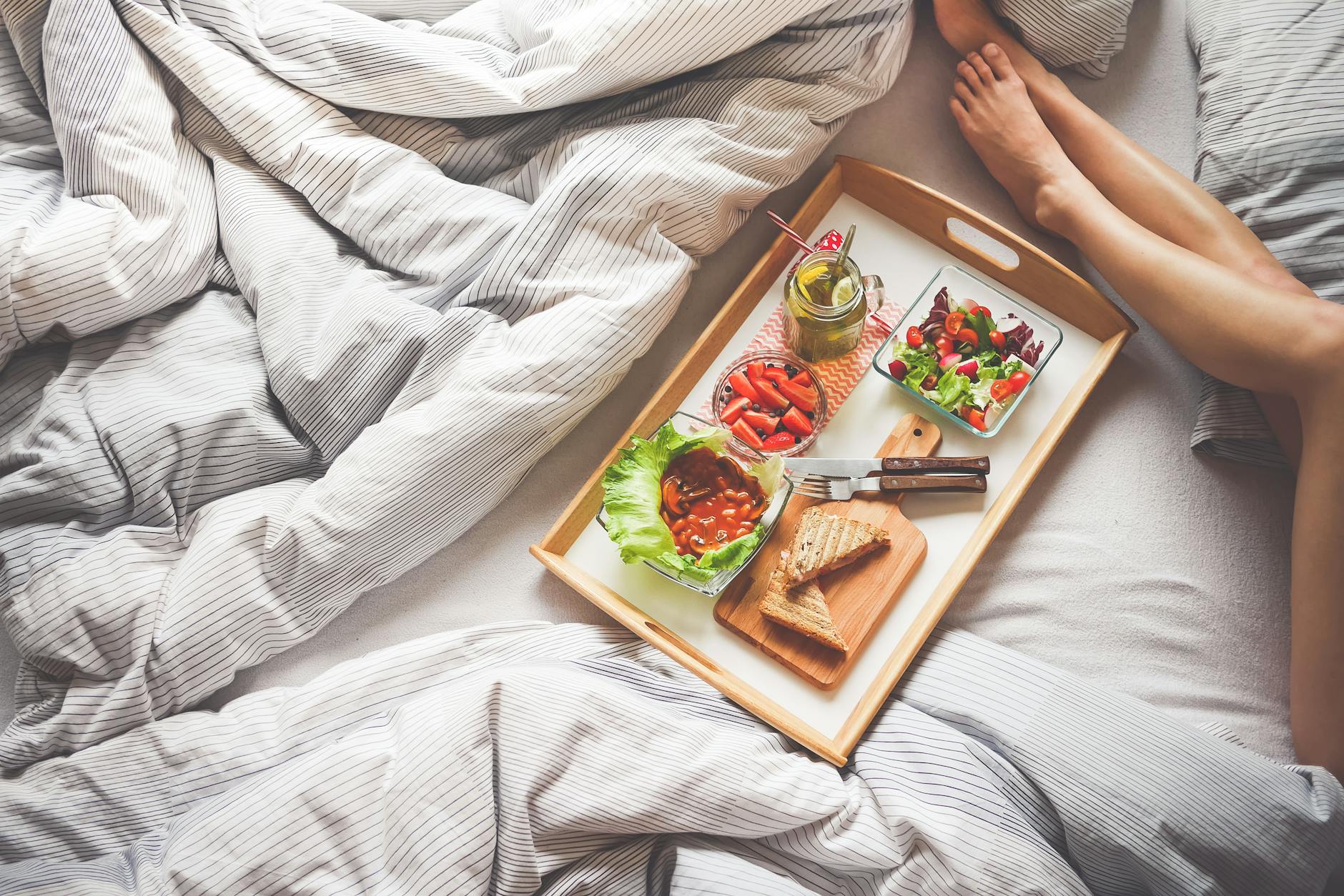
Photo: picjumbo.com / Pexels
Five More Minutes of Sleep Could Add a Year to Your Life
If you have ever felt defeated by wellness advice that demands you wake at 5 a.m., meal-prep on Sundays and run a half-marathon, here is some unexpectedly good news. A large new study suggests that the path to a longer, healthier life may not run through dramatic reinvention at all. Instead, a handful of almost laughably small lifestyle changes — a few extra minutes of sleep, a couple of extra minutes of brisk movement, half a serving more vegetables — may be enough to nudge the odds in your favour. For time-starved, stressed-out urban Indians, that reframing could matter more than any fad diet of the year.

The study that reframes the longevity debate
The research was published on 13 January 2026 in eClinicalMedicine, a journal in the respected Lancet family, and it pulled data from the UK Biobank, one of the world's most-studied health databases. The team analysed 59,078 adults with a median age of around 64, tracking how three everyday behaviours — sleep, physical activity and nutrition — related to how long people lived and how long they stayed free of major disease. More than 20 researchers across Australia, the UK, Chile and Brazil collaborated on it, led by Dr Nicholas Koemel, a dietitian and research fellow at the University of Sydney.
What sets this work apart is that it refused to treat the three habits as separate silos. Most studies examine sleep, or exercise, or diet, one variable at a time. This one asked a sharper question: what is the minimum combined improvement, across all three at once, that meaningfully moves the needle on death and disease? The answer turned out to be smaller than almost anyone expected.

How little it actually takes
Here is the headline that has been turning heads. The researchers found that a modest combined bump — on the order of about 15 minutes of extra sleep a night, under two minutes more of moderate-to-vigorous activity a day, and a small lift in diet quality such as half a serving more vegetables — was linked to roughly a 10% lower risk of dying during the study period. Pushed slightly further, an additional five minutes of sleep, two minutes of brisker movement and half a serving of vegetables daily was associated with about one extra year of life.
The contrast with single-habit thinking is striking. To get the same risk reduction from sleep alone, a person would need to add roughly 24 minutes a night — about 60% more than the combined approach asked for. Trying to do it through diet alone, the team reported, did not reach that threshold at all. In other words, spreading a little effort across three fronts beat pouring a lot of effort into one.
The study also sketched the upper end of the spectrum. People who hit the fuller picture — seven to eight hours of sleep, more than 40 minutes of moderate-to-vigorous activity a day, and a genuinely healthy diet — were associated with over nine additional years of life and good health compared with the least healthy group. That is the aspirational ceiling. The point of the paper, though, is the floor: you do not have to live at the ceiling to benefit.
Why the changes work better together
The most important idea in the study is synergy. As Koemel put it, sleep, movement and nutrition are usually studied in isolation, yet looking at them together reveals that even small tweaks deliver a cumulative impact over the long run. The whole, in effect, is greater than the sum of its parts.
That makes biological sense. Better sleep tends to steady appetite hormones and blood-sugar control, which makes healthy eating easier. A short daily walk improves insulin sensitivity and mood, which in turn supports deeper sleep. More vegetables and fibre feed the gut and help regulate inflammation, which influences both. Each habit quietly lowers the barrier to the next, so the gains compound rather than simply add up. For most people, the practical lesson is to stop obsessing over perfecting one pillar and instead make tiny, sustainable moves across all three.
What this means for stressed-out urban India
This is where the findings land squarely on Indian doorsteps. Urban India is in the middle of a slow-motion lifestyle-disease surge — type 2 diabetes, hypertension and heart disease are striking earlier than they did a generation ago, often in people who look slim and outwardly fit. Long commutes, desk-bound jobs, late dinners and screen-soaked nights have squeezed both sleep and movement out of the average day. Recent wellbeing surveys of Indian city-dwellers paint a familiar picture: people who appear healthy on the surface but report rising stress and shrinking rest, with the 25-to-34 age group often the most frazzled.
The usual response — buy a gym membership, attempt a crash diet, overhaul everything by Monday — tends to collapse within weeks. This study offers a gentler, more realistic playbook. Going to bed 15 minutes earlier, stepping out for a short evening walk after dinner, adding an extra vegetable to your thali or swapping a fried snack for fruit are changes that fit inside a packed Indian workday. They are also culturally easy: a post-meal walk and a vegetable-heavy plate are already woven into many households. The science simply confirms that these unglamorous habits, done consistently and together, are quietly powerful.
The fine print: association, not a magic pill
It is worth being honest about what the study can and cannot prove. This is observational research. It shows that people with these habits tended to live longer and healthier, but it cannot by itself establish that the habits caused the longer lives. Independent experts reacting to the work made the point bluntly: the analysis models what might happen to lifespan if changing these behaviours truly improves health, rather than demonstrating cause and effect outright.
There are other caveats. The UK Biobank skews older, healthier and whiter than the general population, and habits were captured at a snapshot in time using questionnaires and wearable trackers, which carry their own errors. Indian bodies, diets and disease patterns differ from a British cohort, so the precise numbers should be read as directional, not as a personal guarantee. None of this erases the takeaway — the direction of travel is consistent with decades of lifestyle research — but it does argue against treating "five more minutes of sleep" as a literal magic dose. Think of these figures as encouragement to start small, not as a prescription to obsess over the stopwatch.
How to put it into practice this week
The beauty of the findings is how actionable they are. You do not need an app, a trainer or a single rupee. Pick one nudge from each pillar and let them reinforce one another. For sleep, shift your bedtime earlier by 10 to 15 minutes and put the phone outside arm's reach. For movement, add one short brisk walk — after lunch or dinner is ideal, since it also blunts post-meal blood sugar. For nutrition, add a serving of vegetables, dal or fruit and drop one ultra-processed snack.
Done together, these are the kinds of changes you barely notice but can actually keep for years — and consistency, not intensity, is what the data rewards. The promise here is refreshingly democratic: meaningful longevity is not reserved for people with the time and money for elaborate wellness routines. It may be available to anyone willing to make a few minutes of room for rest, a few steps of movement and a little more colour on the plate.
What comes next
Researchers will now want to test whether deliberately coaching people to make these micro-changes produces the predicted gains in real life — the kind of controlled trial that could turn association into firmer proof. There is also growing interest in tailoring such advice to specific populations, including South Asians, whose elevated risk of diabetes and heart disease at lower body weights makes early, low-effort intervention especially valuable. For now, the message is one of empowerment over guilt: you almost certainly do not need to transform your life to extend it. You may just need to start, small and steady, today.
Source: thelancet.com