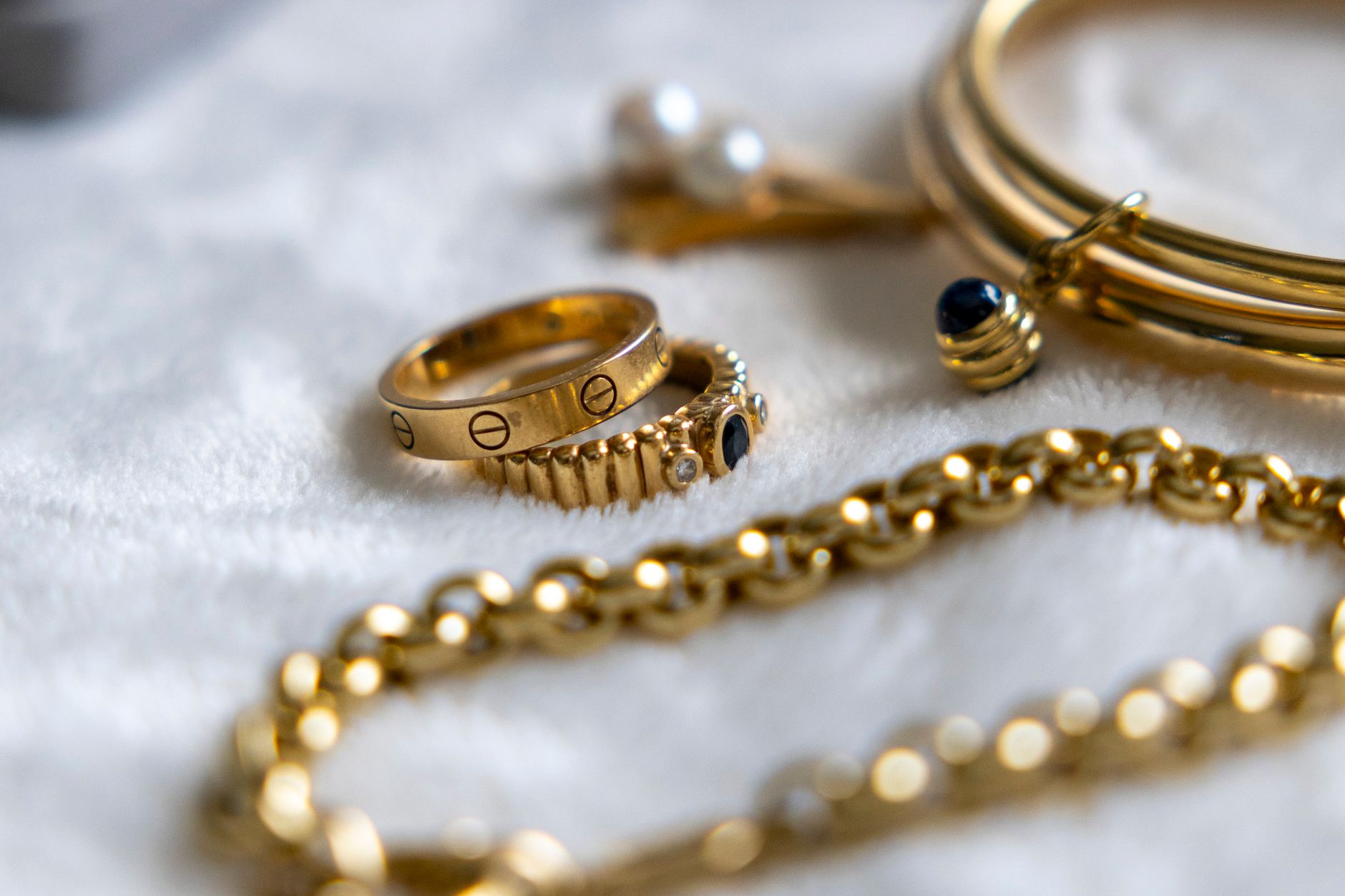
Photo: Stephen Leonardi / Pexels
Gold Just Fell ₹23,000 From Its Peak. Buy Now or Wait?
Gold spent the first quarter of 2026 making headlines for all the right reasons if you already owned some. On 2 March 2026, 24-karat gold touched an all-time high of ₹1,69,349 per 10 grams in several markets. Three months on, the metal has cooled noticeably. Around 22 June 2026, the same 10 grams is changing hands close to ₹1,46,000 — a gap of roughly ₹23,000, or about 14 percent, from the peak.
That slide has reopened a very Indian debate at family dinner tables: is this the dip to load up before the wedding and festive season, or the start of something worse? And since gold purchases here rarely come alone, the second question follows quickly — if you are visiting the jeweller anyway, which gemstones are worth buying in 2026? Let's take both honestly.
What the numbers actually say
The headline drop sounds dramatic, but context matters. Even at ₹1.46 lakh, gold is sitting far above where it was a year or two ago. The March spike was driven by a familiar cocktail — a nervous global mood, a firm run in international bullion, and a rupee that wasn't doing prices any favours. When some of that anxiety eased, the metal gave back part of its gains. This is a correction inside a long uptrend, not a collapse.
Daily rates have been bobbing in a tight band through June. On 20 June, for instance, 24K was quoted near ₹1,46,180 per 10 grams, barely moved from the days around it. That kind of sideways drift usually means the market is waiting for its next cue rather than rushing for the exits.
One practical note: the rate you see in the news is for pure 24K. Most jewellery is 22K, which runs lower per gram, and your final bill adds making charges and 3 percent GST on top. So the sticker shock at the counter is always a bit higher than the screen rate.

Buy the dip, or sit it out?
There is no clean answer, but there is a sensible framework. If you are buying gold as a long-term anchor for your savings — the role it has played in Indian households for generations — then trying to time the exact bottom is a losing game. Prices that look high today have a habit of looking like a bargain a few years out.
A few ground rules worth keeping in mind:
- Stagger your buying. Splitting a large purchase across a few months smooths out the price you pay and removes the stress of calling the bottom.
- Separate jewellery from investment. Ornaments carry making charges you rarely recover at resale. For pure investment, gold ETFs or digital gold avoid that drag, though they don't sparkle at a wedding.
- Mind the Sovereign Gold Bond gap. With fresh SGB tranches discontinued, the neat tax-free maturity route many investors loved is no longer on the table for new buyers, nudging some toward ETFs instead.
- Don't borrow to buy. Gold is a store of value, not a quick trade. Leverage turns a slow asset into a fast way to lose money.
If your purchase is tied to an actual event — a wedding in the family, a gift, a festival ritual — then the timing question is largely settled for you. A pullback from the record high simply means you are paying less than someone who bought in March.
The gemstone question for 2026
Walk into any serious jeweller and the conversation rarely stays on gold alone. Coloured stones are having a strong run, and 2026 is no exception. The framework most Indian buyers fall back on is Navratna — the nine sacred gems of Vedic astrology, each tied to a planet.
The nine are Ruby (Manik), Pearl (Moti), Red Coral (Moonga), Emerald (Panna), Yellow Sapphire (Pukhraj), Diamond (Heera), Blue Sapphire (Neelam), Hessonite (Gomed) and Cat's Eye (Lehsunia). A Navratna piece carries all nine in one setting, which is why it is treated as a kind of all-weather talisman — the logic being that whichever planet is troubling you, its remedy is already on your finger.
This year, four stones dominate the demand list, usually for reasons of career, money and health:
- Yellow Sapphire (Pukhraj) — linked to Jupiter, the planet of wisdom and growth. It is the go-to choice for those chasing career progress, financial stability and, traditionally, marital harmony.
- Emerald (Panna) — tied to Mercury, and favoured by students, writers, traders and anyone whose work runs on communication and quick thinking.
- Ruby (Manik) — the Sun's stone, associated with confidence, authority and recognition. Popular with people in leadership or public-facing roles.
- Blue Sapphire (Neelam) — Saturn's gem, and the fastest-acting of the lot. It is also the most cautioned-about, which brings us to the important part.
Why you can't just pick the prettiest one
Here is where well-meaning buyers go wrong. In astrology, a gemstone is not a fashion accessory you choose by colour. The stone is matched to your individual birth chart, and the wrong one is believed to do as much harm as the right one does good. Blue sapphire is the classic example — practitioners insist it should never be worn without a proper chart reading, and many suggest a trial period before committing.
The sensible approach is to treat the astrological recommendation and the purchase as two separate steps. First, find out which stone, if any, actually suits your chart from someone you trust. Only then go shopping. Buying a ruby because a cousin's ruby "worked" is exactly the mistake the tradition warns against.
And if you don't subscribe to the astrology at all, that is perfectly fine too. A fine emerald or ruby is a beautiful, durable object that holds value on its own merits. Just buy it as a gem, not as a guarantee.
How to not get cheated at the counter
Whether it is gold or a coloured stone, the difference between a smart buy and a costly one comes down to paperwork.
For gold, look for the BIS hallmark stamped with a six-digit alphanumeric HUID code. Since hallmarking became mandatory, that code is your proof of purity, and you can verify it. Ask for a bill that spells out the weight, purity, making charges and GST as separate lines — vague "all inclusive" pricing usually hides a fat margin.
For gemstones, never accept a stone without a certificate from a recognised gemological lab. A credible report carries the stone's weight, treatment details and often a unique number you can check on the lab's own website. Genuine certificates increasingly come with laser inscriptions and reference photos. Treatment matters enormously — a heated or filled stone is worth a fraction of an untreated one, and a good certificate will say which it is.
What to watch next
Gold's near-term direction will hang on the same forces that drove the March spike — global risk appetite, international bullion moves and the rupee. A calmer world tends to take the shine off; fresh tension tends to put it back. For most households, the takeaway is unglamorous but reliable: buy what you need for genuine reasons, spread the cost, insist on the hallmark, and don't bet money you can't lock away.
The gemstone you carry home should clear the same bar. Match it to your chart if you believe in that, admire it as a jewel if you don't — and in both cases, let the certificate, not the salesperson, do the talking.


