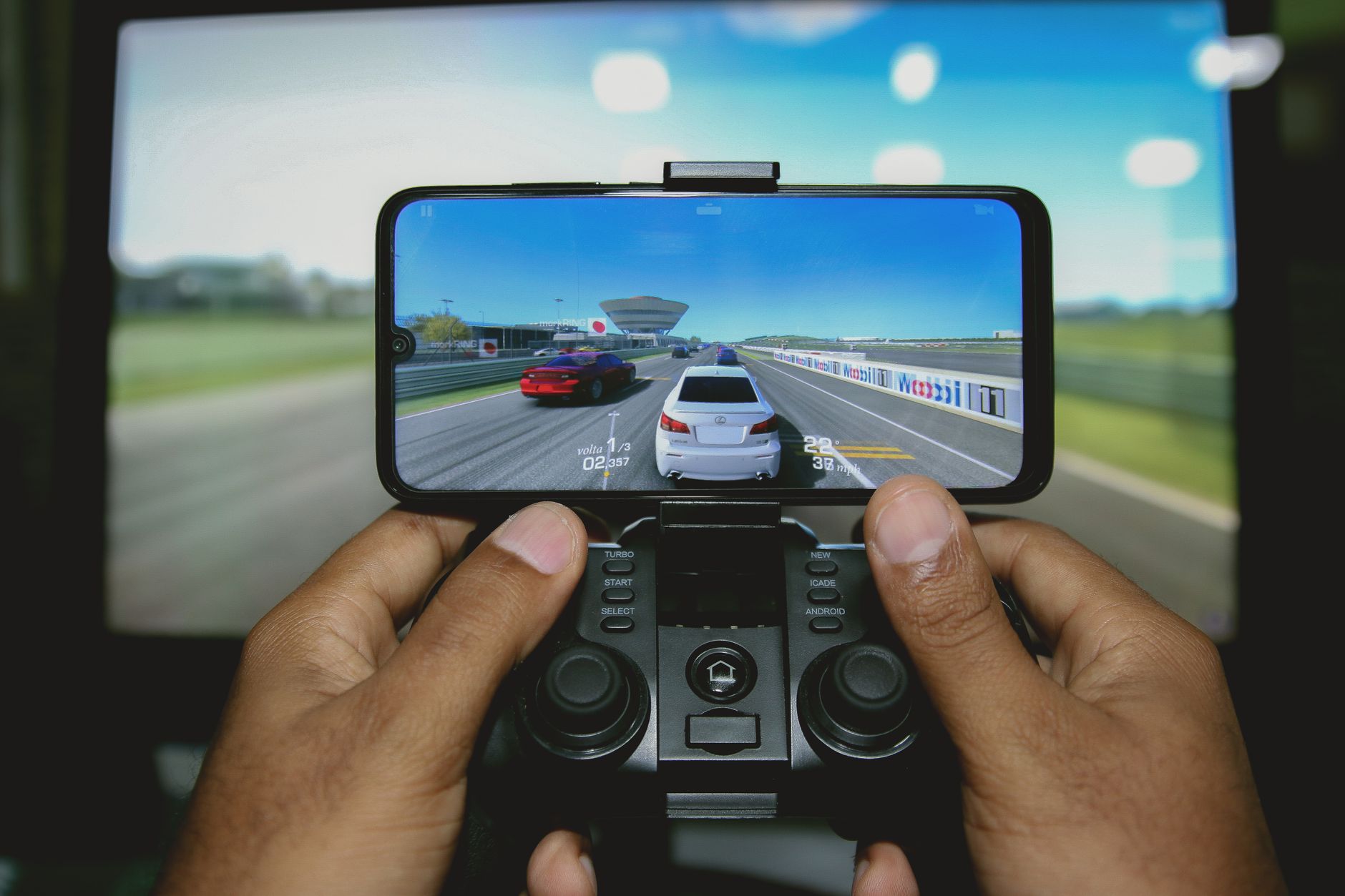
Photo: Nino Souza / Pexels
India's Real-Money Gaming Ban: Inside the Great Reset
India's real-money gaming ban did something almost no government has dared to do: it switched off an entire multi-billion-rupee consumer industry, deliberately, in a single day. On 1 May 2026, the rules giving teeth to the Promotion and Regulation of Online Gaming Act came into force, and platforms that millions of Indians opened every evening simply went dark. Fantasy cricket lineups, online rummy tables, poker rooms, opinion-trading apps—all of it, gone from the legal market. What makes the story worth reading is not just the demolition. It is what the same law is trying to build on the rubble.

What the law actually banned
The Act, passed by Parliament in August 2025 and operationalised through rules notified by the Ministry of Electronics and Information Technology in late April 2026, draws one blunt, unforgiving line. Any online game where a user puts in money expecting to win money is prohibited. Crucially, the law refuses to play the old game-of-skill versus game-of-chance argument that the industry had been winning in courtrooms for years. Rummy, fantasy sports, poker, real-money card games—it does not matter whether a high court once called them skill-based. If money is staked on an uncertain outcome, it is out.
That single design choice is the heart of the upheaval. For more than a decade, Indian operators had built their entire legal defence on the idea that their games rewarded knowledge and judgment, not luck. The new framework simply removes that defence from the board. The result was immediate and total: marquee names including Dream11, MPL, Games24x7, A23, Zupee, PokerBaazi and the opinion-trading app Probo suspended or shut their money-gaming operations rather than risk criminal exposure.

A multi-billion-rupee industry switched off overnight
The scale of what was switched off is genuinely startling. Government statements have pointed to hundreds of millions of Indians having engaged with online money-gaming apps, and to aggregate user losses running into tens of thousands of crores of rupees—the official figure cited is upwards of Rs 20,000 crore. The sector was not a fringe vice; it was a mainstream entertainment habit with serious money attached, and at its peak it contributed a comparable sum in annual direct and indirect taxes.
The financial aftermath has been brutal and fast. Industry reporting indicates that real-money gaming companies wrote down more than $840 million in assets in roughly the first 90 days after the original August clampdown began biting. Thousands of jobs—reports put the figure around 7,000—evaporated, with MPL among the firms cutting staff sharply. The knock-on damage spread beyond the platforms themselves: India's digital advertising market, long propped up by gaming companies splashing out on cricket sponsorships and influencer deals, faces an estimated annual hole of several thousand crore rupees. An entire ecosystem of marketing, payments and creator partnerships had quietly grown around real-money gaming, and it is now contracting all at once.
The tax hammer that came first
The ban did not arrive out of nowhere. It landed on an industry already reeling from a tax decision that, in hindsight, was the first domino. The imposition of 28% GST on the full face value of every bet placed—rather than on the platform's much smaller margin—had already made the economics of many games close to unviable. Then, on 27 May 2026, a Supreme Court bench reinforced the squeeze, ruling that organised online gaming activity involving money staked on uncertain outcomes amounts to betting and gambling for tax purposes, opening the door to retrospective demands calculated on the entire pool of bets.
For operators, this is the difference between a survivable haircut and an extinction-level event. Tax on margin is a cost of doing business; tax on the full value of every rupee that ever flowed through a platform is a bill many companies could never hope to pay. The legal fight is not over—a larger bench is expected to weigh in during the year on the deeper question of how the law should treat games of skill—but for now the freeze holds, and the uncertainty alone is enough to keep capital away.
What survived: esports gets a green light
Here is the twist that turns this from a demolition story into a strategy story. The very same Act that crushed real-money gaming carves out two categories it explicitly wants to protect and grow: esports and online social games. Competitive video gaming, where players win on the basis of skill, reflexes and training rather than wagered cash, has for the first time been given formal statutory recognition in India. Casual, entertainment- and learning-focused social games—the kind built for fun rather than for staking money—are likewise treated as permitted.
The message from policymakers is that India is not anti-gaming; it is anti-gambling-dressed-as-gaming. The framework sets up the Online Gaming Authority of India, a new regulator attached to the technology ministry, to register and supervise the permitted categories. Operators in those lanes are expected to build in age verification, time limits, parental controls, grievance redressal and counselling support—the architecture of a consumer-protection regime rather than a prohibition. The hope, stated openly, is to redirect talent and investment toward competitive gaming, educational titles and homegrown studios that create jobs and exports instead of extracting stakes from anxious users.
Where the money is running now
Capital and founders have already started pivoting, and the moves are telling. Dream Sports, the parent of Dream11, has pushed into financial services with a venture branded around money management. WinZO, rather than wait out the Indian freeze, has expanded into the United States content market. Zupee has moved toward esports. These are not minor product tweaks; they are companies built on real-money gaming trying to find a future in a country that has told them their core product is illegal.
Whether the esports bet pays off depends on a sobering comparison of scale. India's esports market is currently valued in the low hundreds of millions of dollars—estimates put it around $240 million in 2026, with projections reaching the mid-hundreds of millions by the early 2030s. That is real growth, but it is an order of magnitude smaller than the real-money industry that was just dismantled. The state is asking a young, comparatively tiny competitive-gaming sector to absorb the ambitions, talent and capital of a giant it just retired.
Why this matters beyond gaming
The Indian experiment will be watched closely far outside the country, because few large democracies have attempted to extinguish a popular, tax-paying digital industry this decisively. The risks are obvious: where legal platforms vanish, demand does not always disappear with them. Early reports already point to offshore and grey-market apps courting Indian users who can no longer find their old games on domestic stores, raising the uncomfortable possibility that the ban pushes activity into channels with zero consumer protection and zero tax.
The deeper question is one of philosophy. India has effectively declared that protecting hundreds of millions of citizens from stake-based losses outweighs the revenue, jobs and valuations the industry generated—and that the path forward runs through competitive skill, not wagered cash. If the esports and social-gaming pivot flourishes, this becomes a template for regulating addictive digital products worldwide. If demand simply migrates underground, it becomes a cautionary tale about prohibition in the smartphone age. For now, India has made its move, and an entire generation of gamers is discovering what it means to live on the other side of it.
Source: igamingbusiness.com