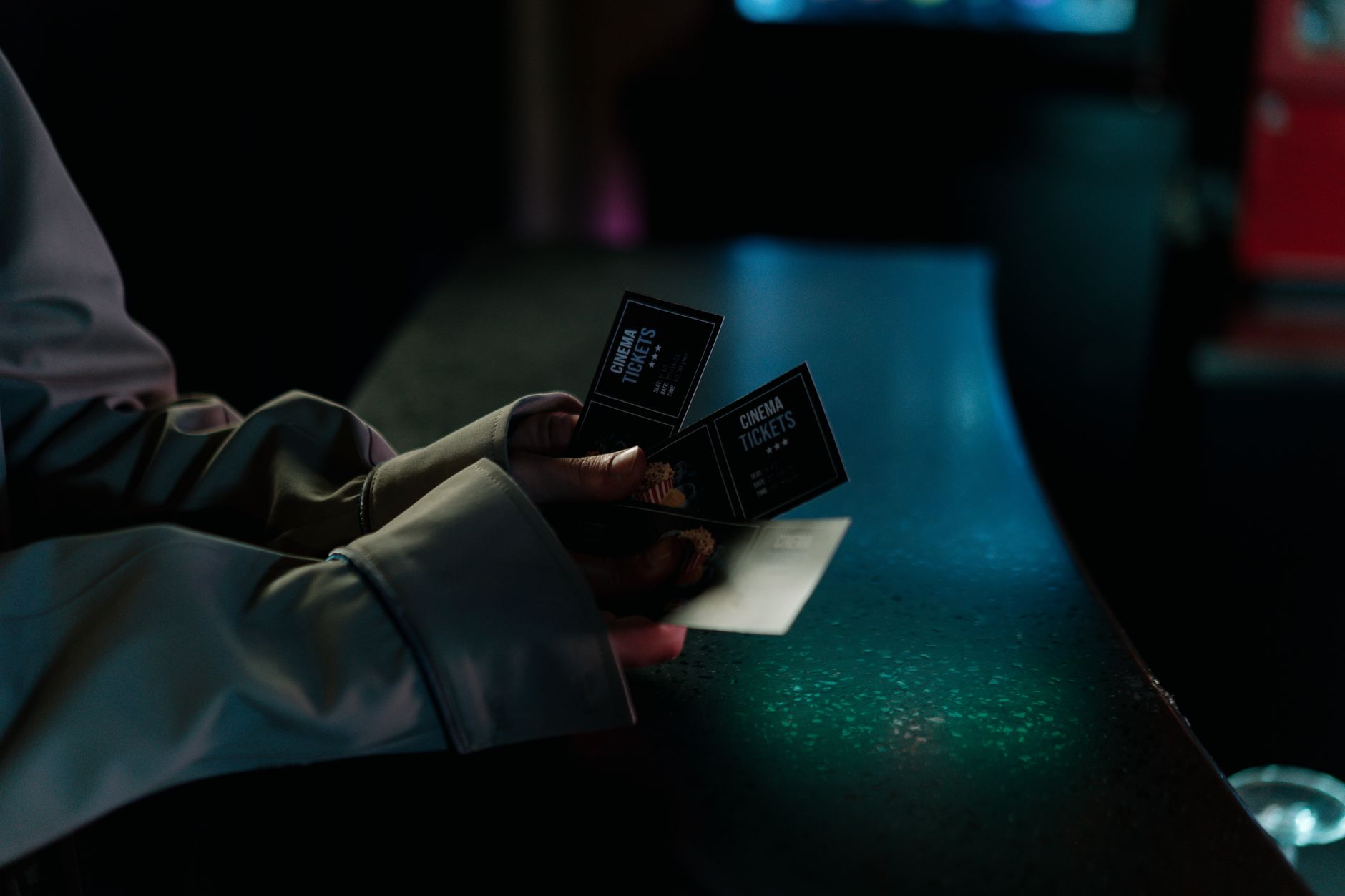
Photo: Jakub Zerdzicki / Pexels
The Interval Buzzer: Why Indian Movies Pause and Who Profits
A buzzer, a freeze-frame, and a stampede for samosas
You know the moment. The hero turns to face the villain, the music swells, the screen freezes on a face mid-snarl, and a fat red INTERVAL card slams up. Lights come on. Half the hall stands and shuffles toward the lobby. For Indian audiences this rhythm is so natural we rarely ask why it exists. Yet the interval is one of the most deliberate, commercially loaded decisions in the entire filmmaking and exhibition business, and almost nothing about it is accidental.
The break splits a film into two distinct halves, each with its own arc. It shapes how writers plot, how editors cut, and how much money a cinema actually takes home. Once you see the machinery behind that buzzer, you watch movies a little differently.

Where the habit came from
The interval is older than the multiplex. In the single-projector era, a long feature was spread across multiple film reels, and someone had to physically swap them. A natural pause point doubled as a breather for the audience and a chance to change reels without the screen going dark mid-scene.
Indian films also ran long. Three hours of song, drama, comedy and fight was the norm, and a single uninterrupted sitting was genuinely tiring. The break became a comfort stop—tea, a cigarette, the restroom—baked into a night out at the movies rather than a flaw in it. Western cinema once had intermissions too, mostly for epics like the big roadshow releases. Hollywood quietly dropped the practice as runtimes shrank and the home-video calendar tightened. India never let it go, and that difference now drives a whole craft and a whole business.

The interval block: a craft, not a coincidence
Walk into any writers' room and you'll hear the film discussed as first half and second half, almost as two separate units. That is not casual shorthand. Indian screenwriters structure a movie so that the story reaches a sharp turn right before the break—a revelation, a betrayal, a death, a face-off. The industry term for it is the interval block or interval bang.
The logic is pure showmanship. You don't want the audience leaving for popcorn feeling the story is settled. You want them walking out buzzing, arguing about what just happened, eager to get back to their seats. A weak first half can sink a film even if the second half is strong, because word of mouth in the lobby travels fast.
Good interval points tend to do one of a few things:
- Reverse what we thought we knew (the trusted friend is the traitor).
- Raise the stakes sharply (the threat becomes personal).
- Introduce the real antagonist or the hero's true mission.
- End on a question the second half exists to answer.
Editors guard this beat fiercely in post-production. Trimming the first half too much can push the turning point to the wrong place, leaving an interval that lands flat. Stretch it and the audience grows restless before the buzzer ever sounds.
Follow the popcorn
Here's the part the romance of cinema skips over. The interval is, above everything, a selling window. The single most profitable line on a multiplex's books often isn't the ticket—it's the food and drink.
Food and beverage carries margins that dwarf ticket revenue, because a tub of popcorn costs the cinema very little to produce and sells for a great deal. Chains like PVR Inox treat concessions as a core profit engine, not a side hustle, and they obsess over a metric called spend per head: how much the average ticket-buyer also spends on snacks. The interval is the moment that number is won or lost.
Think about the choreography. The break is timed long enough to queue, order and return—but short enough that you grab whatever's fast rather than waiting in a slow line and missing the second half. The counters are positioned in your path. The screen often carries food slides during the break. None of it is random. The pause that feels like a courtesy to your bladder is also a precision-engineered retail event.
This is why even the placement of the interval has a commercial edge. Too early and people aren't hungry yet. Too late and they've settled in and won't move. The sweet spot keeps both the story and the snack bar humming.
Why Hollywood films get a break they were never written for
If you've watched a big international release in an Indian cinema, you may have hit an interval that arrived at a jarring moment—mid-conversation, mid-chase, with no story logic to it at all. That's because the film was never built with a break in mind. The Indian distributor or exhibitor inserts one anyway.
The reason is exactly the same: concession sales and audience comfort. A two-and-a-half-hour superhero film with no break means a quieter lobby and a thinner F&B haul. So a cut point gets chosen, often by runtime rather than story, and the buzzer goes off whether the screenplay likes it or not. Purists groan; the math wins. Occasionally a filmmaker requests no interval for a specific title, but the default in India remains the break.
What the interval tells you about a film
Once you know the interval is engineered, it becomes a useful lens. The quality and placement of the break is a quiet tell about how well a movie is built.
- A strong interval point signals confident structure—the writers knew exactly where their first act turns.
- A limp or oddly timed break often means a baggy first half, or a foreign film with a break bolted on.
- A first half that outshines the second is a common Indian failure mode; the interval bang oversells what follows.
- No interval at all is a deliberate artistic statement, usually in a tightly paced thriller that wants you locked in.
Next time the buzzer sounds, notice where you are in the story. A film that makes you desperate to skip the popcorn and stay seated has done its job. One that leaves you happy to wander off for ten minutes has, in screenplay terms, let you go.
The break isn't going anywhere
Streaming has no interval—you pause when you like—and runtimes are creeping down. Yet in Indian theatres the break remains close to sacred, because it serves two masters at once. It gives writers a built-in act structure and a guaranteed cliffhanger, and it gives exhibitors their richest sales minutes of the night.
So the freeze-frame and the buzzer aren't a quaint hangover from the reel-changing days. They're a living piece of how Indian films are written, cut, sold and watched. The story stops for a reason, the lights come up for a reason, and the queue at the counter is precisely the point.