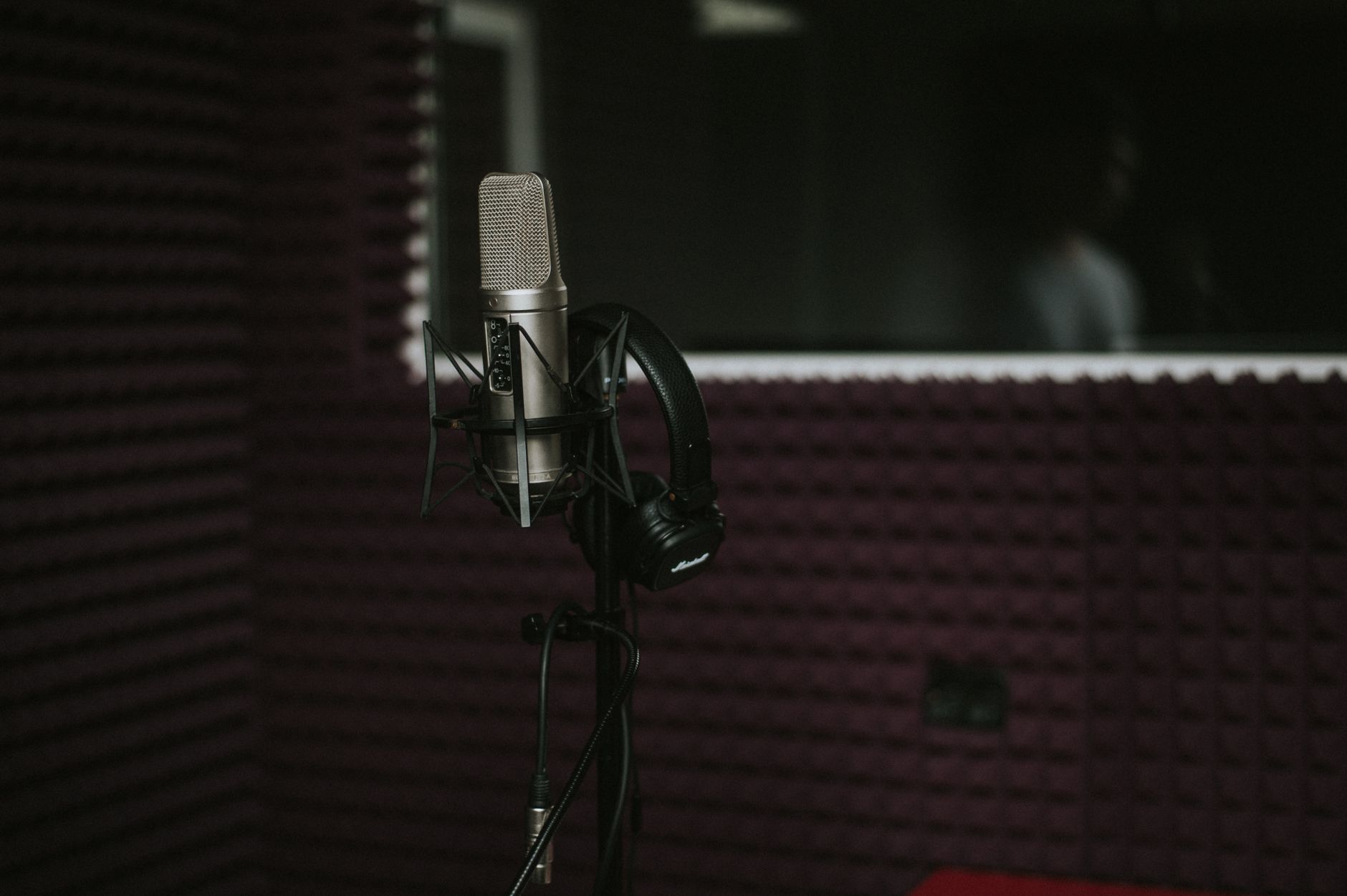
Photo: John Taran / Pexels
Film Dubbing in India: The Voices Behind Pan-India Hits
When a Telugu or Kannada blockbuster storms the Hindi belt and pulls hundreds of crores, fans cheer the star on screen. The person who actually made those lines land in Hindi is usually sitting in a soundproof booth in Mumbai, name nowhere on the poster. Film dubbing in India has quietly become one of the most important, least understood jobs in the business — the difference between a regional film that travels and one that dies at the language barrier.
This is the part of the movie machine almost nobody sees, yet it now shapes what India watches and how much a film earns. Here is how it actually works, who the voices behind the stars are, and why studios fight over a good dubbing artist.

Old Bollywood was dubbed long before the South films arrived
Dubbing is not new to Indian cinema, and it did not start with pan-India releases. For most of Hindi cinema's history, almost every film was dubbed — by the actors themselves. Until roughly the 1960s, films were shot with quiet cameras and recorded live. Then the noisy but practical Arri 2C camera took over outdoor shoots, and clean on-set sound became nearly impossible.
The fix was to throw away the location audio and have actors re-record every line in a studio afterwards, matching their own lip movements on screen. The industry calls this ADR — automated dialogue replacement. A whole generation of stars became expert at it. Sanjeev Kumar was widely admired for the control and emotion he packed into his studio dubs, and in the earlier era voice artists like Chand Usmani even lent their voice to other actors, dubbing for Meena Kumari in some films.
That changed when Lagaan (2001) shot an entire film on a tough Kutch location using sync sound — recording dialogue live, on set, as it was performed. It was not the first Indian film to do it, but its success made sync sound aspirational. Today many films use it, yet the dubbing booth never went away. It simply found a much bigger job.

The pan-India boom turned dubbing into a business strategy
The real shift came in 2015. Baahubali: The Beginning proved that a Telugu film with a strong Hindi dub could play in Lucknow and Indore as if it were made there. The Hindi version went on to become the highest-grossing dubbed release of its time, and the word pan-India entered everyone's vocabulary.
What followed is now history at the ticket window. The Hindi dubs of KGF: Chapter 2, RRR, Pushpa and its sequel did numbers that most originally-Hindi films cannot touch. The Hindi-dubbed Pushpa 2 in particular became a record-breaking earner. None of this happens without a dub that feels native rather than stitched on.
Producers learned the lesson fast. A dub is no longer a cheap afterthought slapped on after the original is locked. It is budgeted, cast and marketed. Studios now invest in dubbing the songs too, because a hit Hindi track — think of how Pushpa's music travelled — carries the film far beyond the cinema.
The three people it takes to dub one line
Good dubbing is not one person reading a translation. It is a small assembly line, and each stage can make or break the result:
- The translator converts the meaning of the original dialogue into the target language.
- The dialogue adaptor rewrites that translation so the words fit the actor's mouth — same number of beats, same lip shapes, same pauses. This is the hardest, most underrated craft. A literal translation that ignores lip-sync looks dubbed and breaks the spell.
- The voice artist performs it, matching the original actor's breath, anger, comedy timing and screen energy line by line.
The adaptor's job is why a clever dub can swap a regional idiom for a Hindi one that lands the same punch. A flat dub translates words; a great dub translates the feeling and still hits the lips.
The recognisable voices you have never seen
Here is the quiet trick of the trade: the same artist often voices the same star across films, so audiences subconsciously accept one consistent Hindi voice for that actor. Sanket Mhatre, a voice artist with well over a decade in the business, has become the Hindi voice for several southern superstars — he has dubbed for Allu Arjun, Mahesh Babu, Jr NTR and Vijay Deverakonda, among others, on top of years of cartoon work like Ben 10.
That consistency is deliberate. When you hear Pushpa speak Hindi, the voice has to feel like it belongs to that swagger. Switch the artist between films and fans notice instantly. For Baahubali, much of the Hindi dub was handled by the original cast re-recording their own parts, which is why it felt so seamless, but for many films a specialist dubbing artist does the heavy lifting.
These performers are skilled, in-demand professionals. Yet they are almost always uncredited on posters and trailers, and only sometimes listed in the closing crawl. The face gets the fame; the voice gets the next assignment.
Why a bad dub kills a good film
Audiences are unforgiving about dubbing, even if they cannot explain why a film felt off. The usual culprits are easy to spot once you know them.
- Lip-sync drift: the Hindi words run longer or shorter than the mouth, so dialogue floats.
- Tone mismatch: a menacing villain voiced too softly, or a comic beat read flat.
- Literal translation: jokes and slang that made sense in Telugu landing as nonsense in Hindi.
- Flat song dubs: lyrics crammed in without rhythm, so a chartbuster becomes forgettable.
The reverse is also true. Hollywood tentpoles like the Avengers films and Avatar earned a huge slice of their Indian money from Hindi, Tamil and Telugu dubs that brought in viewers who would never watch in English. The dub is not a courtesy; it is the door.
What this means for the next few years
Three shifts are worth watching. First, streaming has made multi-language dubs standard — a series now drops in five or six Indian languages on day one, which means steady, year-round work for dubbing studios that used to depend on a few big theatrical releases.
Second, AI voice cloning is creeping in. It can already mimic a tone and lip-time a line cheaply, and some platforms are testing it for low-stakes content. Whether it can carry the emotion of a hero block in a mass film is the open question, and voice artists are understandably nervous about credit, consent and pay.
Third, the craft is finally getting respect. As dubs decide nine-figure box office, the people who make them are pushing for screen credit and better terms. The next time a southern film conquers the Hindi belt, remember that somewhere a voice artist nailed every breath — and ask why their name is not on the poster yet.