Photo: John Taran / Pexels
The Invisible Stars: Who Gives South Heroes Their Hindi Voice
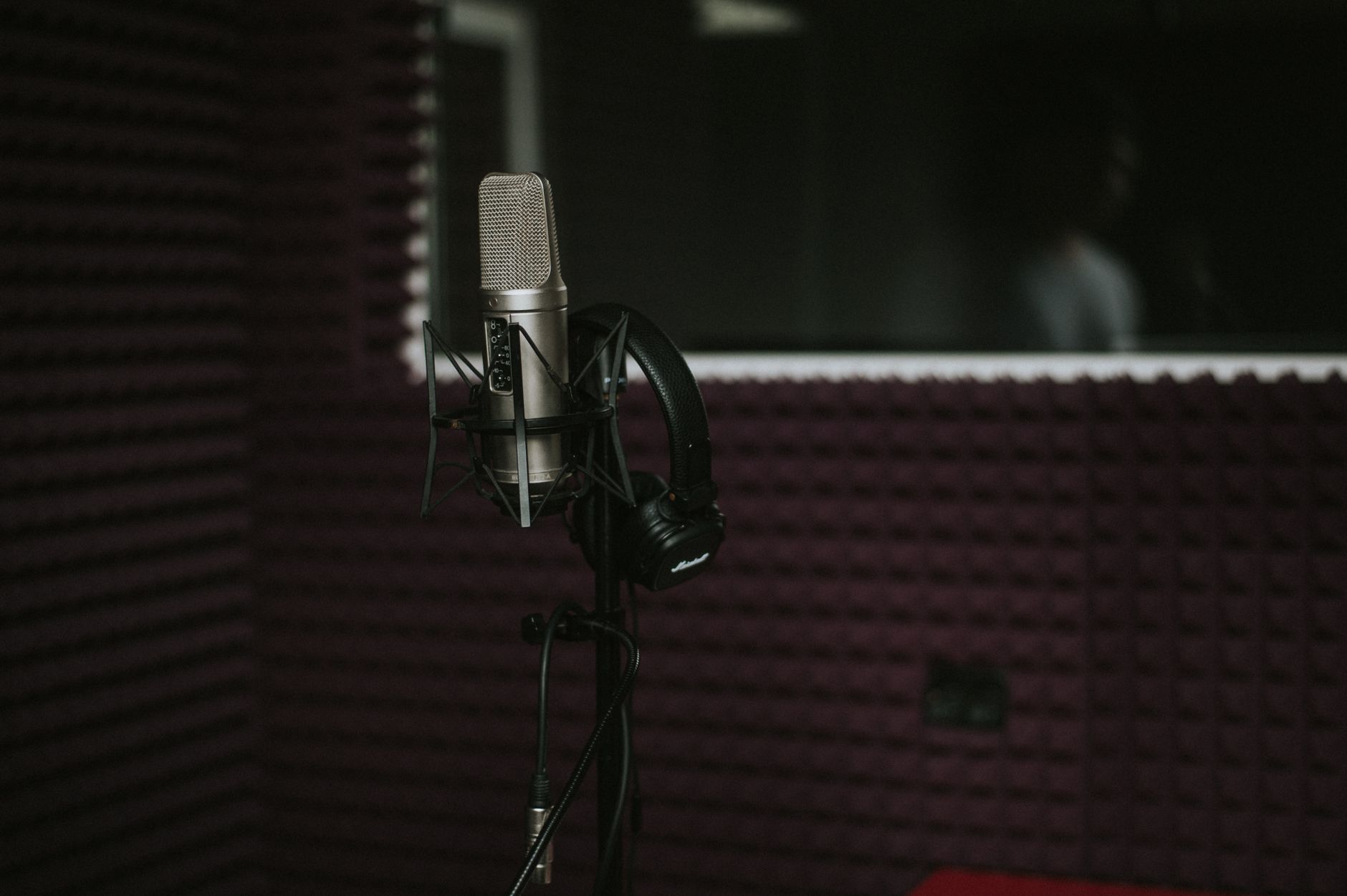
When Baahubali roared across North India and Pushpa had Hindi-belt theatres chanting "jhukega nahi," millions of viewers fell in love with a voice they assumed belonged to the star on screen. It didn't. Behind every blockbuster pan-India film sits an unseen performer in a soundproof booth — a Hindi dubbing voice artist who lends a South superstar his roar, his whisper and his swagger. They are the most-heard, least-known stars in Indian cinema.
As Telugu, Tamil, Kannada and Malayalam films keep storming the Hindi market in 2026, these voices have quietly become the difference between a dub that travels and one that dies. Here's who they are, how the craft actually works, and how you can tell a great dub from a clumsy one.
The voices you already know by heart
You've memorised their lines without ever learning their names. A few of the most prolific:
- Sharad Kelkar — the baritone behind Prabhas in the Hindi Baahubali films. A successful actor in his own right, Kelkar gave Amarendra Baahubali a gravelly grandeur that Hindi audiences now associate with the character itself.
- Shreyas Talpade — the Iqbal and Golmaal actor who dubbed Allu Arjun in the Hindi version of Pushpa, shaping the slouchy, sing-song menace that became a meme machine.
- Sanket Mhatre — a full-time dubbing professional who has voiced heavyweights like Jr NTR and Mahesh Babu, plus countless Hollywood leads in Hindi.
The pattern is telling: sometimes a known actor is hired so the dub carries marquee value, and sometimes a career voice artist does the heavy lifting precisely because nobody should notice the seam. Either way, when the dub clicks, the credit usually flows to the on-screen hero — not the throat that actually spoke.

Dubbing is rewriting, not translating
The biggest myth about dubbing is that someone simply translates the script word-for-word. In reality, a dub is rebuilt almost from scratch. A separate team of adaptation writers reworks every line so it does three things at once: matches the meaning, matches the emotion, and — crucially — matches the lip-sync.
That last constraint rules everything. The Hindi line has to start and stop roughly when the actor's mouth opens and closes, and ideally land its hard consonants on the same lip flaps (the moments lips press together for sounds like m, b and p). A perfect translation that runs two syllables too long is useless; a slightly looser line that hits the flaps feels invisible.
This is why dubbed dialogue often sounds different from a literal subtitle. A punchline rooted in a Telugu pun gets swapped for a Hindi one. A local proverb becomes a North Indian equivalent. The goal isn't fidelity to the words — it's fidelity to the feeling, delivered in a mouth-shape that doesn't betray the trick.
What actually happens inside the booth
The physical process is gruelling and unglamorous. A typical dubbing session looks like this:
- The artist watches the original scene on a loop, in short chunks of a few seconds each.
- A rolling on-screen cue or a beep counts them in so they hit the first word on time.
- They perform the line again and again until the timing, breath and emotion lock to the picture.
- A dubbing director rides every take, pushing for the right intensity — a sob that doesn't oversell, a war cry that doesn't crack.
The hardest part isn't speed; it's emotional cloning. The voice artist has to reverse-engineer a performance they didn't give, matching not just words but sighs, stammers, mid-sentence breaths and the tiny catch in a voice before a character breaks down. Get the breaths wrong and the whole illusion collapses, because the human ear notices air even when it can't name what's off.
How to spot a good dub (and a bad one)
Once you know what to listen for, you can't unhear it. Use this quick checklist next time you stream a dubbed film:
- Watch the lips on close-ups. If the mouth keeps moving after the Hindi line ends — or stops while words keep coming — the sync is loose.
- Listen for the breaths. Great dubs include realistic inhales and grunts; weak ones feel oddly airless, like a clean studio read pasted over a sweaty action scene.
- Check emotional temperature. Does the voice swell and drop with the actor's face, or stay on one flat level? Monotone delivery over an expressive performance is the classic giveaway.
- Notice the slang. A confident dub uses idioms that feel native to Hindi; a lazy one keeps stiff, over-literal phrasing that no one actually speaks.
- Mind the crowd and ambience. Good dubs rebuild background chatter and reactions; thin, silent crowds signal a rushed job.
The best compliment a dub can get is that you forget it exists — which is exactly why the artists rarely get applauded.
Why these stars stay invisible — and why that's changing
For decades, dubbing was treated as back-end factory work. Names were buried at the bottom of the credits or left off entirely, fees were modest, and there was little public recognition even when a dub single-handedly cracked open a new market. A film could earn hundreds of crores in Hindi while the voice that sold it earned a flat session fee.
That economics is slowly shifting. As pan-India releases become the default rather than the exception, studios have realised that a strong dub is not an afterthought — it's a distribution strategy. A bad Hindi track can sink an otherwise great Telugu film up north; a brilliant one can turn a regional hero into a national phenomenon. Casting the right dubbing voice is now discussed almost like casting a co-lead.
Social media has done the rest. Fan accounts now hunt down and celebrate the people behind the voices, clips of dubbing sessions go viral, and a handful of artists have built genuine followings. The work is finally being seen as performance, not plumbing.
The takeaway for the next time you press play
The next time a South superstar's Hindi line gives you goosebumps, remember that two people made that moment: the face on screen and the voice you'll never see. Dubbing is one of Indian cinema's great hidden crafts — part translation, part acting, part precision engineering against a ticking clock.
So treat the dub as its own performance. Notice the breaths, watch the lips, listen for the slang. You'll enjoy the film more, and you'll start giving silent credit to the invisible stars who quietly turned your favourite regional blockbuster into something the whole country could feel.