Photo: Eyes2Soul Eyes2Soul / Pexels
Protein on an Indian Veg Diet: How to Actually Hit Your Target
Most Indians eat plenty of food and still fall short on one nutrient that quietly governs muscle, immunity, hair and even how full you feel: protein. The problem isn't vegetarianism — it's that the typical Indian plate is built around carbohydrates, with rice, roti, potato and sugar crowding out the very thing your body cannot store for later. Getting enough protein on an Indian vegetarian diet is entirely doable, but it takes a little arithmetic and a few swaps rather than a fancy diet.
This is a practical, no-jargon guide: how much you actually need, why dal isn't the hero you think it is, and a realistic day's eating that hits the target without imported powders or a chef.

How much protein do you really need?
The official Indian benchmark comes from ICMR-NIN, which sets the safe daily intake at roughly 0.83 grams per kilogram of body weight for a healthy, sedentary adult. For a 60 kg person, that's about 50 grams a day — not a huge number, yet surveys repeatedly suggest most urban Indians miss even this floor.
The catch is that this is a minimum for someone who barely moves. The moment you add real life — gym sessions, a physical job, age over 50, pregnancy, or recovery from illness — the requirement climbs. Active adults and older people are better served by 1.2 to 1.6 g/kg, which for a 60 kg person can mean 70–95 grams. ICMR also notes that people on a cereal-dominated diet — which describes much of India — should aim nearer 1 g/kg, because plant protein is less efficiently used than the animal kind.
A simple personal rule: take your body weight in kilograms, and treat that number in grams as a sensible daily goal if you're reasonably active. A 65 kg person targeting ~65 g is aiming higher than the bare minimum, which is exactly the point.
Why dal alone won't get you there
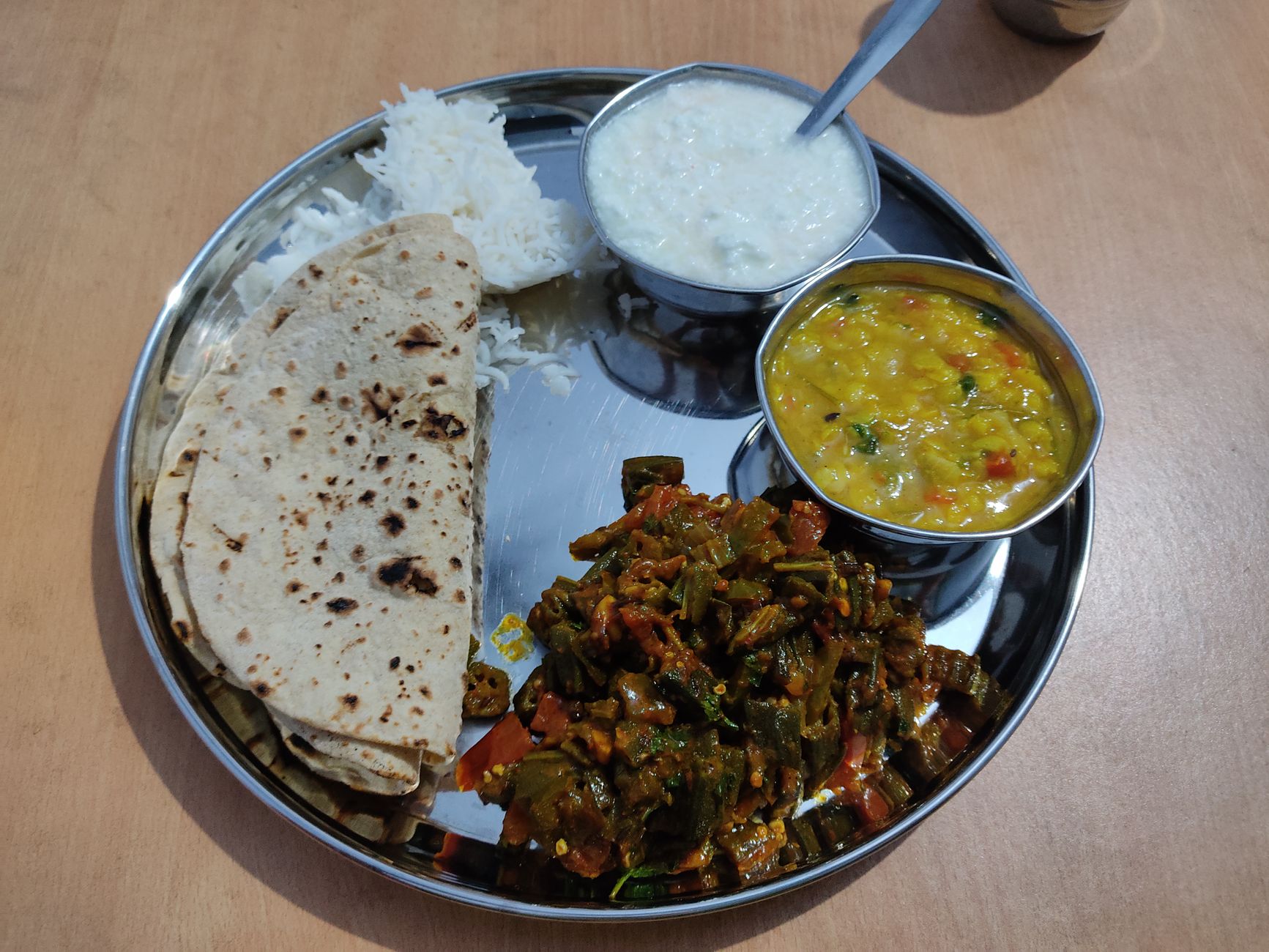
Ask most families where their protein comes from and the answer is "dal." It's a comforting myth. A standard katori of thin, restaurant-style dal is mostly water and delivers only a few grams of protein — nowhere near a meal's worth. You'd need several bowls to make a dent, and nobody eats dal that way.
The deeper issue is protein quality. Cereals like rice and wheat are low in the amino acid lysine, while pulses are low in methionine. On their own, each is an "incomplete" protein. But eat them together and they fill each other's gaps — which is the quiet genius behind dal-chawal, rajma-rice and chana with roti. These grandma combinations are textbook complementary proteins, and you don't even have to eat them in the same bite; getting both across the day works.
The fix, then, isn't to abandon dal. It's to make it thicker, always pair a grain with a pulse, and stop expecting the dal bowl to do a job it was never big enough for.
The vegetarian protein heavy-hitters
If dal is a supporting actor, these are the leads. Approximate protein content, so you can do the math:
- Soya chunks — around 52 g per 100 g (dry), with a complete amino-acid profile. The single most protein-dense vegetarian food in an Indian kitchen, and dirt cheap.
- Paneer — roughly 18–20 g per 100 g. Filling, versatile, and far more concentrated than dal. Tofu is a lighter cousin at about 8–10 g.
- Eggs (for eggetarians) — about 6 g each, with near-perfect protein quality.
- Curd and milk — a glass of milk is ~6–7 g; thick curd or hung curd packs more than the watery kind.
- Roasted chana, peanuts and rajma — a fistful of roasted chana or a katori of cooked rajma adds 6–9 g while doubling as fibre.
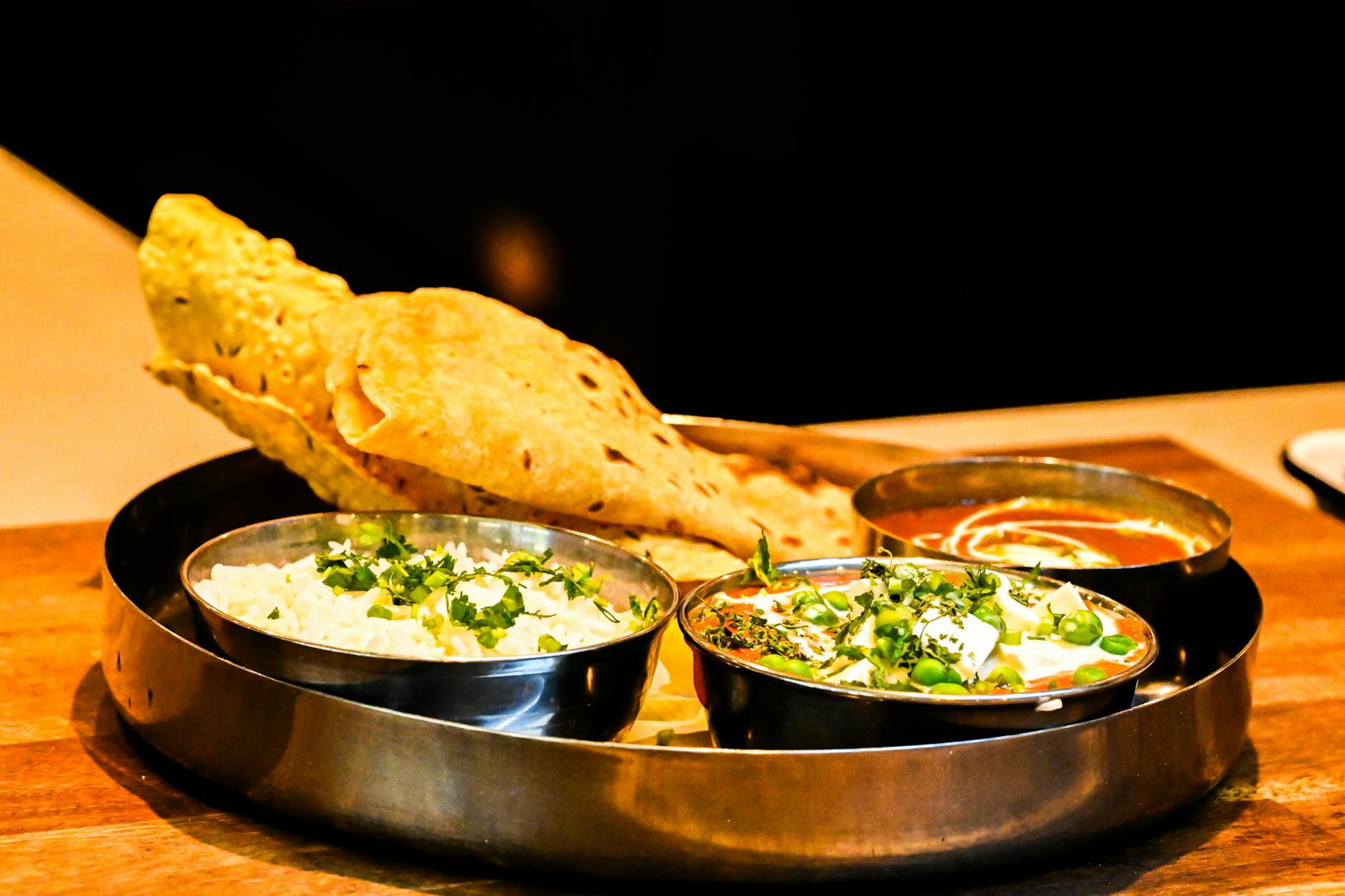
Notice the pattern: real protein comes from making these the base of a meal, not a garnish. Two of them per meal — say paneer plus curd, or soya plus rajma — quietly does what ten bowls of dal cannot.
Spread it across the day, don't cram it at dinner
Most Indian eating back-loads everything into one large dinner. That's a poor strategy for protein, because your body uses it best in moderate doses across the day — roughly 20–30 grams per meal — rather than one giant hit at night.
There's biology behind the 20–30 g figure. Each meal needs enough of the amino acid leucine to switch on muscle repair, and skimpy breakfasts rarely cross that line. The classic Indian breakfast — poha, idli, a couple of parathas — is almost pure carbohydrate. That's the single biggest, easiest gap to fix.
Upgrade breakfast first: add eggs or a thick besan or moong chilla, a bowl of curd, a glass of milk, or paneer in your sandwich. Win the morning and the daily total largely takes care of itself.
A realistic 60-gram day, Indian-style
Here's how an ordinary vegetarian day can clear the target without anything exotic:
- Breakfast — two besan chillas or two eggs, plus a glass of milk or a bowl of curd (~18–20 g).
- Lunch — two rotis with a thick dal and a sabzi built around paneer or soya chunks (~20 g).
- Snack — a fistful of roasted chana or peanuts, or a bowl of curd (~8–10 g).
- Dinner — rajma or chole with rice, the grain-pulse pairing doing its complementary magic (~15 g).
That's comfortably 60+ grams with zero supplements. A scoop of whey or plant protein (~20–24 g) is a handy shortcut on busy or heavy-training days, but it's a convenience, not a necessity.
What comes next
The takeaway isn't to eat more food — most of us already do — but to rebalance the plate. Shift the centre of gravity from rice and roti toward pulses, paneer, soya, dairy and eggs, and make breakfast carry its weight.
Do that for a few weeks and the changes are noticeable: steadier energy between meals, fewer 4 p.m. biscuit cravings, easier weight control, and better recovery if you train. Protein is the one macronutrient where the Indian vegetarian diet has a real blind spot — and also the one where small, cheap, everyday swaps deliver an outsized return.