Photo: Rajesh S Balouria / Pexels
Tap Water for All: Where Jal Shakti Works and Where It Leaks
When the Ministry of Jal Shakti was stitched together on 31 May 2019 from two older ministries, the idea was simple: stop treating water supply, sanitation and river health as separate files on separate desks. Seven years on, the experiment has produced one of independent India's fastest infrastructure rollouts — and a set of stubborn problems that no ribbon-cutting can hide. This is a governance question, not a political one, so it is worth looking at both halves honestly.

The number that changed a generation
In August 2019, just 3.23 crore rural households had a tap inside the home — barely 17 percent. By May 2026, that figure had crossed 15.8 crore households, about 82 percent of the country's 19.35 crore rural homes, under the Jal Jeevan Mission and its Har Ghar Jal promise. States including Goa, Telangana, Haryana and Puducherry report full coverage. More than 2.77 lakh villages say every home has a tap.
For a woman who once walked kilometres to a borewell, this is not a statistic. It is hours of her day returned, and a child more likely to stay in school. The Union Cabinet has now extended the mission to December 2028, with a stated shift towards making sources last. The intent and the pace deserve fair acknowledgement before any criticism.
A tap on the wall is not the same as water in the glass
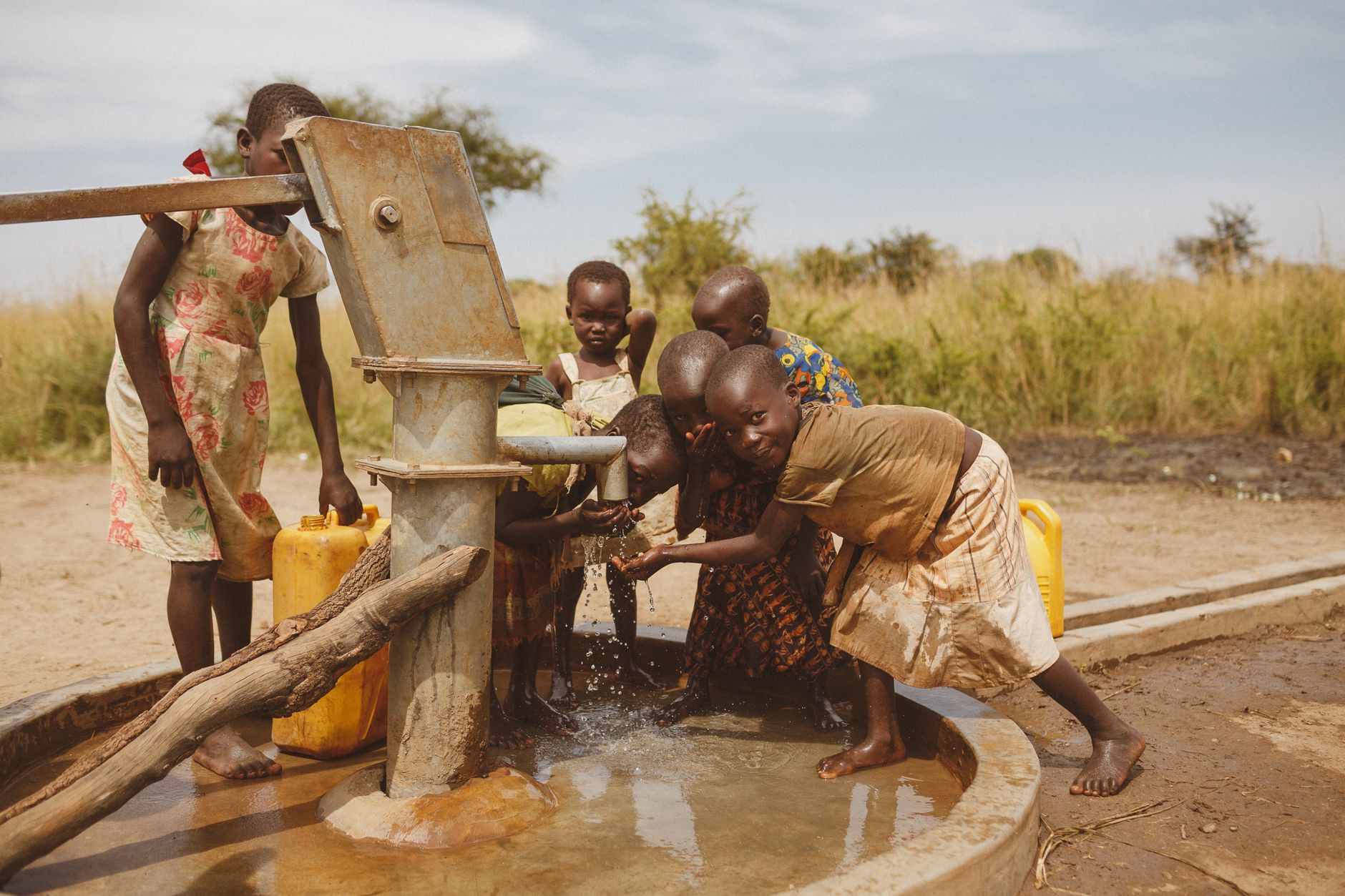
Here the picture gets harder. The government's own Functionality Assessment 2024 found that while 98.1 percent of surveyed homes had a tap connection, only about 76 percent met every functionality standard — regular supply, adequate pressure, sufficient quantity, acceptable quality. A connection that runs dry three days a week, or trickles at low pressure, technically exists but does not serve.
Usage data tells the same story. By some field estimates, only around 39 percent of households with taps use them as their main water source, with several large states clustering far lower. A field study of 39 schemes across 28 villages in early 2025 found broken or missing taps, leaking pipelines, faulty designs and poor construction even in places certified as Har Ghar Jal. The honest reading: the country is excellent at laying pipe and still learning to keep water flowing through it.
The quality problem hiding underground
The deeper worry is what the water carries. Government and independent reports estimate that over 200 million people depend on groundwater with chemical concentrations above permissible limits. In Bihar alone, contamination was flagged in more than 30,000 rural wards — arsenic, fluoride and iron each affecting thousands. As of April 2025, India had over 7,700 fluoride-affected pockets, with Rajasthan accounting for more than half.
There is a cruel feedback loop here. As over-extraction pushes the water table down, deeper, more fluoride-rich layers get drawn up, so depletion and contamination feed each other. High fluoride causes dental and skeletal fluorosis; long-term arsenic exposure causes skin lesions and cancer. A tap that delivers poisoned water on time is not a solved problem.
The sanitation half of the ledger
The Swachh Bharat Mission belongs in the same conversation, because clean water and safe sanitation rise or fall together. Over 12 crore household toilets have been built in rural India, and nearly every village is declared open-defecation-free. By late 2025, more than 5.67 lakh villages — over 95 percent — had been declared ODF Plus, the higher bar that adds waste management.
The weak link now is what happens after the toilet. Faecal sludge management — collecting, transporting and treating what septic tanks hold — remains thin, especially in dense peri-urban belts where waste is sometimes emptied into drains, fields or water bodies. That untreated sludge can seep straight back into the groundwater that the taps draw from, quietly undoing both missions at once. Verification is patchy too: a large share of ODF Plus villages have not completed even a first independent round of checking.
What is genuinely working
It would be unfair to list only the cracks. Several things have gone right and are worth building on:
- Speed and scale. Going from 17 percent to 82 percent rural tap coverage in under seven years is a logistics feat by any country's standard.
- A single point of accountability. Merging water ministries reduced the old turf wars between supply and sanitation departments.
- Some teeth on complaints. Officials report that of over 17,000 complaints logged, action followed against nearly 2,400 officials, with contractors blacklisted — imperfect, but a paper trail that did not exist before.
- Community ownership models. Village water and sanitation committees and women-led monitoring, where active, have improved upkeep.
The fixes experts actually back
Water specialists, auditors and civil-society researchers converge on a short, practical list. None of it requires a new flagship scheme — only a shift from counting connections to guaranteeing service.
- Treat the source first. Recharge structures, watershed work and curbs on over-extraction so that schemes still have water to pump a decade out. A pipeline without a sustainable aquifer is a temporary win.
- Make testing routine and public. Equip village committees with field test kits, fund the district labs, and publish results so households know what their tap carries. Quality should be measured monthly, not certified once.
- Pay for operation and maintenance. Most schemes fail not at construction but afterwards. A funded O&M model — modest user tariffs plus assured support for poorer panchayats — keeps pumps and pipes alive.
- Finish the sanitation job. Invest in faecal sludge treatment plants, scheduled desludging, and honest second-round ODF Plus verification, so toilets do not become a new source of contamination.
- Independent, transparent audits. Third-party functionality checks, with data open to citizens, turn 'declared complete' into 'confirmed working'.
- Skill the local plumber economy. Trained, paid local technicians fix a leaking tap in days, not months.
Why this matters now
The extension to 2028 is the chance to convert a remarkable construction story into a durable service. The hard part of public infrastructure is never the inauguration; it is year five, when the novelty fades and the pump needs a part. Drinking water and sanitation sit at the base of almost every other development goal — child health, women's time, school attendance, dignity. Getting the last mile right is less glamorous than the first crore connections, and far more decisive. The foundation has been laid at impressive speed. The work ahead is quieter, more technical, and entirely worth doing.